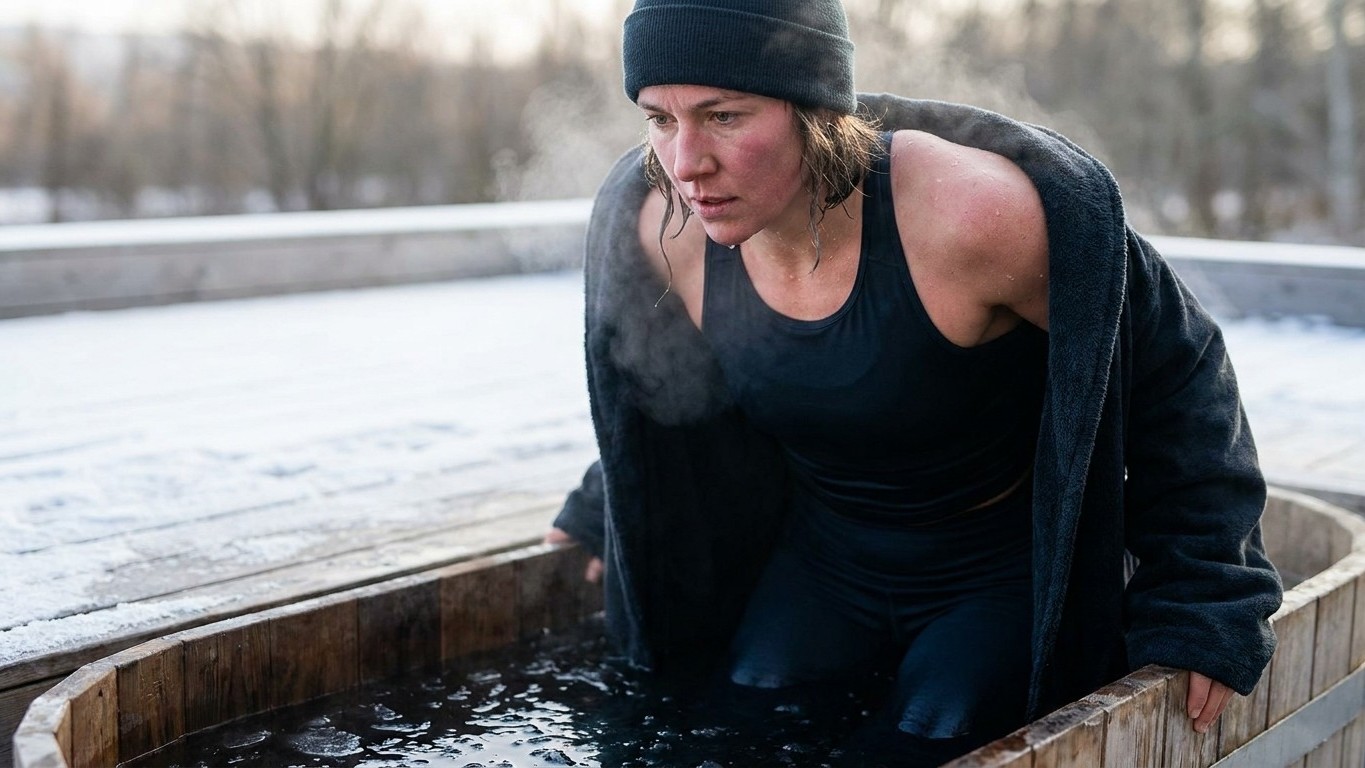
Cold water after training doesn’t just numb sore muscles, it can blunt the very signalling that makes those muscles grow back stronger. That’s the finding that stopped me mid-plunge one winter morning, kettle bell session behind me, feet already numb in a bath of ice and tap water. I’d been doing this after every hard workout for the best part of a year, convinced I was fast-tracking recovery. Turns out the research tells a more complicated story.
The routine felt bulletproof at the time. Train hard, sit in Freezing Water for ten minutes, feel smug about “optimising” recovery. Athletes on television did it, gym influencers swore by it, and the immediate relief from sore legs seemed like proof enough. What I hadn’t clocked was that the inflammation I was so eager to switch off is part of how muscles actually adapt to training.
Key takeaways
- Cold water immersion reduces soreness—but that’s not the same as better muscle adaptation
- The inflammation you’re trying to shut off is actually the signal that builds stronger muscles
- The timing of your ice bath might matter more than whether you use one at all
What cold water immersion actually does inside the muscle
A study published in The Journal of Physiology in 2015 by Roberts and colleagues put this to the test directly. They had young men complete a 12-week strength training programme, with one leg recovering via cold water immersion and the other via active recovery (low-intensity cycling). Muscle biopsies showed that the cold-treated leg had significantly lower activation of key signalling pathways involved in muscle protein synthesis, including the mTOR pathway, and blunted long-term gains in both muscle mass and strength compared with the actively recovered leg (Roberts et al., 2015, The Journal of Physiology).
The mechanism makes sense once you think about it. Resistance training causes controlled damage to muscle fibres. That damage triggers an inflammatory response, satellite cells get activated, and the repair process is what actually builds new, thicker muscle tissue. Plunge into near-freezing water straight after training and you constrict blood vessels, slow the delivery of immune cells to the damaged tissue, and effectively mute the repair signal before it gets going properly. I’d been icing the exact process I was trying to encourage.
Why it still feels like it’s helping
The soreness reduction is real, that part isn’t in dispute. Cold exposure does lower perceived muscle soreness and can reduce swelling in the short term, which is why it became standard practice in professional sport decades ago. But feeling less sore isn’t the same as recovering better at a tissue level. A review in the Cochrane Database of Systematic Reviews looked at cold water immersion for delayed onset muscle soreness and found it can modestly reduce soreness compared with rest, though evidence on strength and functional recovery is far less convincing (Cochrane, 2012).
That distinction matters enormously depending on what you’re training for. If you’re a footballer with a match in 48 hours, feeling fresher legs sooner is genuinely useful, even if the biopsy-level adaptation is slightly dampened. If you’re in the gym trying to build muscle over months, dulling the very repair mechanism you’re relying on works against you every single session, week after week, compounding into a noticeably smaller result by the end of a training block.
When cold still earns its place
None of this means ice baths belong in the bin. Context decides whether cold water helps or hinders, and three scenarios stand out where I’d still recommend it:
- Tournament or competition weeks, where same-day or next-day performance matters more than long-term adaptation
- Managing genuinely disruptive soreness that’s affecting sleep or daily movement, rather than routine post-session stiffness
- Endurance athletes managing heat stress or swelling after very long sessions, where the goal is symptom relief rather than hypertrophy
Outside those situations, particularly during dedicated strength or muscle-building phases, the research points toward leaving the ice bath alone, at least in the hours immediately after training. Waiting several hours before cold exposure, or using it on rest days instead, appears to sidestep the interference with the anabolic window while still offering whatever psychological or symptom benefits people find valuable.
What I do now
I still own the cold plunge. It just doesn’t come out on the same day as a hypertrophy session anymore. Heavy lifting days get a proper cooldown, some protein, and either a gentle walk or nothing more dramatic than a hot shower. The ice bath gets saved for the odd week where I’m genuinely beaten up, travelling for back-to-back events, or simply want the mental reset that plunging into cold water provides, that’s not a myth, the alertness boost is well documented and has nothing to do with muscle repair.
One detail surprised me most while reading around this topic: the temperature and duration used in most of the supporting research (typically 10 to 15 minutes at around 10-15°C) is colder and longer than what most home ice baths or gym cold plunges actually deliver. Some of the interference effect may be dose-dependent, meaning a quick, milder dip might carry less of a downside than a prolonged deep freeze. The evidence on that specific nuance is still thin, so it’s not a licence to assume any cold exposure is fine. If you’re chasing strength or size, the simplest evidence-based move is timing your cold plunges around your goals rather than every session automatically. As always, if you have circulation issues, heart conditions, or are recovering from injury, check with your GP before starting any cold water immersion routine.