
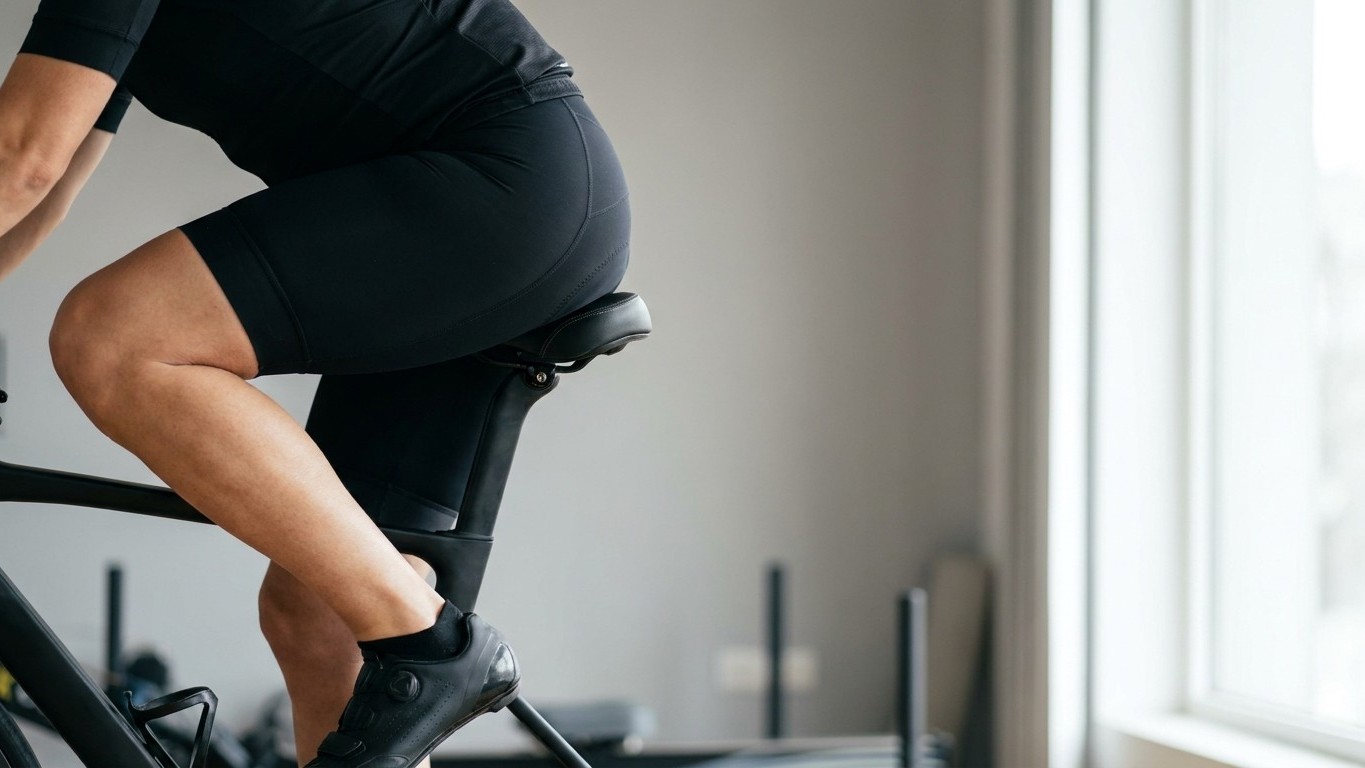
A saddle set too low is one of the most common and quietly damaging mistakes in cycling, and most riders have no idea they’re doing it. The knee joint absorbs enormous forces on the bike, and when your seat height is off by even a centimetre or two, the biomechanics shift in ways that grind cartilage, strain tendons, and set you on a slow path toward chronic pain. A good bike fit coach can spot the problem in seconds. Your knees may take months to tell you about it.
Key takeaways
- A low saddle forces your kneecap to track incorrectly, compressing cartilage with every pedal stroke—14,000+ times per two-hour ride
- A cycling coach can identify the problem instantly, but the biomechanical damage accumulates silently before you feel anything
- There’s a precise optimal saddle height range, and raising it too quickly creates equally damaging problems in your hamstrings and Achilles
What actually happens when your saddle is too low
The patellofemoral joint, which is the articulation between your kneecap and the femur beneath it, relies on smooth, gliding movement through a specific range of motion. When your saddle drops below its optimal height, your knee bends more acutely at the bottom of each pedal stroke than it should. This increases the compressive load across the patellofemoral joint dramatically. Research published in sports medicine literature consistently links excessive knee flexion angles during cycling with higher rates of anterior knee pain, the dull, grinding ache that sits just behind or around the kneecap.
The patella is meant to track in a shallow groove in the femur called the trochlear groove. When compression is high and tracking is disrupted, the cartilage on the underside of the kneecap experiences shear forces it wasn’t designed to handle repeatedly. Over thousands of pedal strokes per hour, this adds up faster than most people expect. A recreational cyclist doing a two-hour ride turns the cranks somewhere between 14,000 and 18,000 times. Every single one of those strokes, if the saddle is wrong, is a small insult to the joint.
There’s a secondary issue too: a low saddle often forces riders to compensate through their hips and lower back, rocking slightly side to side to complete each pedal revolution. That rocking motion loads the iliotibial band and hip flexors unevenly, creating tension patterns that spread well beyond the knee itself.
How bike fitting actually works (and what coaches look for)
A professional bike fit isn’t just someone watching you ride and making a rough guess. A trained fitter uses a combination of static measurements and dynamic observation, often with video analysis, to assess how your body interacts with the machine. The gold standard measurement most fitters start with is the knee angle at the bottom of the pedal stroke: a range of approximately 25 to 35 degrees of flexion is widely used as a target, though individual anatomy means there’s no single magic number.
One of the most commonly used starting-point methods is the heel-on-pedal technique. With your heel placed flat on the pedal at the six o’clock position, your leg should be fully extended without your hips tilting. When you move your foot to the correct cycling position, ball of the foot over the pedal axle, that slight bend in the knee should fall naturally within the optimal range. It’s a rough guide, not a finished prescription, but it gets most people much closer than guessing.
Cleat position matters enormously here too. A cleat set too far forward places the metatarsal joints behind the pedal axle, effectively shortening your leg length on the bike and mimicking the effect of a saddle that’s too low. Many riders chase saddle height adjustments without ever addressing their cleat setup, and wonder why the knee pain keeps returning.
The saddle-too-high problem: equally real, differently damaging
Raising the saddle immediately when someone flags it low is the right instinct, but overcorrecting introduces a different set of problems. A saddle set too high causes the hip to drop and rock at the top of the pedal stroke, placing the hamstring tendon under repeated strain where it attaches just below the back of the knee. This is classic posterior knee pain, and it’s particularly insidious because the discomfort often doesn’t appear until well into a long ride, by which point you’ve already done the damage.
An overly high saddle also puts the Achilles tendon under stress, as the heel drops excessively to compensate for the extended leg position. Cyclists who’ve suddenly raised their saddle significantly after years of riding low sometimes develop Achilles tendinopathy within weeks, simply because the tissue hasn’t adapted to the new load.
The practical lesson is that adjustments should be made gradually. If a fitter tells you your saddle needs to come up two centimetres, consider making the change over two or three weeks rather than all at once, particularly if you’ve been riding at the incorrect height for a long time. Your soft tissues need time to adapt.
When to get a professional fit, and what to do in the meantime
A professional bike fit from a qualified coach or physiotherapist with cycling experience is worth the investment for anyone riding regularly, particularly if you’re putting in more than three hours a week. It’s especially worthwhile before building up mileage for a sportive or cycling event, when training loads increase rapidly.
In the meantime, a few immediate checks are worth doing. Sit on your bike with the pedal at the bottom of the stroke and your foot in its normal riding position. Your knee should have a visible, comfortable bend, not be fully locked out, and not be folded acutely. Ask a friend to watch you from the side and look for any hip rocking. If your hips shift from side to side with every pedal revolution, your saddle is almost certainly too high.
One thing most riders don’t realise: saddle height isn’t a set-and-forget measurement. Body weight changes, flexibility changes with age and training, and even shoe wear can affect the effective leg length on the bike. A fit that was perfect two years ago may have drifted subtly out of alignment. Many coaches recommend a quick check-in fit every couple of years, or any time knee pain starts appearing without an obvious cause.
Please consult your GP or a physiotherapist if you’re experiencing persistent knee pain. A bike fit addresses biomechanics, but it doesn’t replace medical assessment of existing joint problems.