Reformer Pilates had a spectacular run. Over the past few years it became the dominant boutique fitness choice across the UK, a sophisticated, low-impact method promising a dancer’s posture and a strong core in a sleek studio setting. According to ClassPass’s 2025 Look Back Report, Pilates was the most-booked workout globally for the third year in a row, with a 66 per cent increase since 2024. The numbers were genuinely staggering. But something has quietly shifted in 2026. Financially squeezed and increasingly sceptical of high-cost studios, a growing wave of fitness enthusiasts are rediscovering a method that predates every reformer machine by about two thousand years: calisthenics.
Key takeaways
- A major fitness pivot is happening right now: expensive Pilates studios are losing members to an ancient workout that costs absolutely nothing
- Recent studies show calisthenics beats Pilates on several measurable outcomes—but the real story is about what people actually want from fitness in 2026
- The economics are brutal: £18-37 per class adds up fast, while your lounge floor and bodyweight provide everything you need
The Cost Problem Nobody Was Talking About
Let’s be honest about what reformer Pilates actually costs. Standard 60-minute group classes in the UK typically cost £18 to £37 or more per class, while private sessions often range from £70 to £100 per hour. Commit to twice a week and you are easily spending well over £150 a month on a single workout format. As one London studio puts it directly: Pilates is “a big investment in terms of time and money.” That is a candid admission few studios make loudly.
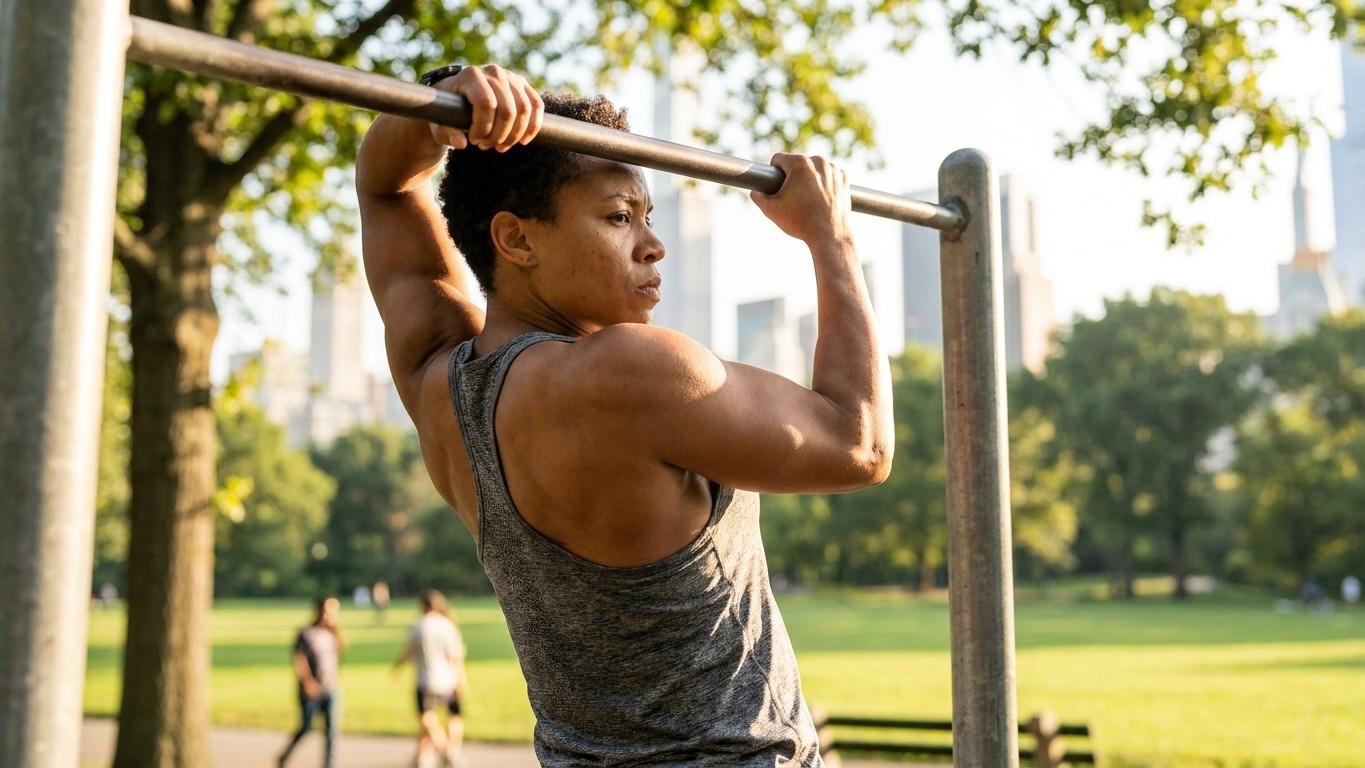
Calisthenics, by contrast, costs precisely nothing to start. One of the biggest draws for calisthenic workouts is that they require no equipment to get started. Many of the staple exercises, including planks, squats, lunges, dips and chin-ups, can be performed at home. The same lounge floor where you once did pandemic Zoom yoga will do perfectly. That financial equation has become very difficult to argue with in the current climate, particularly for younger adults who are already navigating rent pressures and rising costs across every area of life.
Economic pressure is pushing clients to rethink how they engage with fitness, expanding interest in hybrid coaching, digital touchpoints and community-driven group formats. Calisthenics fits neatly into all three of those shifts. You can follow a progressive programme on your phone, train in a park with friends, and scale the difficulty without ever touching a reformer carriage.
What Calisthenics Actually Does for Your Body
Calisthenics, exercises that use your own body weight for resistance, like push-ups, pull-ups and squats — has been around for a long time, but has recently seen a resurgence as a mainstream fitness choice. The name, worth noting, translates from ancient Greek as “beautiful strength.” There is nothing new about it. What is new is the rigour with which researchers are now examining it.
Calisthenics targets larger muscles like the chest, back, shoulders, arms and legs, an approach that makes it effective for building overall strength and long-term physical endurance. Research comparing the two methods directly has produced some striking results. A randomised controlled trial published on PubMed found that calisthenic exercises are more likely to improve coordination of the lower extremity after three and six months of training than Pilates exercises. A separate study comparing the two approaches in individuals with type 2 diabetes found that calisthenics exercise training was more effective than Pilates training in achieving long-term glycaemic control with a significant reduction in body fat percentage. Neither finding means Pilates is worthless, it absolutely is not, but they do suggest calisthenics offers a broader physiological stimulus than its reputation as a “park workout” implies.
Calisthenics offers a wider spectrum of intensity, from simple movements to advanced ones like muscle-ups or handstand push-ups, challenging the body with a natural progression that increases in intensity over time. That progression is the key. Unlike a Pilates reformer class where the instructor controls most of the variables, calisthenics allows you to own your own development completely. Master a full push-up. Work towards a pike press. Attempt a planche. The skill ladder is genuinely endless, which has particular appeal for people who find traditional gym training tedious after the first few months.
The Bigger Shift: Training for Life, Not for Looks
The no-pain, no-gain approach has been replaced by intentional, sustainable programming designed to support the body for decades to come, not just days. That cultural recalibration is not a minor tweak, it is the most significant structural change in fitness since HIIT swept through every gym floor in the 2010s. A survey conducted by the National Academy of Sports Medicine of 625 professionals points to a clear shift: clients are no longer driven primarily by how they look, but by how they live. Longevity and healthy ageing are now the fastest-growing client goals, outpacing traditional physique motivations and signalling a cultural move toward healthspan, mobility and feeling better every day.
Calisthenics slots directly into that longevity conversation. Functional strength training focuses on exercises that improve performance in everyday movements, lifting, twisting, reaching and balancing. Unlike traditional weightlifting that isolates muscles, this style trains movement patterns, often using bodyweight, kettlebells, resistance bands or compound lifts. The overlap with calisthenics is considerable. Both emphasise movement quality over machine-dependence. The flexibility, balance and coordination required for calisthenics enhance mobility in ways that carry directly into daily life — climbing stairs, carrying shopping, getting up from the floor with ease. That matters increasingly as we age.
Rather than a flash-in-the-pan moment, calisthenics looks like a solid building block of the broader fitness ecosystem. If anything, it seems poised to become even more integrated with hybrid training routines, where athletes mix traditional strength training, running, mobility work and bodyweight skills. The data backs this up. One of the clearest signals that calisthenics is growing is what people are searching for online. Data from Google Trends for terms like “calisthenics equipment” shows search interest climbed through 2025, with major peaks around January and September, corresponding to common goal-setting times, indicating that people aren’t just trying it for a moment, they are actively researching tools to use year-round.
Where Pilates Still Wins, and How to Use Both
Before anyone cancels their reformer membership in a rage, a word of balance. Pilates retains genuine advantages. Pilates can improve posture, reduce lower back pain and increase flexibility. It also benefits mental health by helping to reduce stress and improve focus. For people recovering from injury, managing chronic pain or working through a postnatal period, it remains an outstanding tool and is often recommended by physiotherapists. The issue is not that Pilates is ineffective. The issue is that its premium studio version has been positioned as the only valid way to train, and that is simply not true.
The most intelligent approach in 2026 is the one the data already suggests: mixing modalities. More people are moving away from single-style workouts and embracing hybrid training, programmes that combine strength, cardio and mobility in one. Whether it’s pairing bodyweight work with cycling or blending HIIT with yoga, hybrid training offers a more well-rounded, efficient path to fitness. A calisthenics session on Tuesday and Thursday, a mat Pilates flow at the weekend, a long walk on a Monday morning — no reformer required, no studio membership draining your direct debits every month.
One thing worth knowing: calisthenics does have a genuine limitation when it comes to bone density. The impact and Resistance of weights are superior for increasing bone mineral density compared to low-impact Pilates and calisthenics. For women approaching or navigating perimenopause, when bone health becomes a pressing concern, adding some weighted work, even light resistance bands or dumbbells at home, alongside calisthenics is a genuinely worthwhile consideration. Your GP or a qualified physiotherapist can advise on what is appropriate for your individual circumstances.
The reformer will not disappear from the fitness landscape any time soon. But the idea that a machine costing upwards of £3,000 and a £100-per-month membership are prerequisites for being fit, strong and mobile? That particular myth is very much on its way out. A pull-up bar bolted in a doorframe, a patch of grass, and your own bodyweight will take you further than most studio marketing departments would like you to believe.
As always, consult your GP before beginning a new exercise programme, particularly if you have any underlying health conditions or a history of injury.
Sources : researchgate.net | themanual.com