
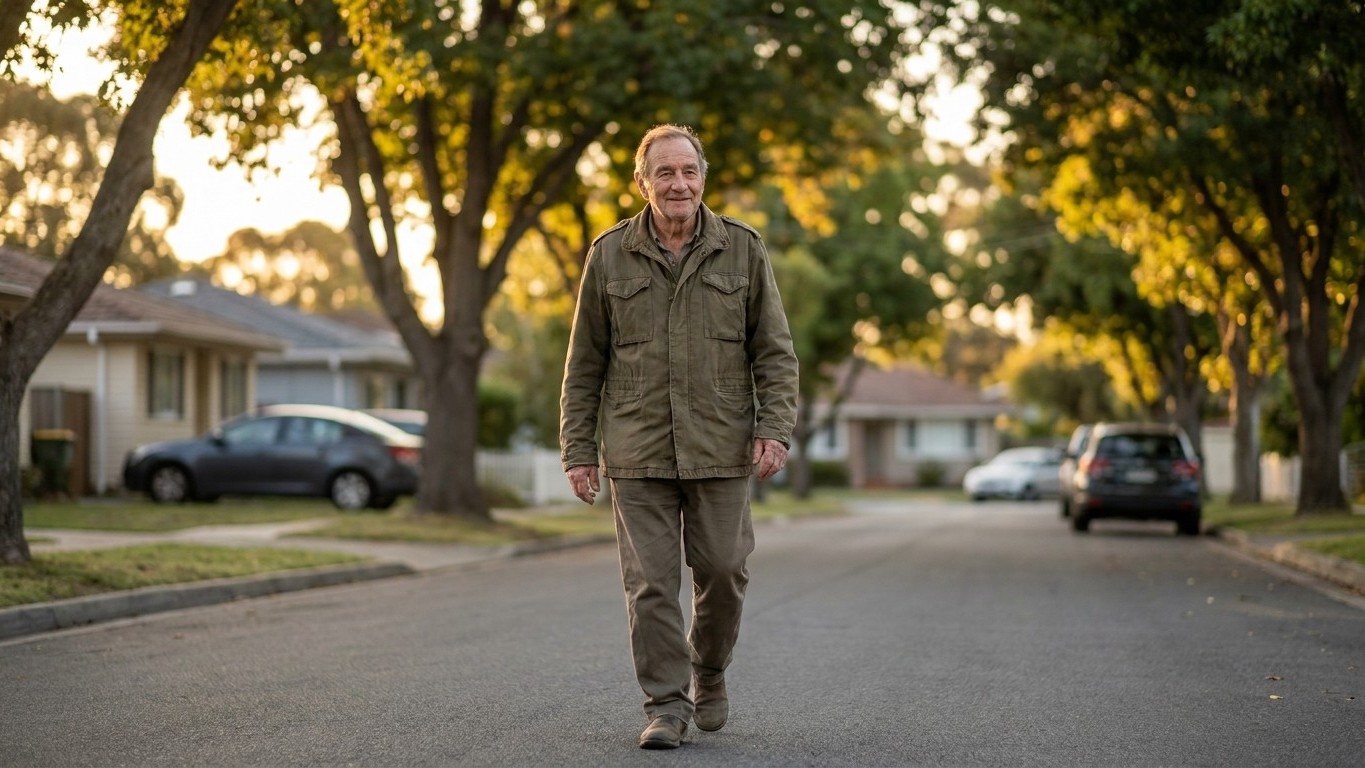
Every evening, rain or shine, my father pushed back his chair, patted his stomach and announced he was “off round the block.” For years I teased him mercilessly, convinced this ten-minute post-dinner shuffle was just an old man’s quirk, a habit from a slower era. It took a physiology degree and a stack of recent research papers for me to admit, quietly, that he’d been onto something the entire time.
The science on this is no longer a matter of folklore or family tradition. It’s measurable, repeatable and increasingly precise about timing.
Key takeaways
- A seemingly old-fashioned habit holds surprising power over your blood sugar and metabolism
- Timing matters more than you’d think—and a 10-minute walk beats longer alternatives in one unexpected way
- The digestive benefits nobody talks about might be just as important as the glucose control
The blood sugar spike nobody told him about
What my father was doing, without knowing a single word of the terminology, was managing his postprandial glucose response. After any meal, blood sugar rises as carbohydrates break down into glucose and flood the bloodstream, and blood sugar levels naturally rise as your body breaks down food into energy, with walking helping muscles absorb glucose from the bloodstream to prevent spikes and crashes. This Matters More Than it sounds, because elevated postprandial glucose and large glycemic excursions have been identified as better predictors of cardiometabolic disorders than fasting hyperglycemia, with exaggerated blood glucose spikes linked to higher oxidative stress, endothelial dysfunction and cardiovascular risk.
A 2025 randomised crossover trial gave the sceptics in my family (namely, me) little room to argue. Researchers found that a 10-minute walk immediately after glucose intake significantly blunted post-meal blood glucose spikes, and both a 10-minute walk right after eating and a longer 30-minute walk improved blood sugar control compared with resting, though the immediate 10-minute walk was uniquely effective at reducing peak glucose spikes. Tellingly, participants walked at a self-chosen, gentle pace averaging around 3.8 km/h, roughly the speed of someone strolling to fetch the newspaper, not marching for a personal best.
An earlier and often-cited 2016 study in people with type 2 diabetes pushed the timing argument further. The post-meal walking group showed a 22% reduction in average blood sugar and a 12% reduction in post-dinner blood sugar compared with a single daily walk group, even though total walking time was identical at 30 minutes per day, with the difference entirely down to timing. the same steps taken at the wrong moment simply don’t do the same job. There’s also a mechanical reason evening walks appear to matter most: postprandial walking appeared more effective at controlling glycaemic impact after evening meals compared with premeal exercise or no exercise at all, which happens to be exactly the slot my father always chose.
Why he called it “settling his dinner”
The digestive side of his ritual has its own evidence base, and it’s rather less glamorous than glucose curves but no less real. Walking promotes gastrointestinal motility, the process by which food, fluids and waste move through the digestive tract, encouraging the muscles to contract and relax and push food forward, which is a simple way to alleviate bloating and prevent constipation. A small trial specifically aimed at people prone to bloating backed this up: walking for 10 to 15 minutes after each meal for four weeks helped reduce gastrointestinal symptoms like excess gas, abdominal bloating and burping.
There’s a knock-on effect at bedtime too, one My father never mentioned but almost certainly benefited from. Post-dinner walks that stimulate digestion can improve sleep quality by decreasing the odds of heartburn and preventing GI distress that might otherwise keep you up at night. Given that evening meals tend to be our largest, the timing lines up neatly with the advice from gastroenterologists: if you can only manage one postmeal walk a day, take it after your biggest meal, since most people eat their largest meal in the evening, and a post-dinner walk can help relieve fullness and bloating as well as prevent digestion-related sleep disruptions.
How long, how fast, and what actually counts
None of this requires trainers, a step-counting app or a change of clothes. To get the digestive benefits, there’s no need to rush; aim for a conversational pace and resist turning the outing into a workout. On duration, the research is refreshingly forgiving: short walking breaks of just 2 to 5 minutes every 30 minutes were nearly as effective as a continuous 15-minute walk for controlling blood sugar. If you genuinely can’t manage a full stroll, that’s not a reason to skip it entirely, because research shows that 10 to 15 minutes of leisurely walking has positive benefits, but if five minutes is all you have, that time still counts.
Timing has some flexibility built in as well, which is reassuring on evenings when the washing-up simply cannot wait. A 2022 meta-analysis suggests that as long as you walk within 60 to 90 minutes of eating, you’ll still reap the blood sugar-lowering benefits, even if heading out the door immediately, dishes soaking in the sink, appears to give the sharpest reduction in glucose spikes.
My father, it turns out, wasn’t performing some quaint ritual left over from his own upbringing in a household without television. He was doing something that modern glucose monitors and gut-brain research are only now able to explain in mechanistic detail. There’s one detail I didn’t expect to find in the research, though: one exercise scientist has pointed out that people in Italy have been walking after meals for centuries, long before anyone had a name for postprandial glycaemic control. My father wasn’t inventing anything. He was simply part of a habit that outlasted the science needed to justify it, and I owe him an apology for every raised eyebrow. As with any change to activity or diet, it’s worth checking with your GP first if you have existing health conditions, but for most of us, a short walk after dinner is about as low-risk and evidence-backed as habits get.
Sources : ncbi.nlm.nih.gov | ncbi.nlm.nih.gov