
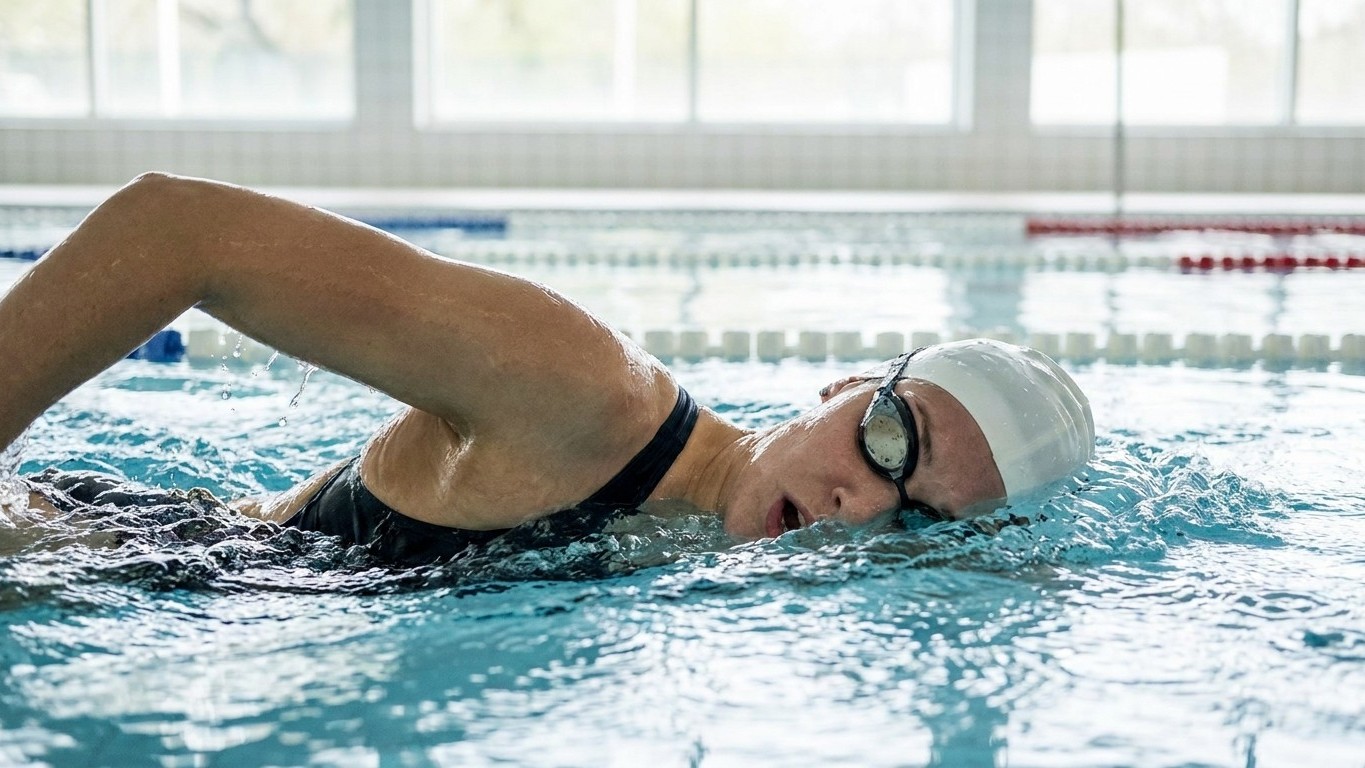
Ten minutes into a swim, my arms would turn to lead and my lungs would burn like I’d sprinted a mile. I put it down to poor fitness for three years, pushing through gasping breaths and blaming my lack of natural talent for the water. Then a coach at my local pool stood at the end of my lane, watched two lengths, and said something that changed everything: I was lifting my head far too high every time I breathed, and I wasn’t exhaling underwater at all. Two mistakes, working together, quietly doubling how hard my body had to work.
Key takeaways
- A single habit was silently sabotaging every breath and destroying body position
- The fix came down to two overlooked techniques most swimmers never master
- Six weeks later, the same distance felt effortless instead of impossible
The head lift that was sinking my hips
Here’s what was actually happening. Every time I turned to breathe, I craned my head up and forward instead of rotating it to the side. That single habit was wrecking my body position from head to toe. Lifting the head too high out of the water when breathing can cause the hips to sink and create more drag in the water, slowing swimmers down. It’s a seesaw effect: raise the front, sink the back.
The physics is more significant than most swimmers realise. If your head is up too high, your hips drop, creating drag, and that 4-5.2% reduction in drag from correcting head position can help you save energy at the same speed. That might sound modest until you’re forty lengths in and your legs are dragging behind you like an anchor. A high head lifts the chest and sinks the hips, and when hips sink, drag skyrockets. I wasn’t swimming through water so much as ploughing a furrow through it.
My coach’s fix was almost absurdly simple. He told me to focus on keeping one goggle in the water while turning my head to the side to take a quick breath, before returning to a neutral position in line with my body. No lifting, no looking forward, just a smooth roll. The most important part of breathing in freestyle is keeping a neutral head position, because moving the head forward or up ruins body position and wastes energy. I’d been treating breathing as an emergency manoeuvre rather than part of the stroke’s natural rhythm.
The breath I never fully let go
The second problem was sneakier, and honestly, I didn’t believe it at first. I thought I was breathing normally between strokes. What I was actually doing was holding my breath underwater and only exhaling in the split second my mouth cleared the surface. Many swimmers mistakenly believe holding the breath conserves energy, but it can lead to oxygen deprivation, and consistent exhalation through the nose or mouth while the face is underwater is the fix. Instead of a steady release, I was forcing two lungfuls of stale air out in a rushed gasp, then trying to inhale before my head had even cleared properly.
A final, forceful exhalation that clears the lungs of air just before breathing in creates a vacuum, so when you turn your head and open your mouth, air rushes in without needing to consciously inhale. I’d never done that. My exhale was shallow, and by the time I turned to breathe, I was scrambling for air that should have arrived effortlessly. Picking the head up to breathe or rotating too much sends the neck out of alignment with the spine and core, and swimmers who don’t breathe effectively often think they’re rotating their shoulders when in reality they’re rotating their neck, which is inefficient and can lead to injury. No wonder my shoulders ached the next day too.
What surprised me most was learning how much this compounds. Rushed breathing creates tension, tension wastes oxygen, and a starved, tense stroke breaks down further with every length. Struggling for air tenses the shoulders, neck, and jaw, increasing energy use, whereas training relaxed breathing under moderate fatigue keeps tension low and sustains longer sets. I’d built a vicious cycle without realising it, gasping my way through a workout that should have felt sustainable.
Two small drills that rebuilt my stroke
My coach didn’t overhaul my technique overnight. He gave me two drills and told me to be patient with them.
- The bubble drill. Exhale bubbles underwater continuously, ensuring a steady air release, rather than holding it all in until the last second.
- The one-goggle drill. Swim freestyle while keeping one goggle lens submerged, which forces proper head positioning during breaths.
- Bilateral breathing practice. Practice drills emphasising bilateral breathing and balance in the water help maintain proper rotation while swimming freestyle.
I felt faintly ridiculous doing them in the slow lane, blowing bubbles like a child in a bathtub. But within a fortnight, something shifted. My hips felt higher in the water. My kick, which had always felt like it was fighting gravity, started to feel like it was simply following my body along rather than propping it up.
What twenty minutes now feels like
The transformation wasn’t dramatic in the way I’d hoped for. It didn’t happen in a single session. But within about six weeks, ten minutes stopped being my ceiling. I could do twenty, then thirty, without that same crushing fatigue creeping into my shoulders. Maintaining a great body position is the most important skill for swimming freestyle fast, and doing so greatly reduces the amount of energy it takes to go forward, leading to more speed and endurance. I hadn’t got fitter in those six weeks, not really. I’d simply stopped fighting the water with every single stroke.
If you recognise yourself in any of this, the advice I’d pass on isn’t to swim harder or more often. Ask someone with a trained eye, whether that’s a coach or a friend filming you from the poolside, to watch your head position and your exhale for two lengths. Underwater video analysis reveals posture issues you might not feel yourself, and coach feedback from a trained eye can spot subtle alignment problems and help correct them quickly. It’s rarely your fitness that’s failing you. It’s usually one small habit, repeated a thousand times a session, quietly doubling the work your body has to do.
Sources : intotheswim.com | vasatrainer.com