
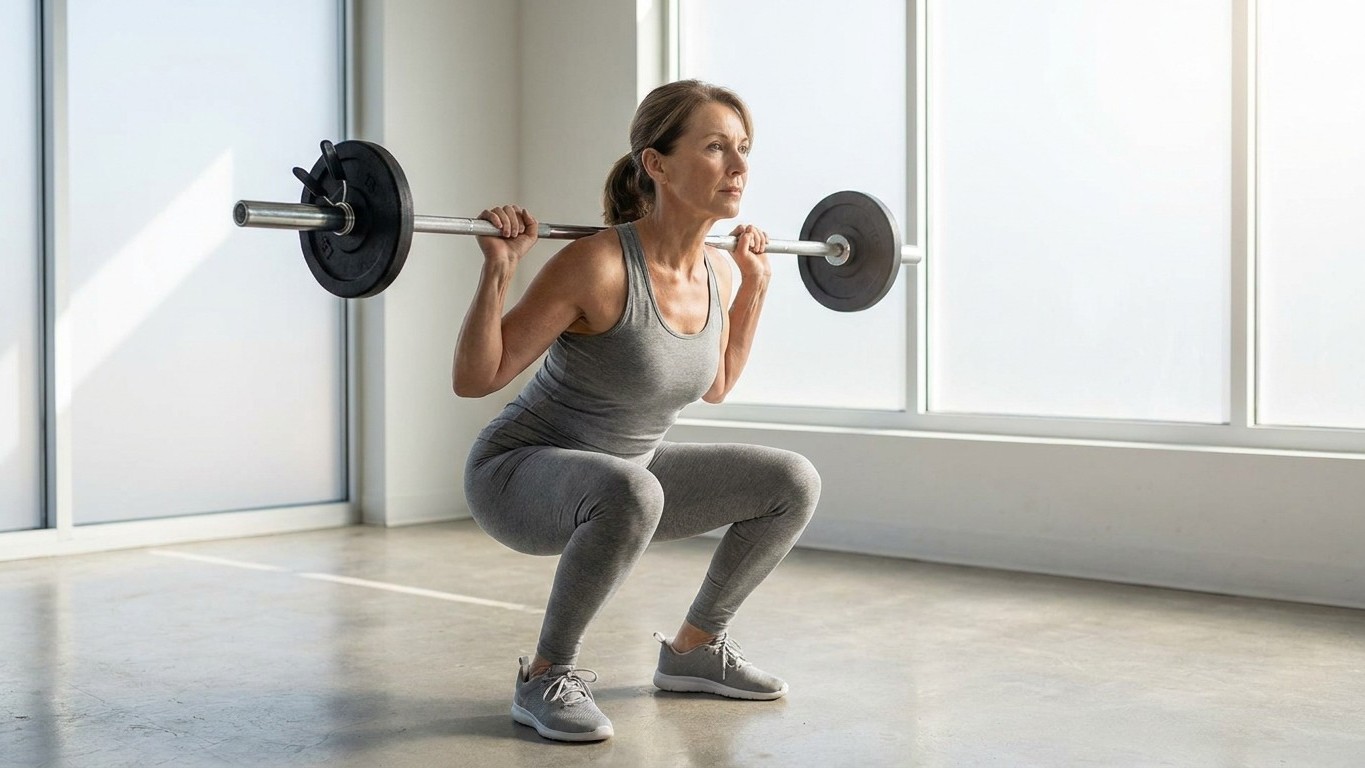
The scan told a story eight months of daily walking simply couldn’t write: while a first-person walker’s bone density had barely budged, women doing structured Resistance training twice a week over that same period had actually reversed their bone loss. This isn’t anecdote dressed up as science. It’s exactly what researchers found when they compared bone-loading exercise types in postmenopausal women, and the gap between the two approaches is bigger than most walkers realise.
The most compelling evidence comes from the LIFTMOR trial, an Australian randomised controlled study that has become something of a reference point in bone health research. Postmenopausal women with low bone mass were randomised to either 8 months of twice-weekly, 30-minute, supervised high-intensity resistance and impact training or a home-based, low-intensity exercise programme. The results, published in the Journal of Bone and Mineral Research, were striking. The resistance and impact training group showed lumbar spine bone density gains of 2.9% compared with a loss of 1.2% in the control group, and femoral neck bone density improved by 0.3% versus a decline of 1.9% in controls. That’s roughly a four percentage point swing at the spine between the two groups, achieved in less time than most people spend deciding whether to renew their gym membership.
Compliance wasn’t a barrier either. Compliance was high, at 92% for the resistance training group, with only one minor adverse event reported across the entire trial. That matters, because a persistent myth around lifting for older women is that it’s risky. The data simply doesn’t support that fear.
Key takeaways
- One woman’s eight-month daily walking routine barely moved her bone density needle
- Women lifting twice weekly gained what the daily walker lost—and reversed years of decline
- The mechanical difference between impact loading and repetitive low-force movement explains everything
Why walking alone struggles to shift the needle
Walking isn’t useless for bone health, but it operates on a fundamentally different mechanical principle than most people assume. Bone responds to mechanical strain, and specifically to the rate and magnitude of that strain, not to how many hours you spend moving. A meta-analysis examining running, a higher-impact activity than walking, found modest results at best: a meta-analysis of 22 randomised controlled trials found that running produced mean spine bone density increases of 1.68% in postmenopausal women, with the hip response being smaller and not consistently significant across trials. If running only manages that, ordinary walking, with its far gentler ground reaction forces, has an even steeper hill to climb.
Some cross-sectional research does show a step-count relationship worth mentioning for balance. One study of over a thousand older Chinese women found that participants who walked at least 10,000 steps a day showed better bone health than those who walked fewer than 6,000 steps a day. But this was observational data using heel ultrasound, not a controlled trial measuring change over time with DEXA, and it tells us more walking beats a sedentary lifestyle rather than that walking rivals resistance training. Context matters here, and it’s easy to see how a hopeful walker might misread “more steps helps” as “steps alone are sufficient.”
The mechanical explanation is fairly intuitive once you hear it. During resistance training, a heavy, controlled load passes through the skeleton, and that load, particularly when combined with impact elements like jumping or landing, triggers what researchers call an osteogenic response. Broader network meta-analyses reinforce this: high-speed resistance training twice or more per week produces the greatest skeletal benefits, and during resistance exercise a large mechanical load is applied to the bone, stimulating and promoting the osteogenic response. Walking, by contrast, applies a relatively low, repetitive force. It’s fantastic for cardiovascular fitness, mood, and joint mobility, but it simply doesn’t ask enough of the skeleton to trigger meaningful rebuilding in most people.
How often is enough, and what should the sessions look like
Twice a week appears to be something of a floor rather than a ceiling. A 2025 systematic review and network meta-analysis in Scientific Reports concluded that moderate intensity resistance training for three days a week can be preferred clinically to improve bone mineral density in postmenopausal women, and it is recommended that the duration of the same training should not exceed one year. That said, other trials found real benefit from lower frequencies too. A sixteen-week study comparing training frequencies concluded that postmenopausal women should be encouraged to do aerobic exercise such as walking plus resistance training at least once weekly to prevent osteoporosis. The practical takeaway: something is better than nothing, twice weekly is a solid working target backed by the strongest single trial we have, and three sessions may edge ahead if you can manage it.
The type of loading matters too. Findings consistently point toward compound, weight-bearing movements, squats, deadlifts, step-ups, rather than isolated machine work, ideally progressed over time so the skeleton keeps encountering a slightly heavier or more forceful stimulus. Impact elements like gentle jumping or hopping, where medically appropriate, appear to add further benefit alongside the lifting itself, which is precisely the combination the LIFTMOR protocol used.
Bringing both together, sensibly
None of this means lacing up for a daily walk was wasted effort. Walking supports cardiovascular health, mental wellbeing, and general mobility in ways resistance training doesn’t fully replicate, and the two are not in competition. The sensible approach, and the one most exercise physiologists now recommend, is layering: keep the daily walks for heart health and headspace, then add two structured resistance sessions a week specifically targeting the muscles that pull on bone, hips, spine, and thighs particularly. If you have osteopenia or osteoporosis, or you’re unsure which movements are appropriate for your bone density, a chat with your GP or a physiotherapist experienced in bone health before starting a lifting programme is worth the twenty minutes it takes.
One detail worth remembering from the LIFTMOR data: the resistance training group also grew slightly taller over the eight months, by roughly two millimetres on average, while the control group shrank slightly. It’s a small measurement, but it’s a rather neat physical reminder that what’s happening inside the spine during lifting isn’t subtle. It’s structural.
Sources : onlinelibrary.wiley.com | academic.oup.com