
A retired diabetes specialist nurse, scrolling through a set of routine blood results at a family barbecue in mid-August, apparently didn’t blink at the cholesterol figures or the liver panel. What stopped her was a single ratio buried near the bottom of the page, the kind most parents skim past because it doesn’t come with a big red “abnormal” flag. Her advice was blunt: get the boy lifting weights, and don’t wait until September.
That story has been doing the rounds this summer, and it touches on something GPs and paediatric endocrinologists have been watching with growing unease. The marker in question is almost certainly linked to insulin resistance, a condition that can creep up on a lean, sporty-looking 14-year-old years before fasting glucose or HbA1c ever wobble out of range.
Key takeaways
- One obscure number on routine blood tests worries specialists far more than glucose—and most parents miss it entirely
- Insulin resistance is climbing steeply in teenagers who look perfectly healthy, but muscle tissue can reverse it
- A structured 12-week lifting program shows measurable shifts in how cells absorb glucose—faster than diet alone
The number that worries specialists more than glucose
Insulin resistance is defined by reduced sensitivity to insulin, forcing the pancreas to pump out more of it just to keep blood sugar level. Insulin resistance in adolescents is characterized by a reduced insulin sensitivity, followed by compensatory hyperinsulinemia in order to maintain an euglycemic state. That compensation is exactly why standard glucose readings can look reassuringly normal while the underlying picture is anything but. Clinicians increasingly lean on cheaper proxy markers instead, and one of the most widely used is the triglyceride/high-density lipoprotein (TG/HDL) ratio, precisely the kind of unglamorous figure a diabetes nurse would know to hunt for on a routine panel.
This isn’t a rare fluke confined to one teenager’s paperwork. Large US survey data tracking non-diabetic adolescents found that the estimated prevalence of hyperinsulinemia and HOMA-IR increased significantly from 15.2% and 14.0% in 1999–2000 to 21.5% and 20.4% in 2017–2020, a steady climb across two decades in kids who technically had no diabetes diagnosis whatsoever. Puberty itself adds a layer of complication, since hormonal shifts temporarily reduce insulin sensitivity in most teenagers, which is exactly why a specialist eye matters when deciding whether a number is developmental noise or an early warning.
Muscle: the body’s biggest glucose sponge
The advice to start lifting isn’t a vague gesture towards “getting fit”. It’s rooted in basic physiology. Skeletal muscle is the major site of glucose disposal during hyperinsulinemic–euglycemic conditions, and muscular strength is an independent correlate of insulin sensitivity, consistent with findings that muscular strength independently predicts HOMA-IR in youth. More usable muscle essentially means more storage space for the sugar circulating after a meal, taking pressure off the pancreas.
Mechanistic work backs this up at a cellular level. In a trial of previously sedentary young men in their early twenties, twelve weeks of resistance training produced measurable shifts in the machinery cells use to soak up glucose. Compared with the 27% increase in muscle insulin sensitivity index, resistance training also resulted in median percent increases in hexokinase 2 (28%), GLUT4 (26%), and AKT2 (33%). Those proteins are the actual doors and enzymes that let glucose into the cell, and lifting weights appears to prise more of them open.
Why the weights rack beats the diet chart for a teenager
Here’s where honesty matters more than hype. A systematic review focused specifically on obese adolescents found resistance training genuinely improved several things: muscle strength, cardiorespiratory fitness, BMI, waist circumference and body fat. But insulin sensitivity itself, measured directly, did not reveal any changes across the pooled studies. That’s not a reason to skip the gym. It’s a reason to see resistance training as one lever among several, working alongside diet and overall activity rather than as a standalone cure. The same review noted that 2 to 3 sessions a week of roughly 60 minutes, sustained for 12 weeks, produced the most consistent positive changes, which gives a rough template for what “starting this week” should actually look like in practice.
Sensible caution around bones and joints applies too, though the fears many parents carry are mostly outdated. Reputable paediatric strength programmes now stress technique over load, not the other way round. Children and adolescents should avoid competitive weightlifting, powerlifting, bodybuilding, and maximal lifts until they reach skeletal maturity, but that leaves plenty of room for structured, supervised training that builds real strength without chasing personal bests.
Starting this week, safely
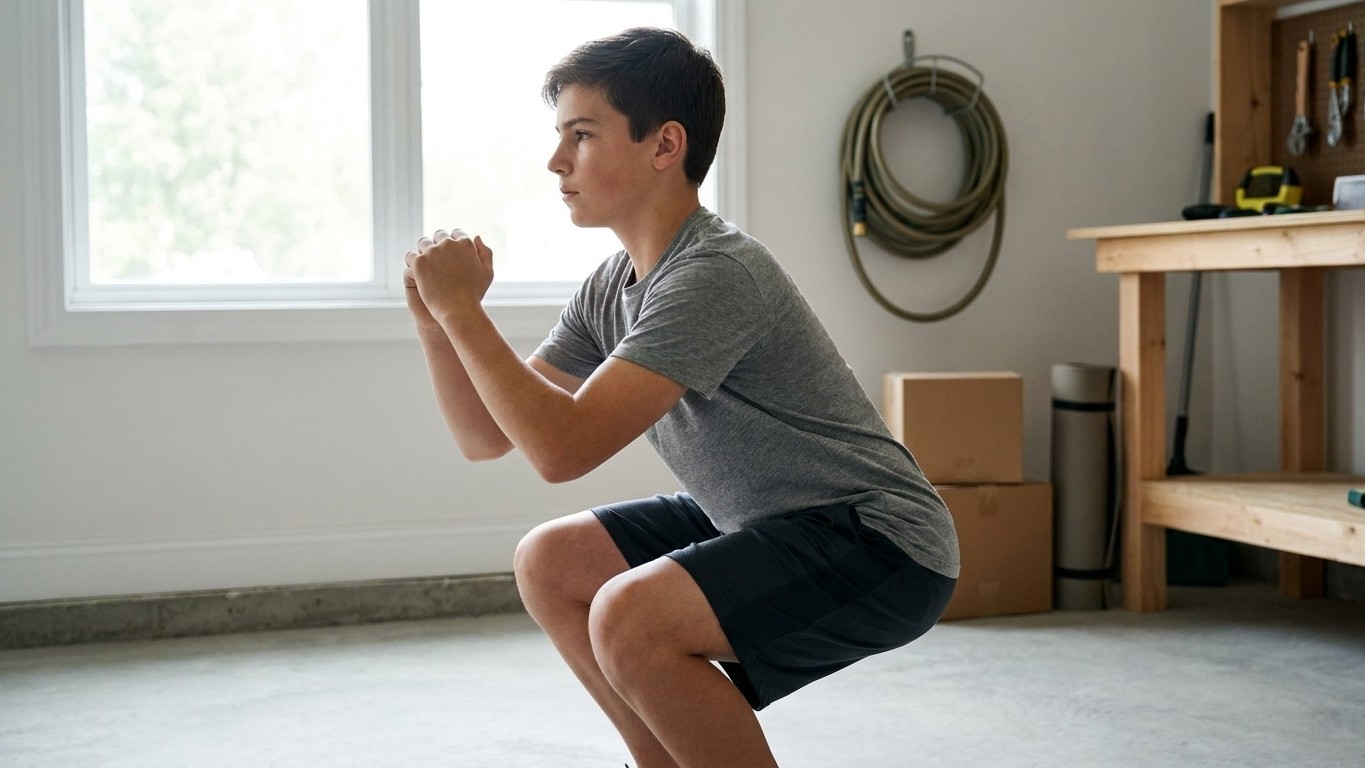
For a 14-year-old with no strength training background, the sensible entry point isn’t a barbell. Kids can start with body weight exercises such as sit-ups, push-ups, and squats and work on technique without using weights, moving on to light free weights or resistance bands once form is solid. A workable starting structure looks like this:
- Two or three sessions a week, never on consecutive days for the same muscle groups
- One or two sets of 8 to 12 repetitions covering the major muscle groups of the upper and lower body and core
- A proper warm-up and cool-down either side of every session
This sits comfortably alongside existing UK activity recommendations rather than replacing them. The UK Physical Activity Guidelines state that children and young people aged 5 to 18 should be physically active for at least 60 minutes every day, and strength sessions can simply be folded into that daily total a few times a week rather than treated as an extra chore bolted on top.
None of this replaces a conversation with your own GP, particularly if a blood test has already flagged something worth investigating properly. But if there’s one figure worth taking from all this, it’s how quickly the body responds once muscles start working harder. Research on youth strength programmes has found that children can improve strength by 30% to 50% after just 8 to 12 weeks of a well-designed strength training program, which means a nervous parent watching their teenager grumble through squats in the garage this week could plausibly see the numbers shift before the next school term even settles in.
Sources : journals.physiology.org | ncbi.nlm.nih.gov