
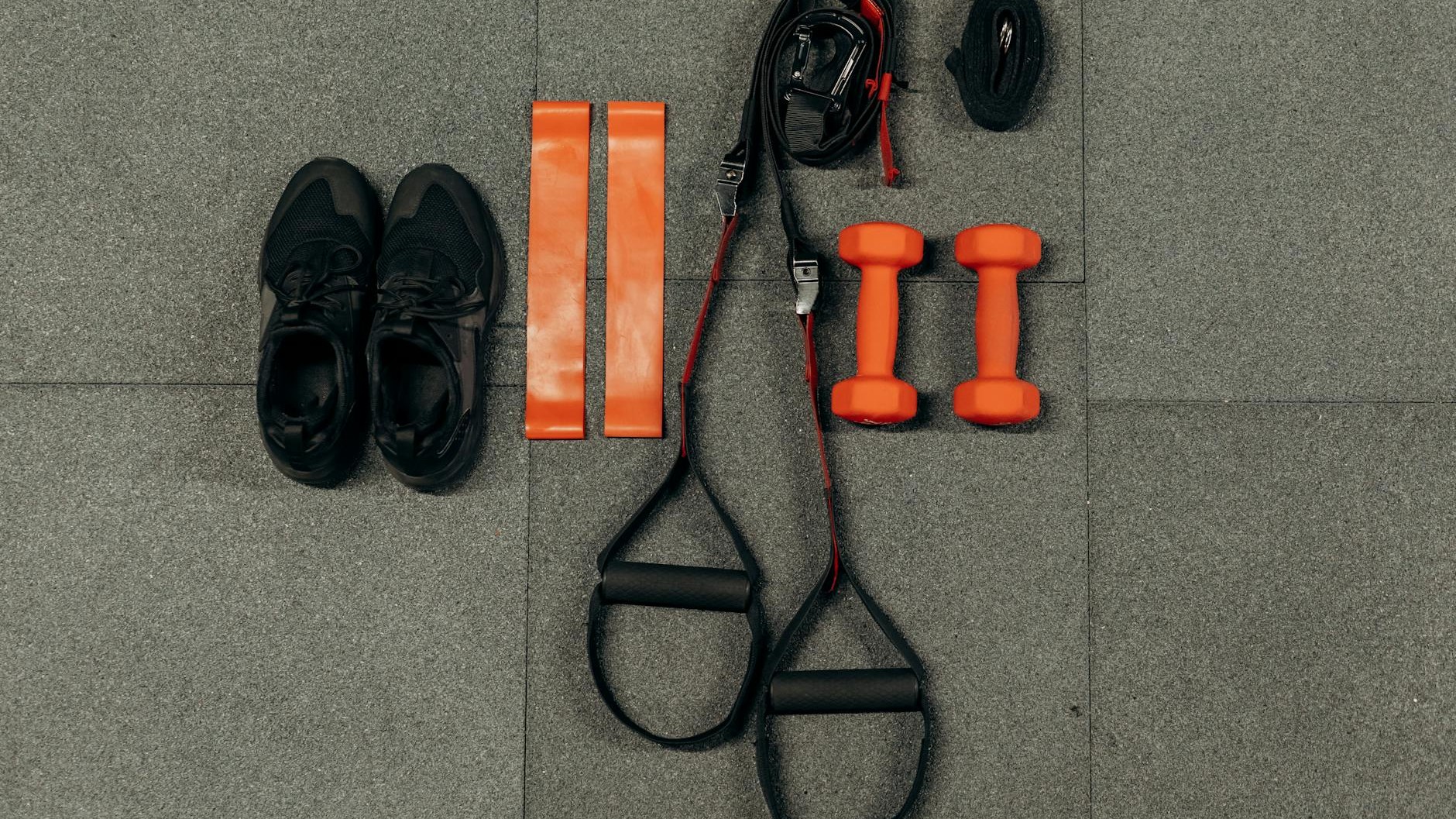
The snap happened on a Tuesday afternoon. One moment the band was taut, the next it had recoiled like a whip straight into my forearm, leaving a welt that lasted three days. The door anchor had held fine, as it turned out. The band itself had simply given way after months of being looped, stretched, and stored without much thought. If you use resistance bands regularly, this scenario is closer than you might think.
Key takeaways
- Resistance bands degrade invisibly over months of use—micro-tears accumulate faster than you’d think
- Door anchors create a dangerous weak point where the band bends, essentially acting as a slow-motion blade on the same rubber section
- Eye injuries from snapped bands are documented in medical literature, yet most users have no idea about the risk
Why bands fail, and when
Resistance bands are made from either natural latex or synthetic rubber (usually TPE, or thermoplastic elastomer), and both materials degrade over time in ways that aren’t always visible to the naked eye. Micro-tears accumulate with each stretch cycle. UV exposure accelerates the breakdown of the polymer chains. Even ozone in the air, in high enough concentrations near certain industrial areas, can cause surface cracking. The problem is that the warning signs are subtle: a slight discolouration, a faint chalky residue, a barely perceptible loss of elasticity. Most of us ignore them, or don’t know to look.
The position of maximum tension is where failure is most likely. For a band anchored at door height and pulled horizontally during a chest press or row, that point sits somewhere around the anchor itself or where the band bends sharply around any edge. If your door stopper anchor has a rough or squared interior, it’s essentially acting like a slow-motion blade on the same small section of rubber, every single session.
The door anchor problem nobody talks about
Door anchors are the most popular resistance band accessory sold, and also the most misused. The design is straightforward: a foam or nylon disc sits on one side of a closed door, with a loop or strap protruding on the other side. The assumption is that any standard door can handle the load. The reality is more complicated.
Hollow-core doors, which are extremely common in British homes and flats, are not designed to take repeated lateral forces. The anchor pulls against the edge of the door frame with every rep, and over time this can cause cosmetic damage to the door, wear to the hinge side, and instability in the anchor point itself. More pressing for your safety: if the door isn’t fully latched or the anchor slips, the band releases its stored elastic energy instantly. A heavily loaded band can travel at considerable speed. Eye injuries from snapped bands have been reported in clinical literature, which is why a handful of sports medicine practitioners recommend using protective eyewear during high-resistance band work, particularly near anchor points.
The height you choose matters too. Anchoring at the very top of a door places the maximum load on a narrow strip of the frame. Mid-door anchoring is generally more stable, but only if the door itself is solid and fully closed against a frame that fits properly. An old British terrace with settling walls and a door that doesn’t quite shut flush? That’s a different calculation entirely.
How to assess your set-up before something snaps
A few practical checks take less than two minutes and are worth doing before every session. Run your fingers along the full length of the band, feeling for any notching, stickiness, or surface roughness. Hold it up to the light and stretch it gently by hand, looking for lighter patches or areas where the colour becomes uneven, these indicate thinning. Check the anchor point specifically: if the band shows any creasing or flattening where it loops through the anchor, that section is under disproportionate stress.
Bands typically come with a resistance rating and a recommended replacement schedule, though the latter is rarely printed on packaging. As a general guide, bands used three to five times per week in moderate-load exercises tend to show meaningful degradation within six to twelve months, sooner if stored in direct sunlight or a warm car boot. Storing them loosely coiled in a cool, dry drawer, rather than hung under tension, extends their usable life considerably.
For the anchor itself, a wall-mounted anchor plate fixed into a stud is substantially more stable than any door-based solution. They’re widely available, cost little, and remove the door-edge stress point entirely. If wall mounting genuinely isn’t an option, wrapping the anchor strap with a short length of foam pipe insulation where it contacts any edge reduces the localised pressure on the band meaningfully.
After a snap: what to do
If a band does fail mid-exercise, the immediate priority is assessing the impact site. A snap to the face or eyes warrants prompt medical attention regardless of how minor it initially seems. Blunt trauma to the eye can cause damage that isn’t apparent for hours, and the NHS advises anyone who experiences sudden vision changes, pain, or light sensitivity following an eye injury to attend A&E rather than wait for a GP appointment.
For welt injuries to the arm or leg, standard first aid applies: cool the area with running water for at least ten minutes, and monitor for any signs of bruising, swelling, or reduced circulation. These injuries, while painful, are usually superficial. The more serious risk, consistently, is to the face.
One thing worth knowing: resistance band injuries are categorised as sports equipment injuries for insurance and NHS reporting purposes, which means they contribute to the data used to shape product safety guidance. Several manufacturers have tightened their quality control and band-thickness standards partly in response to incident data collected through this reporting system. Buying from a brand that carries CE or EN ISO certification, rather than unbranded stock on a marketplace site, gives you at least some assurance that the band has been tested against a defined failure standard, not just sold on the strength of a stock photograph.