
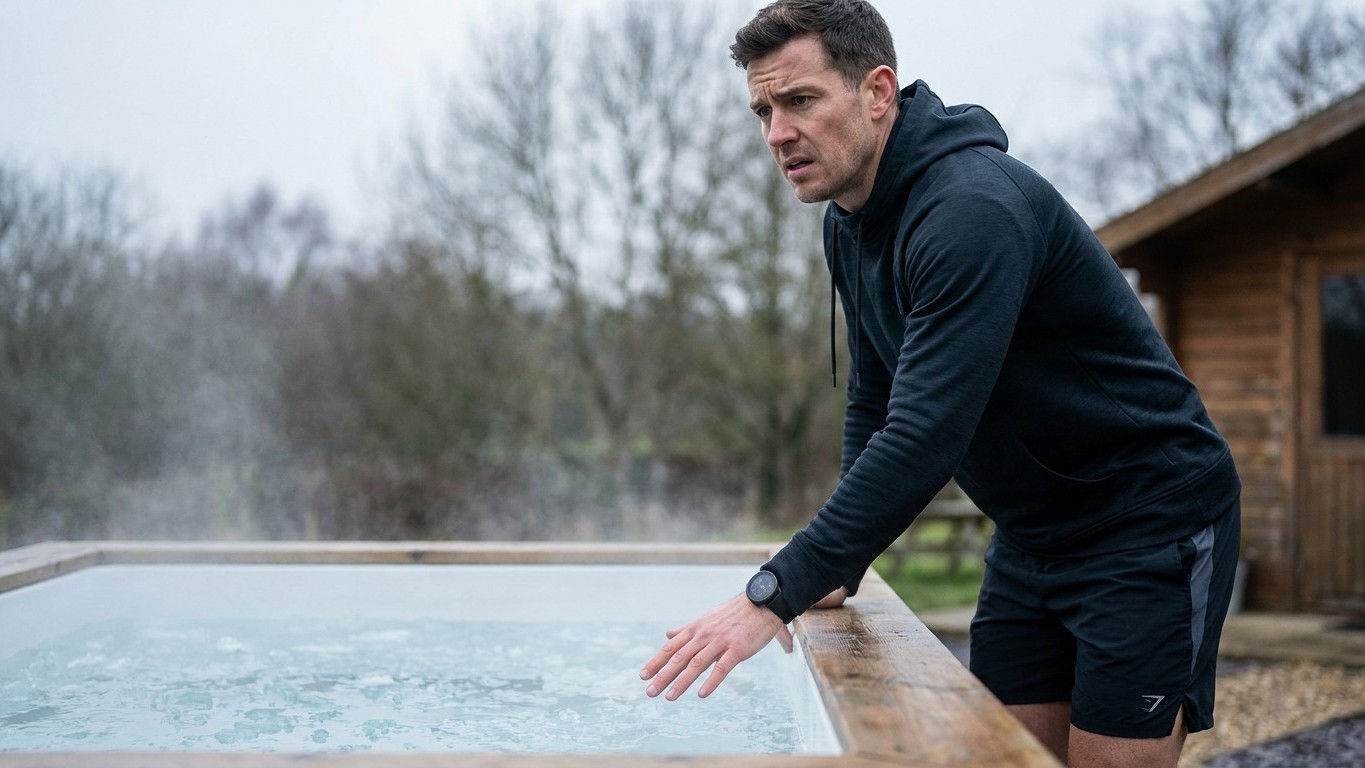
Cold water immersion after exercise has become one of those rituals that feels almost non-negotiable in serious training circles. Ice baths, cold plunge tubs, outdoor dips in January rivers, the practice has been enthusiastically adopted by recreational gym-goers and elite athletes alike. The logic seems sound: cold water reduces inflammation, eases soreness, accelerates recovery. But a growing body of research is complicating that picture considerably, and if building muscle is your primary goal, the evidence now suggests that post-workout cold plunges might be working against you.
Key takeaways
- The inflammation after lifting isn’t damage—it’s the signal that triggers muscle growth, and cold water is shutting it down
- Studies show consistent post-workout cold immersion reduced muscle gains and strength improvements in strength athletes
- Timing and context matter: cold plunges make sense for back-to-back competitions, not for typical 3-4x weekly gym sessions
The inflammation problem nobody warned you about
Here is the uncomfortable truth: the inflammation you experience after a hard strength session is not simply damage to be suppressed. It is a signal. When you lift weights, you create microscopic tears in muscle fibres, and the inflammatory response that follows is part of the repair cascade that makes those fibres rebuild thicker and stronger than before. Blunting that response too aggressively, too soon, may interfere with the very adaptation you are training for.
A study published in the Journal of Physiology found that cold water immersion after Resistance training reduced long-term gains in muscle mass and strength compared to active recovery. Participants who used cold plunges consistently over several weeks showed measurably lower increases in muscle fibre size and less improvement in leg press strength. The researchers identified reduced activity in key muscle-building pathways, including mTOR signalling, as a likely mechanism. This is not a minor footnote, mTOR is one of the central drivers of muscle protein synthesis, the process by which your body actually builds new muscle tissue.
The crux of the issue is timing and context. Acute inflammation after training is short-lived and purposeful. Your body is not malfunctioning; it is responding exactly as it should. Submerging yourself in cold water immediately afterwards sends a systemic signal to dampen that response before it has done its job.
What cold water actually does to your body post-exercise
Cold water immersion does produce real, measurable physiological effects, and some of them are genuinely useful. It causes vasoconstriction, narrowing blood vessels and reducing blood flow to peripheral tissues, which can limit swelling and metabolic waste accumulation. Core temperature drops, perceived exertion falls, and subjective soreness the following day is often reduced. For athletes competing in back-to-back events or training twice a day, that functional recovery benefit can be worth prioritising over long-term hypertrophy.
The problem is that many people are using cold plunges in a context where those trade-offs do not make sense. Someone training three or four times a week for muscle growth, with 48 hours or more between sessions, has ample time to recover naturally. In that scenario, the delayed onset muscle soreness is manageable, and the physiological inflammation is doing productive work. Reaching for the ice bath out of habit, or because it feels like dedication, may be counterproductive.
There is also the question of what cold does to satellite cells. These are the stem-cell-like precursors that fuse with damaged muscle fibres to repair and expand them. Some research suggests that cold immersion may reduce satellite cell activity in the hours after training, though the evidence here is less settled and the magnitude of the effect is still being studied. It is an area worth watching.
When cold plunges still make sense
Context, as always, Determines everything. Cold water immersion has a strong evidence base for reducing perceived fatigue and maintaining performance across repeated bouts of exercise. If you are a team sport athlete playing twice a week, a runner in a heavy training block, or preparing for a second session within 24 hours, the functional recovery benefits can legitimately outweigh the potential dampening of muscle protein synthesis. Your priority in those circumstances is being able to perform again quickly, not maximising hypertrophy from any single session.
Timing matters too. The research suggesting interference with muscle growth focuses primarily on immediate post-workout immersion, within 30 minutes to an hour of finishing training. Some coaches and researchers now suggest that if you want the perceived recovery benefits of cold water without as much potential downside, waiting several hours after training before immersing may reduce the conflict. The inflammatory signalling peak has largely passed by then, and the cold may still help with soreness management without as direct an interference in the adaptation process. This remains an area where guidance is evolving rather than settled, so treating it as a working hypothesis rather than a rule is wise.
Those using cold water for mental health reasons, stress regulation, or the mood-boosting effects associated with cold exposure have a completely different calculus. The psychological benefits are real and well-documented, and if a morning cold shower or plunge improves your mental state and consistency in training, that systemic benefit may outweigh the nuanced muscle-building concern, particularly if your sessions are in the afternoon.
A more strategic approach to recovery
Reconsidering the automatic post-lift ice bath does not mean abandoning recovery tools altogether. Sleep remains the most powerful recovery intervention available, consistently outperforming every other modality in the research on muscle repair, hormonal regulation, and performance. Adequate protein intake in the hours after training, particularly leucine-rich sources like dairy or meat, directly supports muscle protein synthesis. Gentle movement, walking, or low-intensity cycling can clear metabolic by-products without suppressing the inflammatory signal the way cold water does.
One nuance worth sitting with: the research on cold plunges and muscle growth has been conducted primarily in laboratory conditions with specific protocols. Real-world outcomes vary depending on individual physiology, training age, diet, and sleep quality. Someone who has been cold plunging for years and making consistent progress may not need to change anything. The concern is most relevant for those in the early-to-intermediate stages of training, where the adaptations from each session are most pronounced and most worth protecting. Beginners, somewhat counterintuitively, may have the most to lose from routine post-workout cold immersion precisely because they are in the phase where muscle-building signals are running strongest.
Always consult your GP or a qualified healthcare professional before making significant changes to your exercise or recovery routine, particularly if you have any cardiovascular or circulatory conditions.