
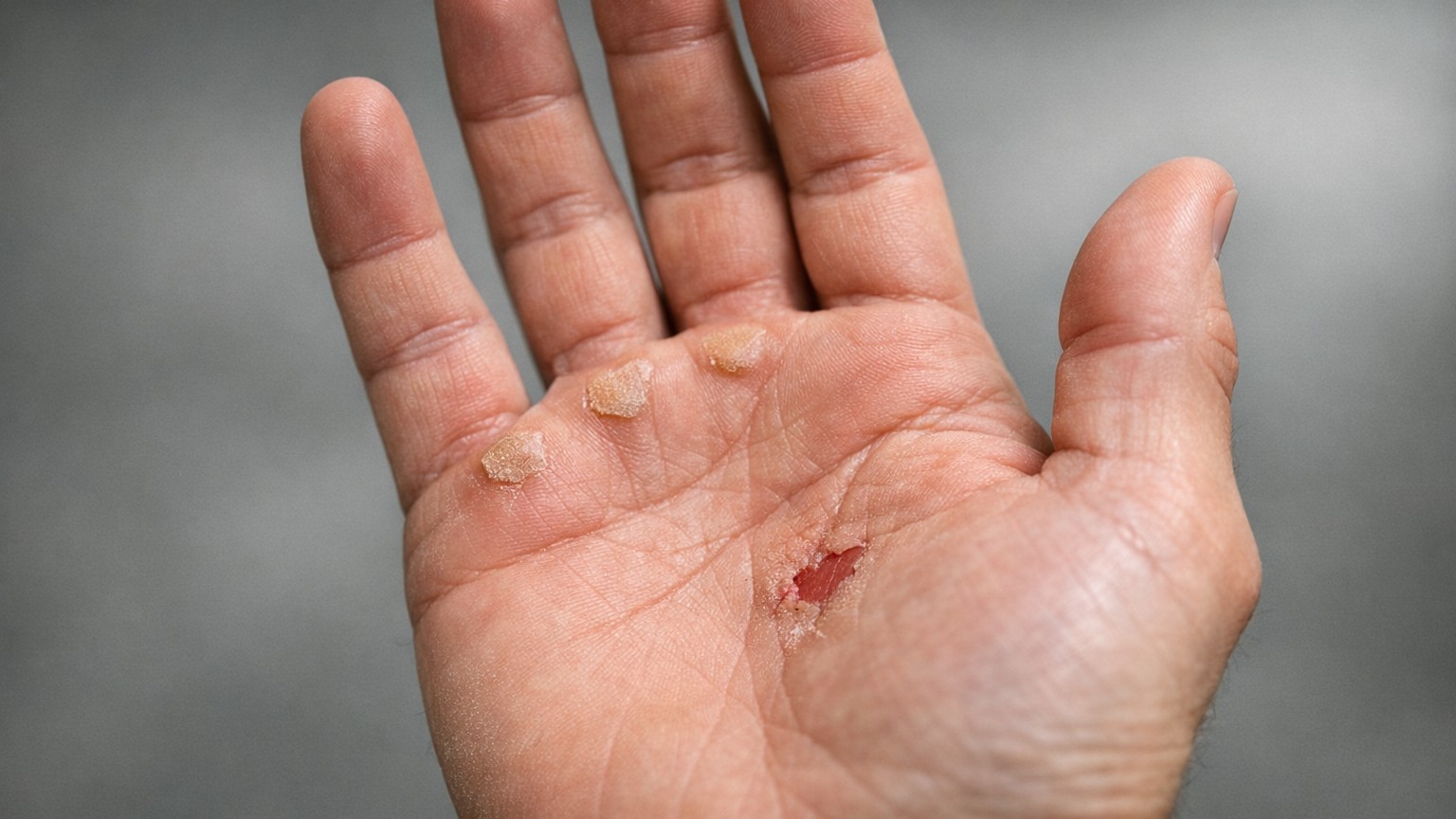
Chalk on your hands during pull-ups feels like doing things properly. It’s the gym shorthand for serious training, the white dust that signals you’re not just going through the motions. But for a significant number of regular climbers, gymnasts, and weightlifters, chalk is quietly contributing to the very skin damage it’s supposed to prevent. The mechanism is counterintuitive, and once you understand it, you can’t unsee it.
Key takeaways
- Chalk removes skin moisture, eliminating the natural ‘give’ that prevents friction damage
- Most gym-goers over-apply chalk, creating thick layers that concentrate pressure and cause tears
- Callus maintenance and post-workout moisturizing matter far more than most athletes realize
What chalk actually does to your grip (and your skin)
Magnesium carbonate, the compound sold as gym chalk, works by absorbing moisture from the surface of your skin. Dry skin creates more friction against the bar, which reduces slippage. In theory, this sounds like a straightforward win. The problem is that friction cuts both ways. Yes, your hand stays on the bar. But the bar also stays on your hand, and when you cycle through the pulling motion repeatedly, that static, high-friction contact acts like fine sandpaper across the same patch of skin every single rep.
Healthy, slightly moist skin has a degree of give. It moves fractionally with external forces rather than resisting them entirely. Chalk removes that compliance. The result, over a high-volume session, is what climbers call a “flappers” and weightlifters know simply as a tear: the outer layer of skin shears away from the softer tissue beneath. If you look at your palm mid-set during a chalk-heavy session, you’ll often see the skin is already puckering and whitening at the callus edges. That’s not a sign of a great workout. That’s delamination beginning.
There’s also the issue of over-application. A thin, even coat of chalk serves its purpose. What many gym-goers actually do is reapply between every set, building up thick layers that clump and create uneven contact surfaces. Thick chalk doesn’t behave like a smooth friction layer; it behaves like grit, concentrating pressure at certain points and making tears far more likely at the base of the fingers, where most pull-up tears occur.
The callus problem nobody talks about enough
Regular training builds calluses, and most athletes wear them as badges of honour. But calluses that grow too thick become a liability rather than a protection. Chalk dries them out further, making them brittle. Brittle calluses don’t flex under load; they crack or catch on the bar and rip. The skin loss people assume is inevitable with heavy pulling work is, in many cases, a maintenance problem compounded by excessive chalk use.
Keeping calluses filed down to a manageable thickness, using a pumice stone or a dedicated callus file after showering when the skin is softened, removes the raised edges that act as tear points. This isn’t softening your hands; it’s levelling them. The goal is a uniform, slightly thickened surface, not peaks and valleys that snag on the knurling.
Moisturising also matters, though the timing is everything. Applying a hand cream or balm immediately before training defeats the purpose of chalk entirely and creates a slip hazard. The window is post-training, once you’ve washed the chalk off. Skin that rehydrates overnight repairs faster, holds its structure better, and is less prone to the brittle cracking that leads to mid-session tears. Some athletes use a small amount of beeswax-based balm specifically formulated for hand care after climbing sessions; the principle transfers directly to bar work.
When chalk helps and when to set it down
Chalk earns its place in specific contexts. During maximum effort lifts, where grip failure genuinely limits performance and the set duration is short, the friction benefit outweighs the skin cost. Olympic weightlifters, powerlifters hitting near-maximal deadlifts, and gymnasts performing brief, explosive movements get clear value from it.
Pull-up sets of ten, fifteen, or twenty reps are a different situation entirely. The contact time is long, the repetitive motion is consistent, and the moisture management argument weakens because most people’s palms simply don’t sweat enough during a moderate-intensity set to justify the additional friction. In these cases, liquid chalk (which provides a thinner, more even coating than block chalk) or going without entirely often produces better skin outcomes without meaningfully affecting performance.
Gloves are a separate debate. Many coaches argue against them for bar work because they reduce proprioceptive feedback and can actually increase grip diameter, which stresses the fingers differently. The evidence on whether gloves prevent tears versus simply relocating the damage is mixed, and they’re worth treating with some scepticism as a default solution.
Giving your skin a chance to catch up
Skin repairs on a slower timeline than muscle. A bicep can recover from a hard session within 48 to 72 hours. Skin tears, depending on depth, can take a week to fully close and several more weeks to rebuild a protective layer. Training through a fresh tear with chalk is a reliable way to turn a minor setback into a recurring injury site.
Tape is a reasonable short-term bridge, but the technique matters. Wrapping tape too tightly across the finger joints restricts flexion and can create new pressure points. A single layer of athletic tape cut to cover just the torn area, without overlapping the joint creases, provides protection without interfering with movement.
One detail worth sitting with: the knurling pattern on your bar has a bigger influence on skin health than most people give it credit for. Aggressive, sharp knurling designed for deadlifts is noticeably more abrasive than the medium knurling typically used on pull-up bars. If you’re training in a gym where the pull-up bar is a repurposed barbell, the knurling may simply be wrong for the volume of contact work you’re doing, and no amount of chalk management will fully compensate for it.