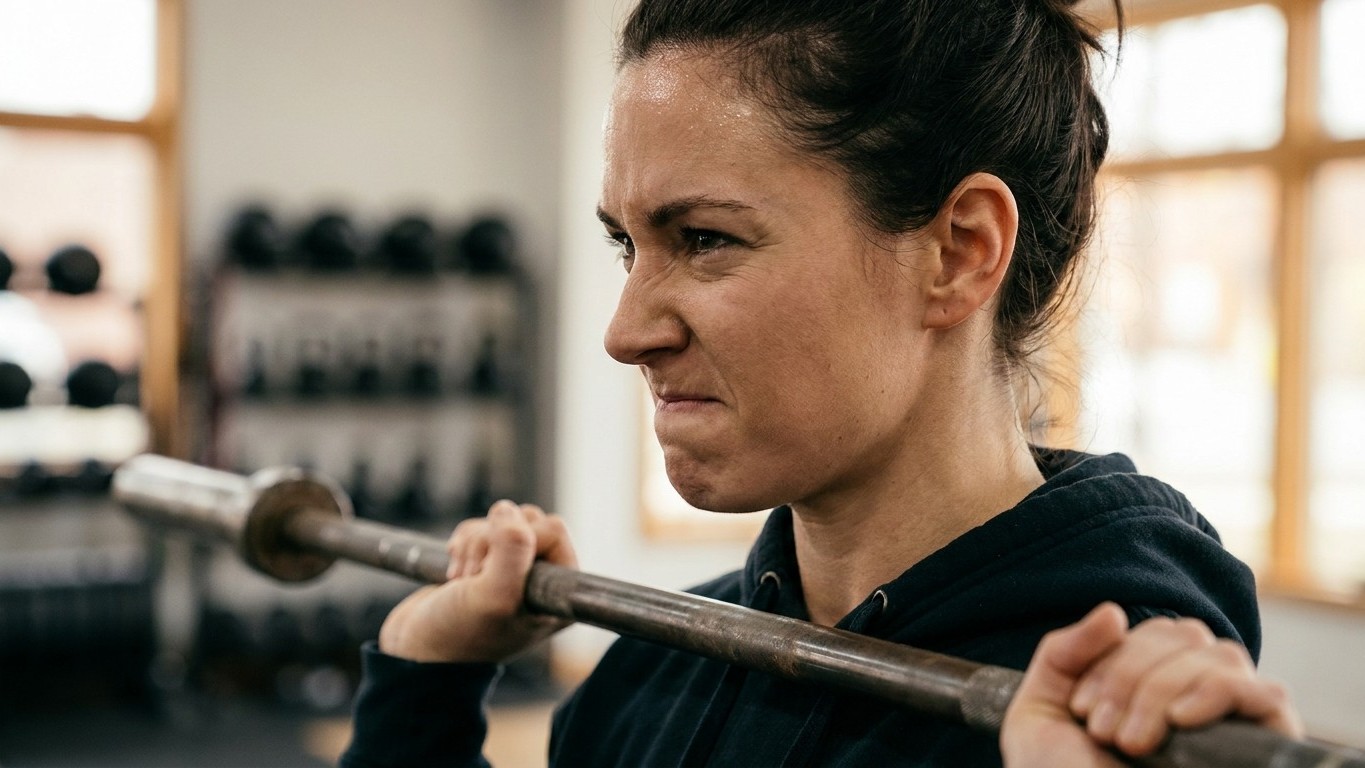
Six weeks. That’s the milestone most surgeons quote before you touch a barbell again after a corneal graft, and it’s exactly when I walked back into the gym, convinced I’d earned the right to lift something heavier than a kettle. I stuck to light sets, an empty bar, a few dumbbells, nothing that would raise an eyebrow at a physio clinic. Then I unracked the bar for a set of bench presses, held my breath the way I’d done a thousand times before surgery, and felt a pressure behind my eye that no discharge leaflet had ever warned me about.
Key takeaways
- A surgeon clears you for the gym at six weeks, but that doesn’t mean your eye is ready for what your body instinctively does under load
- The discharge papers mention avoiding heavy lifting, but they rarely name the mechanism that actually threatens your healing graft
- A single breathing technique—exhaling instead of holding your breath—changes everything about safe return to resistance training
What the discharge papers actually say (and what they leave out)
Standard post-operative advice after a corneal transplant is fairly consistent across UK and international eye units. Clinics typically advise that strenuous exercise and heavy lifting should be avoided for 6-8 weeks, with swimming often permitted a little sooner, usually after 4 weeks, but wear goggles. Bending and lifting come with their own separate warning, because heavy lifting can increase pressure in the eyes and hinder healing, and the same logic applies to anything involving straining, like moving furniture or picking up a toddler.
What those leaflets rarely spell out is the mechanism behind that pressure spike, and that’s the gap I fell into. The culprit has a name: the Valsalva manoeuvre, the technical term for holding your breath and bearing down against a closed airway, exactly what most of us do instinctively on a heavy lift. According to guidance from the American Academy of Ophthalmology, holding your breath can raise eye pressure and cause other health problems, and you should never hold your breath while lifting weights unless instructed by a qualified trainer. It’s not a footnote. It’s the single most relevant piece of physiology for anyone returning to resistance training after eye surgery, and it barely gets a mention in most patient handouts.
Why the bar felt different at six weeks
Six weeks sits right at the edge of most clearance windows, and that’s precisely why it felt deceptive. My eye had passed the point where clinics start allowing moderate-intensity workouts (running, Pilates, non-contact sports), yet full-intensity lifting was still meant to wait. One clinic’s guidance on cataract recovery, which shares the same pressure logic as corneal grafts, states plainly that the Valsalva maneuver raises intraocular pressure and should be avoided until your surgeon clears you for full-intensity lifting, usually at three to four weeks, sometimes longer for corneal cases given the more delicate graft-host junction.
The physiology behind that warning is not trivial. Straining against a closed glottis raises intrathoracic pressure, which transmits almost instantly to the venous system feeding the eye, and a temporarily healing cornea, still stitched or barely re-epithelialised, doesn’t tolerate that spike the way a healthy eye does. Research using elastic bands versus weight plates during squats has confirmed that effort level directly correlates with acute intraocular pressure changes during resistance exercise, even in healthy young men with no eye surgery history at all. If a maximal effort squat nudges pressure upward in an undamaged eye, the effect on a graft still knitting itself into place is a different order of concern altogether.
What surprised me wasn’t the warning itself, since I’d read it, skimmed past it, filed it under “obviously.” It was the physical sensation of a pressure change I could actually feel behind the eye mid-lift, a dull fullness that had nothing to do with muscular effort. That’s the part no leaflet prepares you for: the moment your body demonstrates the mechanism the paperwork only described in the abstract.
Getting back to training without repeating my mistake
The fix, thankfully, is not complicated, and it doesn’t mean abandoning the gym for two months. Breathing technique is the whole story here. Exhaling through the sticking point of a lift, rather than holding air and bearing down, avoids the pressure spike almost entirely, and it’s a habit worth building even after full clearance, since chronic Valsalva straining isn’t brilliant for eye health generally. Several eye clinics echo this exact substitution rather than a blanket ban on the gym itself, noting that patients should start with light weights and avoid holding your breath during lifts once cleared to resume.
Load selection matters more than exercise selection. Bodyweight movements, resistance bands, and lighter dumbbell work let you keep training frequency and muscle memory intact during the restricted window, without the loads that provoke real straining. Bending at the waist deserves its own mention too, since guidance consistently warns against dropping your head below your heart, because don’t bend or otherwise place your head below your waist during recovery, a rule that catches out deadlifts, rows, and even tying your own shoelaces more than people expect.
Timelines vary by graft type, suture pattern, and how your surgeon judges your individual healing, so the six-week figure I used is a general guide, not a personal prescription; anyone unsure where they stand should check with their own ophthalmology team before loading a bar again. What I’d add from experience is smaller and stranger: the discomfort I felt wasn’t pain in any conventional sense, it was closer to the ear-pressure you get on a descending flight, a signal so unfamiliar that I didn’t immediately connect it to my eye at all. That disconnect, I think, is exactly why it’s worth naming explicitly rather than trusting a generic “avoid heavy lifting” line to convey it.
Sources : ncbi.nlm.nih.gov | aao.org