
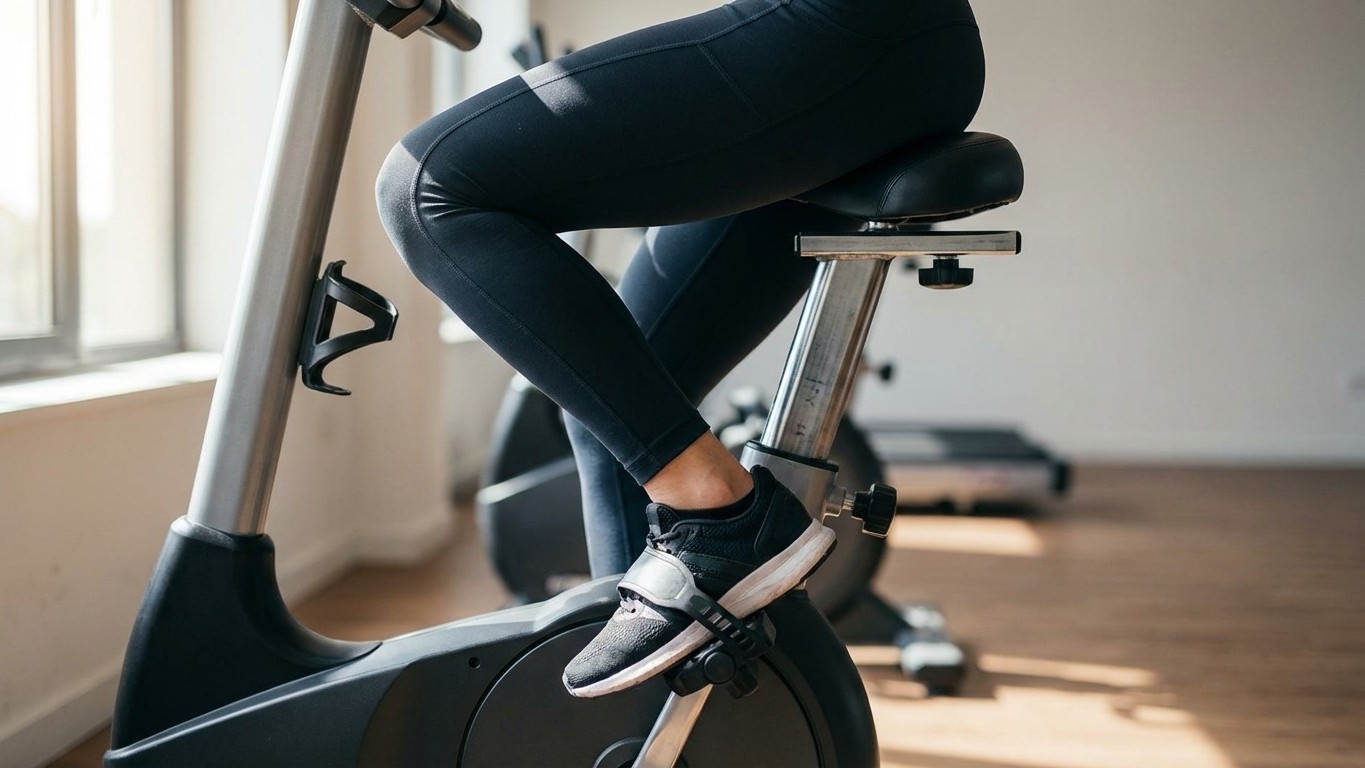
A poorly positioned exercise bike seat is one of those small mistakes that accumulates quietly, session after session, until your knees start sending unmistakeable signals. The discomfort is easy to dismiss at first, a bit of stiffness here, some aching there, but what feels like ordinary post-workout soreness can, over time, become a pattern that genuinely affects your joints. I spent years cycling on a seat set too low, convinced I was doing Everything right, before a physiotherapist pointed out a flaw so simple it felt almost embarrassing.
Key takeaways
- A biomechanical flaw so small it felt embarrassing once discovered—but it caused years of creeping knee damage
- The sweet spot exists, and it’s more specific than most people realize: between 25 and 35 degrees of knee flexion
- One practical test reveals if your setup is working with your body or quietly working against it
Why seat height matters far more than most people realise
The knee is a hinge joint doing complex work every time you pedal. When your seat is too low, your knee bends beyond the angle it can comfortably sustain under load, repeatedly, for the entire duration of your session. This places excessive compressive force on the patellofemoral joint (the area behind your kneecap), and over weeks or months, that repetitive strain can lead to inflammation and the kind of dull, nagging pain that lingers long after you’ve stepped off the bike.
Conversely, a seat positioned too high forces your hips to rock side to side with each pedal stroke to compensate for your overextended leg. This creates a different problem entirely: iliotibial band tension, lower back discomfort, and hip flexor strain. Your body is remarkably good at finding workarounds, but those workarounds come with a cost.
Research in sports biomechanics consistently links poor cycling setup to lower limb overuse injuries. A frequently cited guideline in cycling physiology suggests that the optimal knee flexion angle at the bottom of the pedal stroke sits between 25 and 35 degrees. That’s not zero extension (leg fully straight) and certainly not deep flexion. It’s a subtle but specific sweet spot most people never consciously seek out.
The simple test that changed my approach entirely
There’s a practical method for finding the right seat height that doesn’t require a goniometer or a professional bike fit (though the latter is genuinely worth the investment if you’re cycling seriously). Sit on the saddle and place your heel on the pedal at its lowest point, six o’clock position on the crank. Your leg should be fully straight, with no bend at the knee and no hip tilt. When you then switch to the ball of your foot on the pedal, which is where it Actually sits during proper cycling, that natural bend in the knee falls into the recommended range.
This heel-to-pedal method is widely taught in gym inductions, but astonishingly, many people either skip the setup entirely or adjust the seat based purely on what “feels” comfortable at rest. The problem is that what feels comfortable statically often differs from what’s biomechanically sound dynamically, once you’re actually moving and adding resistance.
Fore-aft position matters too, and this is the adjustment most people forget exists. Sitting too far back from the handlebars can increase anterior knee strain, while sitting too far forward shifts load onto the quadriceps in a way that amplifies kneecap compression. The standard check here involves placing the pedal at the three o’clock position (horizontal, forward stroke) and ensuring your kneecap sits directly above the pedal axle. A plumb line dropped from the front of the knee should bisect the ball of your foot.
Listening to what your knees are actually telling you
Pain behind the kneecap during or after cycling almost always points to a seat that’s too low. Pain on the outer side of the knee (that tight, almost burning sensation) is more often related to seat height being too high or a cleat alignment issue on a road or spin bike. Inner knee discomfort can suggest the seat is positioned too wide or that the foot position on the pedal is misaligned. None of these are diagnoses, your GP or a musculoskeletal physiotherapist should assess any persistent knee pain — but they’re useful signals that something in your setup deserves attention.
The timing of pain matters as well. Discomfort that kicks in about twenty minutes into a session and builds progressively is a classic indicator of a mechanical issue rather than general muscle fatigue. Muscle soreness behaves differently; it tends to peak the day after exercise and respond well to rest. Joint pain that escalates during activity is asking you to stop and investigate.
Making the correction (and giving your body time to adapt)
Once you’ve identified the problem and adjusted your seat, resist the temptation to immediately return to your previous intensity or duration. Even a small change in saddle height shifts the load pattern across your entire lower limb. Muscles, tendons, and joints that have been compensating for months need time to adapt to the corrected mechanics. Most physiotherapists recommend dropping session length by around 30 to 40 percent for the first week or two after a significant position change, then building back up gradually.
Strengthening the muscles around the knee, particularly the quadriceps and glutes, can also provide meaningful support. Weaker glutes, for instance, are closely associated with poor knee tracking during cycling, meaning the kneecap doesn’t travel in its ideal path. This isn’t about doing endless squats; even targeted exercises like clamshells, glute bridges, and terminal knee extensions can make a noticeable difference to how the knee behaves under load.
There’s something quietly humbling about realising a small mechanical error caused months of unnecessary discomfort. The exercise bike was supposed to be the low-impact option, the joint-friendly alternative to running. And it genuinely can be, but only if the setup actually supports your body rather than working quietly against it. The next time you jump on a stationary bike, whether at home or in the gym, take three Minutes before you start pedalling to check those adjustments. Your future self’s knees will appreciate the consideration.