
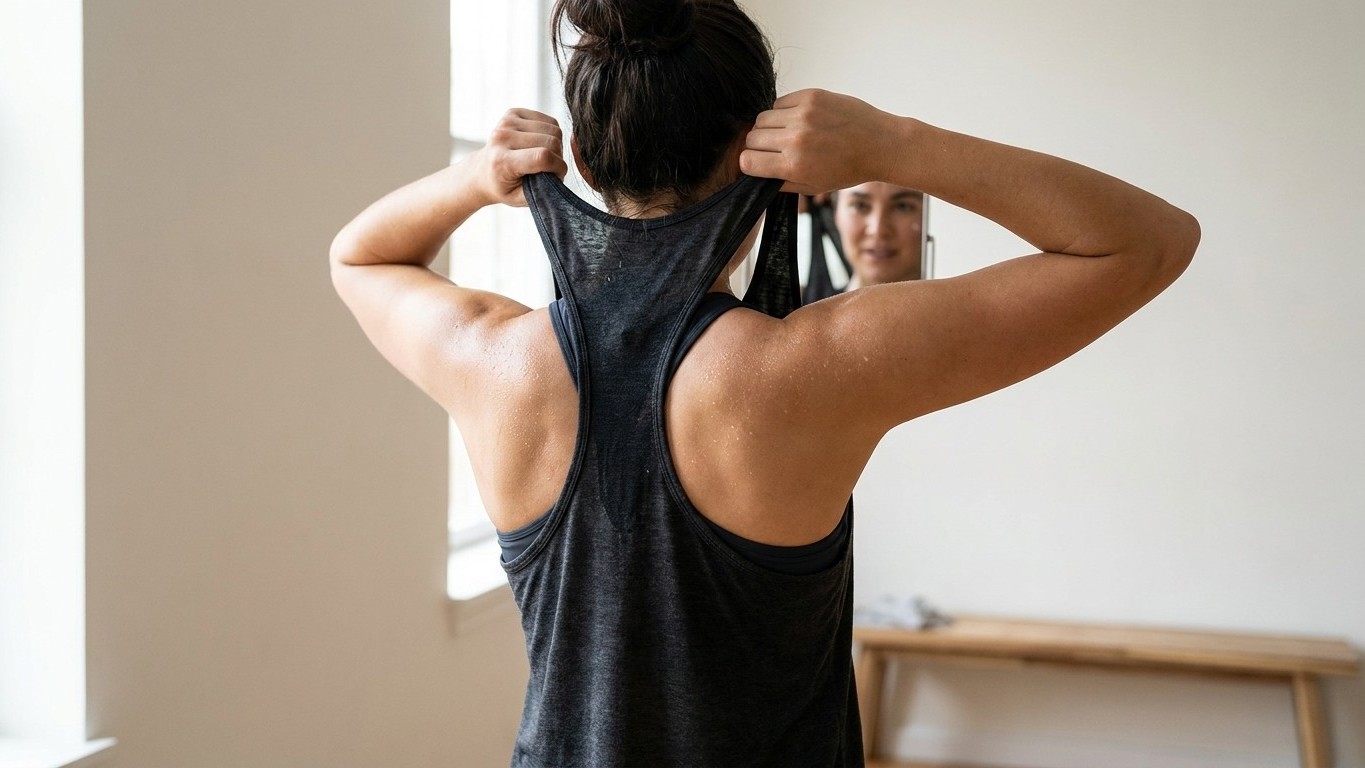
Back acne is stubborn at the best of times, but back acne triggered by exercise is its own particularly frustrating category. For months, many people cycle through medicated washes, exfoliating scrubs, and spot treatments, with limited results, only to find that the culprit was never really their skin type or their hormones. It was a window of roughly 20 minutes after class, and what they did (or didn’t do) during it.
Key takeaways
- Hot yoga creates ideal conditions for a naturally occurring yeast called Malassezia, but most acne treatments don’t target it
- The critical window: what happens in those 20-40 minutes after class when you’re still in damp clothes
- Yoga mats, towels, and even your hairstyle play a bigger role than you’ve been told
Why hot yoga creates the perfect storm for back breakouts
A standard hot yoga session involves sustained heat, usually between 35°C and 42°C, significant humidity, and 60 to 90 minutes of physical exertion. That combination produces something dermatologists call an ideal environment for Malassezia, a naturally occurring yeast that lives on virtually everyone’s skin. Under normal conditions, it causes no harm. But when sweat, heat, and occlusion (being pressed against a mat or damp clothing) combine, Malassezia can overgrow and trigger folliculitis, a condition that looks almost identical to acne but behaves very differently.
This matters because most over-the-counter acne treatments target Cutibacterium acnes bacteria, not yeast. Salicylic acid cleansers and benzoyl peroxide products may do very little for Malassezia-driven breakouts, which is why months of diligent treatment can produce frustratingly little change. The NHS distinguishes between acne vulgaris and folliculitis in its clinical guidance, and the distinction is worth raising with your GP if breakouts are persistent.
The post-class habit that makes everything worse
Here is the specific behaviour that dermatologists flag most often: leaving sweat-soaked clothing on the skin after class. For the back in particular, a damp sports bra or fitted top traps heat and moisture against follicles for as long as it takes to drive home, grab a coffee, or scroll through a phone. That post-session window, often 20 to 40 minutes, can be enough to give Malassezia and bacteria the sustained warmth and humidity they need to proliferate.
The fix sounds almost insultingly simple: change out of wet kit as soon as possible, ideally within minutes of finishing class, rather than waiting until you get home to shower. Even a dry change of clothes worn without showering is meaningfully better than staying in damp fabric. The goal is to interrupt the occlusive, warm, moist environment, not to achieve perfect hygiene immediately.
Showering promptly is, of course, the better option. Lukewarm water rather than another blast of hot water helps close pores and wash away sweat residue. If you use a body wash, a product containing zinc pyrithione or selenium sulphide can help address Malassezia specifically, and these are available over the counter in many UK pharmacies. Leave the wash on for a minute or two before rinsing, as brief contact time matters for antifungal ingredients.
The mat, the towel, and the things people forget to clean
Clothing is the most common offender, but it shares the blame with yoga mats. A mat used in a heated room accumulates sweat, skin cells, and microbes with every session. Research published in the context of gym hygiene has found that exercise equipment can harbour significant bacterial loads, and yoga mats, pressed directly against back skin for extended periods, are no exception. Cleaning your mat after every session with an appropriate spray or wipe, and allowing it to dry fully before rolling it up, is a step that many regular practitioners skip entirely.
Towels placed over the mat offer some protection but become quickly saturated in a hot yoga environment. Using a fresh towel for each class, rather than reusing yesterday’s damp one from a kit bag, removes another variable. Small changes, but they compound.
Hair is another overlooked factor for back acne specifically. Long hair worn down during class drags sweat and hair products (conditioners, serums, dry shampoo residue) across the upper and mid back throughout the session. Tying hair up before practice, or at minimum washing it before it dries against the back, removes a chemical and physical irritant that can block follicles independently of Malassezia.
When these changes aren’t enough
If adjusting post-class habits, cleaning equipment, and switching to an antifungal wash produces no improvement after six to eight weeks, a GP or dermatologist visit is worthwhile. A clinician can assess whether the breakouts are true acne, folliculitis, or another condition entirely, such as hidradenitis suppurativa, which looks superficially similar but requires specific treatment. Self-diagnosing and self-treating for months is common, and understandable, but it can delay more targeted help.
Prescription options for exercise-related folliculitis can include topical antifungals, short courses of oral antifungals in more widespread cases, or topical antibiotics if a bacterial component is confirmed. The appropriate treatment path depends entirely on what’s actually happening at follicle level, which is why a proper assessment makes such a difference.
One detail worth keeping in mind: the back is one of the body’s highest sebum-producing areas, second only to the face and chest. This makes it inherently more prone to follicular congestion than, say, the arms or legs. That underlying predisposition means that even people who aren’t regular gym-goers can experience back breakouts, but it also means that people who exercise intensively in heat need to be more consistent about their post-session routine than the average person. The skin on your back is doing the same sebaceous work as your face, just hidden away where it’s easier to ignore until it becomes impossible to.
This article is for informational purposes only and does not constitute medical advice. Please consult your GP if you are concerned about persistent skin conditions.