
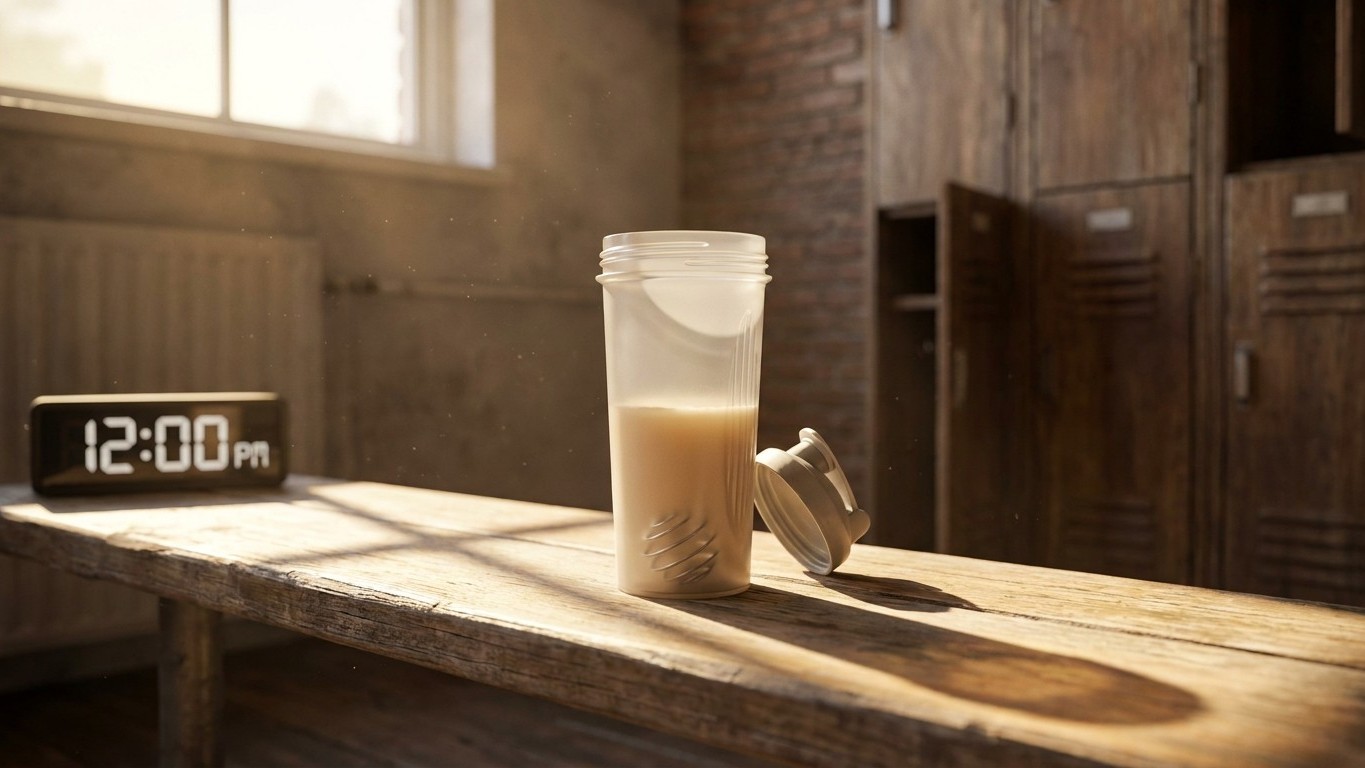
Left at room temperature for more than two hours, a prepared protein shake becomes a genuine food safety risk. Not a theoretical one, a real one, governed by the same microbial rules that apply to chicken breast and dairy milk. The “two-hour rule” established by food safety agencies including the UK Food Standards Agency applies to any perishable food held between 8°C and 63°C, and a whey or milk-based shake mixed at 7am, stuffed into a gym bag, and sipped at midday has almost certainly been sitting in that danger zone the entire time.
Key takeaways
- Bacteria can double in your protein shake every 20 minutes once it’s left at room temperature
- The danger zone exists long before you’d ever notice a smell or taste change
- Post-workout timing makes this particularly risky for your immune system
Why bacteria treat your shake like an all-inclusive buffet
Protein shakes made with whey, casein, or plant-based powders mixed into milk or water are rich in amino acids, moisture, and often sugars, three things that bacteria need to multiply rapidly. At temperatures between 8°C and 63°C, certain pathogens including Bacillus cereus, Staphylococcus aureus, and Salmonella can double in population every 20 minutes under the right conditions. A shake that starts with a low but normal bacterial load from the mixing environment can reach levels capable of causing illness well within the four-to-six hour window most gym-goers casually accept as “fine.”
The problem is compounded by the bottle itself. Most gym shaker bottles are rinsed rather than sterilised between uses, and the mesh mixing balls or grids inside are notorious for harbouring residue. A 2017 study published in Annals of Internal Medicine found that reusable water bottles of various types carried significant bacterial counts, gym shakers, with their grooved lids and protein residue, present an even more hospitable environment. Heat from a car boot or a warm changing room accelerates everything.
There’s also a sensory trap worth understanding. Bacterial contamination at problematic levels is often completely undetectable by smell or taste. The shake that smells slightly off has usually been compromised for hours already. The one that smells perfectly fine might already contain enough Staph aureus toxins to cause vomiting within two to six hours of consumption, and crucially, those toxins are heat-stable, meaning they persist even if you were somehow able to heat the drink.
What actually happens inside your body
Food poisoning from a contaminated protein shake tends to present as what most people describe as “a dodgy stomach”, nausea, cramping, diarrhoea, sometimes vomiting — arriving anywhere from one hour to 72 hours after consumption depending on the pathogen involved. Staphylococcal poisoning typically hits fast (one to six hours), whereas Bacillus cereus, which is particularly associated with proteins and starches, can take six to 24 hours. Neither requires you to be immunocompromised to be unpleasant, and for people with certain health conditions, both can require medical attention.
Athletes and gym-goers are, paradoxically, at slightly higher risk in one specific sense: vigorous exercise temporarily suppresses certain immune functions during and immediately after a hard session. The post-workout window, precisely when most people reach for that shake, is a moment of mild physiological vulnerability. Drinking a bacterially compromised shake during this window is particularly poor timing.
Hydration status matters too. Dehydration, common after intense training, can reduce the dilution effect in the gut and concentrate exposure. The body’s first-line defences, including stomach acid and protective mucus, function less robustly when fluid intake is insufficient.
How to keep your post-workout nutrition safe
The simplest solution is also the most obvious: mix the shake at the gym, not at home beforehand. Keeping the dry powder in a separate compartment and adding water on-site eliminates the entire problem. Most modern shaker bottles include a small storage pod for exactly this purpose. Cold water from a gym fountain mixed with powder consumed immediately carries essentially zero risk.
If pre-mixing is unavoidable, early morning training, no access to water at the venue, a quality insulated bottle kept genuinely cold (below 5°C, not just “not warm”) can extend safe consumption to around four hours. A standard shaker with an ice pack tucked against it in a gym bag does not reliably achieve this; the ice pack warms up, the shake equilibrates to ambient temperature, and you’re back in the danger zone within 90 minutes in a warm environment.
Dry powder blends fare far better than ready-to-drink cartons once opened. Powder mixed with water at the point of consumption is safe. A half-finished ready-to-drink carton left at room temperature follows the same two-hour rule as any other liquid protein product. Shelf-stable, unopened UHT-treated protein drinks are a different category entirely and carry none of these concerns until opened.
Cleaning the shaker matters more than most people realise. The FSA recommends washing food contact surfaces in hot water above 60°C, which means a quick rinse under the tap doesn’t count. Dishwasher cycles or hot soapy water with a dedicated brush that reaches the lid threads and mixing grid will substantially reduce the baseline bacterial load before you mix your next shake. Some athletes now use UV-sterilising bottle caps, which have shown promise in small studies, though the evidence base for their real-world effectiveness remains limited.
One detail that catches people out: protein powders themselves, if stored in humid conditions or scooped with a wet spoon, can develop mould and bacterial contamination long before the printed expiry date. A clumped, discoloured, or odd-smelling powder should be discarded regardless of what the date says. The bag of whey at the back of a warm kitchen cupboard is not the same product as one stored sealed in a cool, dry place.
This article is for general information only. If you experience symptoms of food poisoning, please contact your GP or NHS 111 for advice.