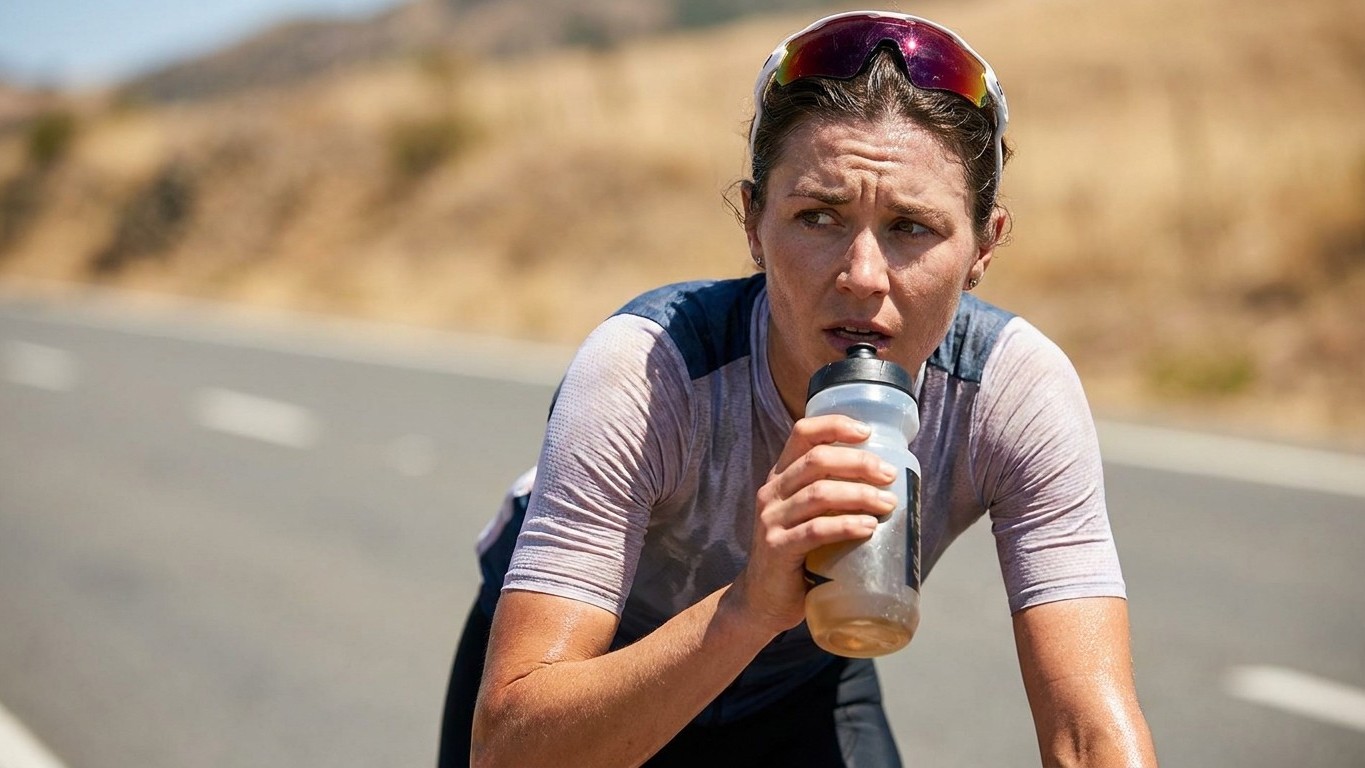
Drinking litre after litre of Plain Water During a hot, sweaty workout can dilute the sodium in your blood to dangerously low levels, a condition called exercise-associated hyponatraemia. It sounds counterintuitive: you’re trying to protect yourself from dehydration, and instead you end up with too much water and not enough salt in your bloodstream. The result can range from mild nausea and headache to, in rare severe cases, confusion and swelling of the brain.
This isn’t a fringe concern reserved for ultramarathon runners. It happens to club-level footballers, weekend cyclists, and gym-goers who’ve been told, repeatedly, that hydration is the answer to everything. The advice to “drink as much as possible” has been so thoroughly absorbed into fitness culture that many people now drink on a schedule rather than in response to thirst, topping up their bottle every ten minutes regardless of how much they’ve actually sweated out.
Key takeaways
- Plain water alone during long, hot exercise can paradoxically cause a life-threatening condition by diluting essential sodium in your blood
- The people most anxious about dehydration are often the ones overdoing it—while elite athletes instinctively drink to thirst
- Early warning signs of over-hydration mimic dehydration symptoms, leading people to make the dangerous mistake of drinking even more
Why more water isn’t automatically better
Sweat isn’t just water. It carries sodium, potassium, and other electrolytes out through your skin. When you sweat heavily in the heat and then replace only the water, without the sodium, the concentration of salt in your blood plasma drops. Your cells, trying to balance things out, absorb some of that excess water, and they swell. Most tissues can tolerate this. Brain tissue, encased in the skull, cannot expand much before it causes real problems.
The International Marathon Medical Directors Association has documented cases of hyponatraemia at endurance events for over two decades, and research published in the New England Journal of Medicine on Boston Marathon runners found that a meaningful proportion of finishers who sought medical attention had low blood sodium, with slower runners who drank the most fluid during the race at higher risk. Slower athletes spend more time on course, drink more often out of habit or anxiety, and sweat less per hour than faster ones, a combination that stacks the odds against them.
The irony is that the people most anxious about dehydration, often less experienced exercisers who’ve internalised the “drink, drink, drink” message, are frequently the ones overdoing it. Elite athletes tend to drink according to thirst and have a good sense of their own sweat rate. Newer exercisers often don’t, so they default to constant sipping as a safety behaviour.
What your body is actually asking for
Thirst is a remarkably well-tuned signal. It’s not perfect, and it can lag slightly behind your body’s real-time fluid losses, but for most moderate exercise sessions lasting under an hour, drinking when you feel thirsty is a perfectly sound strategy. The bigger risk factors for hyponatraemia are prolonged exercise duration (over four hours), high fluid availability (aid stations every mile, or a big bottle within constant reach), and a mindset that treats every twinge of tiredness as a sign to drink more.
Body weight changes during exercise offer a rougher but useful guide. Losing a small percentage of body weight through sweat during a long session is normal and doesn’t require aggressive rehydration mid-exercise. Gaining weight during a long run or ride, which does happen when people drink far more than they lose, is actually a warning sign, not a reassurance.
Sodium replacement matters more the longer and hotter the session gets. For a 45-minute gym class, plain water is fine. For a three-hour hike in July heat, or a long bike ride, adding electrolytes, whether through a sports drink, an Electrolyte tablet, or even something as simple as salted snacks alongside water, helps maintain the sodium balance that plain water alone will steadily erode.
Reading the warning signs
Early hyponatraemia can look almost identical to dehydration, which is part of what makes it dangerous. Nausea, headache, bloating, and a sense of confusion or disorientation can be misread as “not drinking enough,” prompting exactly the wrong response: more water. Puffy fingers or a swollen feeling, especially if you’ve been drinking heavily throughout a long event, is a more specific clue that fluid balance has tipped too far the other way.
If someone exercising in heat starts behaving strangely, becomes confused, or seems increasingly unwell despite having had plenty to drink, this needs urgent medical attention rather than another bottle of water. Event medical teams at marathons and long-distance triathlons are trained to check for this precisely because the instinct to “just hydrate more” can make things worse in a genuine hyponatraemia case.
A more sensible approach to hot-weather hydration
Drink to thirst rather than by the clock. It sounds almost too simple, but for the vast majority of gym sessions, runs, and team sports lasting under 90 minutes, it’s the most reliable strategy available, and it’s what sports medicine bodies including the American College of Sports Medicine have recommended in their consensus guidance on exercise and fluid replacement.
For anything longer, particularly in genuine heat, build in some sodium: an electrolyte drink, tablets dissolved in your bottle, or even a handful of salted crisps at a rest stop. Weigh yourself before and after a long session once or twice to get a rough sense of your personal sweat rate, rather than assuming everyone needs the same litre-per-hour target you read somewhere online.
And resist the urge to treat every ache or wave of tiredness mid-workout as a hydration problem. Fatigue in heat has plenty of causes, pacing, fitness level, heat acclimatisation, that have nothing to do with fluid intake, and reaching for the bottle reflexively isn’t a neutral, harmless habit. If you’re planning a long event in hot conditions and have any underlying health conditions, particularly involving the kidneys or heart, it’s worth a conversation with your GP beforehand about a hydration plan that suits you specifically, rather than following generic race-day advice.