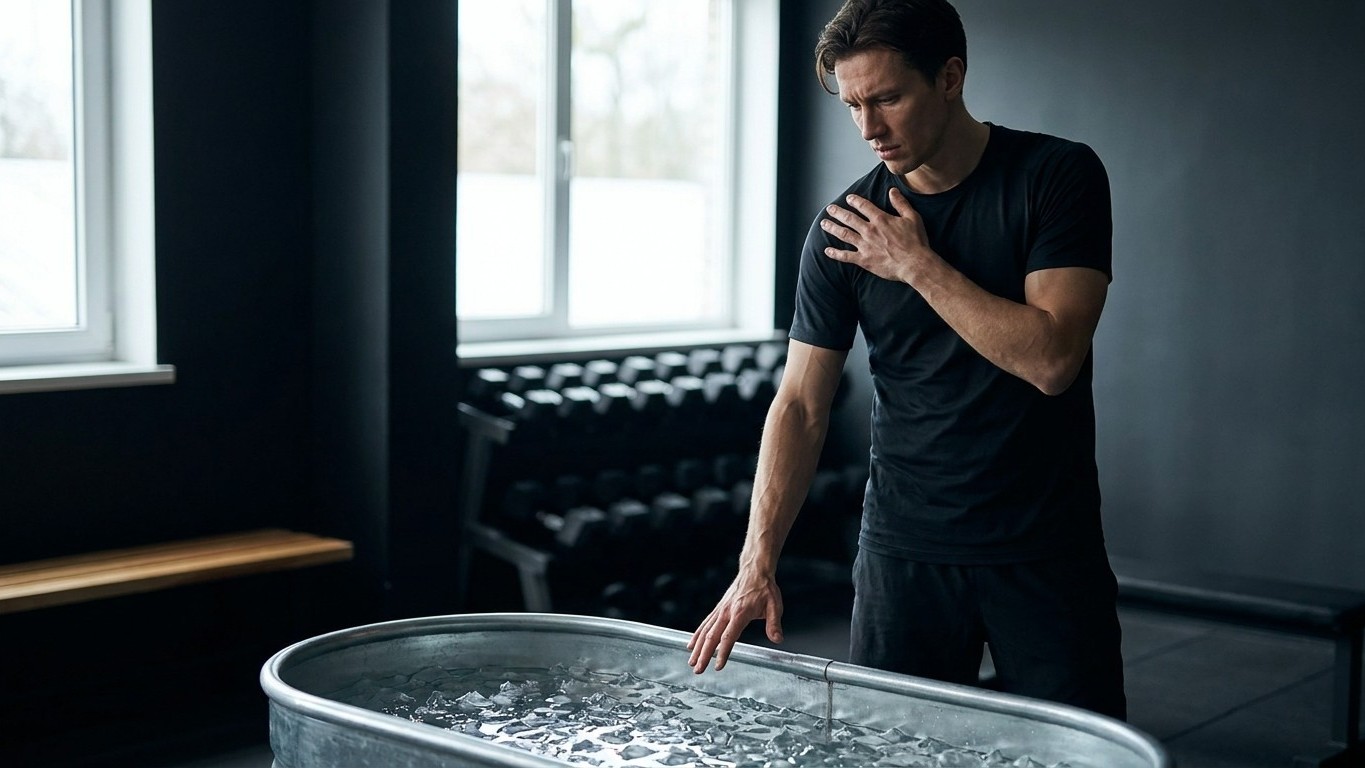
Cold water immersion after exercise has a loyal following. Athletes swear by it, sports centres sell it, and the ritual of plunging into an ice bath post-session carries a certain satisfying brutality that feels productive. The problem is that for a specific and measurable reason, doing it immediately after every strength or hypertrophy session may be quietly undoing the very thing you trained for.
Key takeaways
- You’ve been told ice baths aid recovery, but research shows they suppress the exact inflammatory signals your muscles need to grow
- A landmark study found athletes using cold immersion gained significantly less muscle and strength over 12 weeks at the cellular level
- Timing changes everything: waiting 10-12 hours after lifting, or using cold on rest days, might preserve benefits without sabotaging gains
What your muscles actually need after a hard session
Resistance training works through a cycle of damage and repair. When you lift heavy weights, you create microscopic tears in muscle fibres. The inflammatory response that follows, the soreness, the swelling, the heat, is not a side effect to be managed away. It is the signal. Satellite cells migrate to the damaged tissue, protein synthesis accelerates, and over the following 24 to 72 hours, the muscle rebuilds slightly stronger than before. This process is called hypertrophy, and it depends entirely on that initial inflammatory cascade running its course.
Cold water immersion works precisely by blunting that cascade. It constricts blood vessels, reduces metabolic activity in the tissue, and suppresses the inflammatory markers that act as recruitment signals for repair cells. For pain and acute swelling after injury, this is genuinely useful. After a deliberate strength session, it is closer to cancelling a message your body sent itself.
A study published in the Journal of Physiology in 2015 found that participants who used cold water immersion after Resistance training showed significantly smaller gains in muscle mass and strength over twelve weeks compared to those who used active recovery. Muscle biopsies taken from the cold immersion group showed reduced activity in satellite cells and impaired signalling through pathways directly linked to muscle growth. The cold bath group did not just gain less, they gained meaningfully less, in ways the researchers could measure at a cellular level.
Why the myth persists, and where cold actually earns its place
Part of the confusion is that cold water immersion is genuinely effective for certain things. Endurance athletes recovering between sessions in a multi-day event, rugby players managing collision fatigue across a tight fixture schedule, or anyone dealing with acute joint inflammation, for these situations, the reduction in soreness and swelling has real practical value. The goal there is not maximal adaptation; it is readiness for tomorrow. Getting back on the pitch in 48 hours matters more than optimising hypertrophy over twelve weeks.
There is also reasonable evidence that cold exposure supports parasympathetic nervous system recovery, improves mood, and reduces the perception of effort in subsequent sessions. A review of cold water immersion research consistently shows it reduces subjective soreness scores. The problem is that soreness is not the enemy of progress, its absence does not mean adaptation is occurring, and its presence does not mean you have failed.
Cold water immersion after running, cycling, or swimming tells a different story too. Aerobic adaptations operate through separate pathways, and the current evidence does not suggest the same interference effect on cardiovascular fitness as it does on muscle hypertrophy. So if strength and muscle mass are your primary goals, the timing and context of the cold bath matters enormously. If you are training for a marathon and managing weekly mileage load, the calculus shifts.
The timing question changes everything
One nuance worth sitting with: the research does not argue that cold water immersion is useless for people doing strength training. It argues that immediate, post-session cold immersion in the acute window, roughly the first few hours after lifting, is where the interference is greatest. Waiting ten to twelve hours, or using cold exposure on rest days, appears to carry far less risk of blunting adaptation, based on current understanding of how these signalling windows work.
Some coaches and practitioners now recommend reserving cold immersion for the evening of a morning session, or for full rest days when no acute training stimulus is in the body competing for those inflammatory signals. That approach lets you capture some of the recovery and mood benefits without stepping on the muscle-building process. It is not a perfect solution, research on optimal timing is still developing, but it is a reasonable middle ground for athletes who genuinely benefit from cold exposure and do not want to abandon it entirely.
Heat, by contrast, tells a more interesting story post-strength training. Sauna use after resistance exercise has been associated with increased growth hormone release and improved muscle protein synthesis in some studies, though the evidence base is still building and the effect sizes vary considerably by protocol. The directionality is at least complementary rather than opposed to the adaptation you are chasing.
What to do instead, immediately after lifting
The alternatives to cold immersion for post-workout recovery are less dramatic but well-supported. Light aerobic movement in the ten to twenty minutes after a session, walking, cycling at low intensity, gentle swimming, helps clear metabolic waste products from muscle tissue without suppressing the inflammatory signals needed for repair. Contrast therapy, alternating between warm and cool water, appears to have a smaller interference effect on hypertrophy than sustained cold immersion, though the research here is less definitive.
Nutrition timing also plays a more consistent role in recovery than cold immersion does. Consuming adequate protein within two hours of a resistance session, combined with carbohydrates to restore glycogen, supports muscle protein synthesis through mechanisms that work with the adaptive response rather than against it. Sleep remains the most underrated recovery tool of all, the majority of growth hormone release occurs during slow-wave sleep, making the hours after a session spent in bed more productive than any ice bath ever was.
One detail that rarely makes it into the conversation: habitual cold water immersion may also blunt mitochondrial adaptations in muscle tissue over time, according to some research, which would have implications for long-term endurance capacity even in athletes not focused on hypertrophy. The cold, it turns out, is more opinionated about your training than most people gave it credit for.