
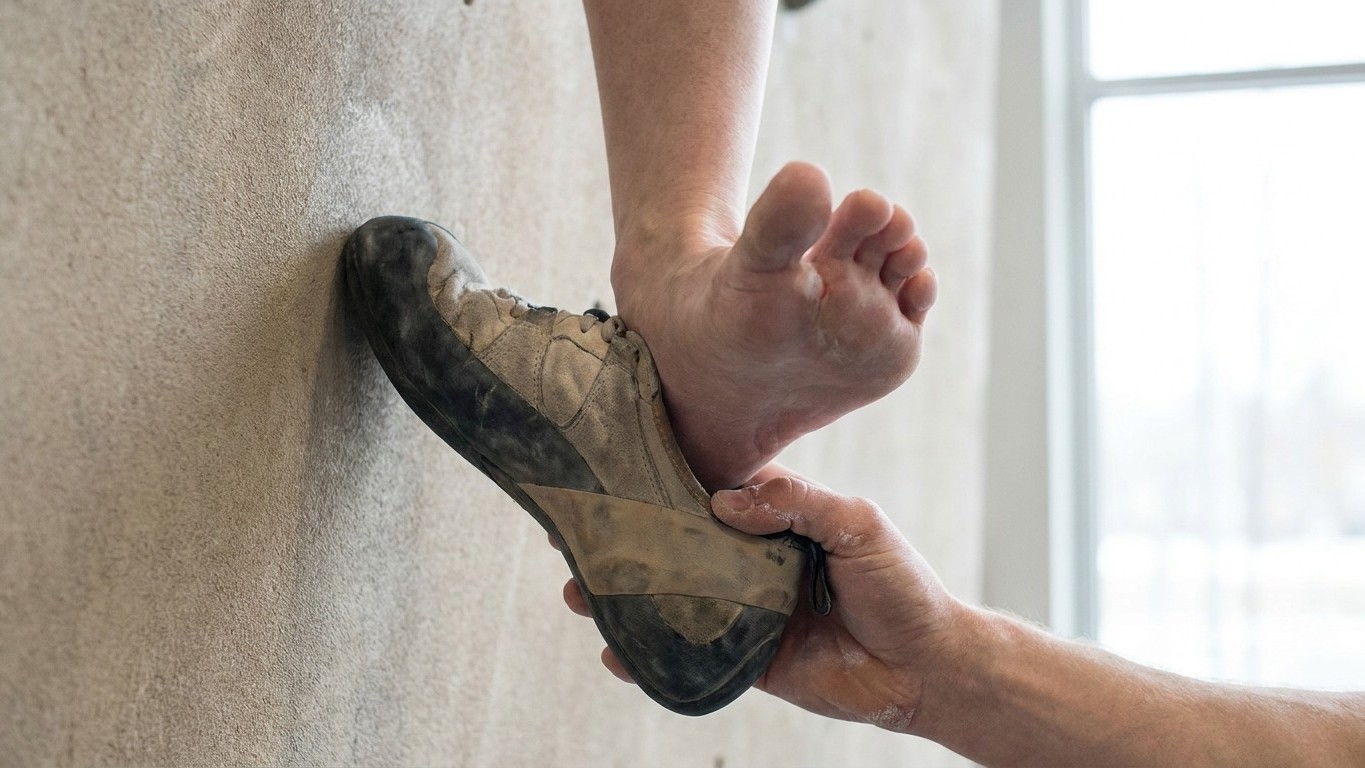
That burning sensation lodged between your third and fourth toes has a name, and it’s one podiatrists see constantly in climbers who chase performance through aggressive downsizing. The pain is typically located behind and between the third and fourth toes, which is precisely the classic presentation of Morton’s neuroma, a nerve condition triggered by exactly the kind of forefoot compression that comes from cramming your feet into shoes two sizes smaller than your street size.
This isn’t a rare quirk of your particular feet. Morton’s neuroma is a disorder caused by digital nerve entrapment under the intermetatarsal ligament, occurring most commonly at the second and third intermetatarsal spaces, between the third and fourth toes. The nerve running through that narrow web space gets squeezed between the metatarsal bones every time you weight the shoe on a foothold, and over weeks or months, it thickens and becomes irritated. This pressure creates burning and inflammation, and may eventually cause unusual tissue to form in and around the affected nerve.
Key takeaways
- The burning sensation between your third and fourth toes has a clinical name—and it’s not just part of the sport
- Two full sizes down puts your foot in elite-level compression territory, regardless of your actual climbing ability
- A persistent ache that outlasts your session signals something different than ordinary shoe tightness
Why the Third-Fourth Web Space Takes the Hit
Climbing shoes are engineered to be unlike any other footwear you own. Downturned, asymmetrical lasts concentrate pressure exactly where you don’t want it. Attributes like downturn, the concave shape that places pressure on the toes, and asymmetry, concentrating pressure on the big toe, are basic elements of modern climbing shoes. Squeeze two sizes off your normal fit on top of that geometry, and the ball of your foot ends up bearing forces it was never built to absorb comfortably.
The scale of downsizing Matters More Than most climbers realise. Research on footwear practices found that higher ability climbers had an average shoe size difference between normal shoes and climbing shoes of 2.3 EU or 1.7 US, while average climbers showed a difference of about 1.2 EU or 1.5 US. Two full sizes down puts you firmly in elite-level compression territory, regardless of your actual climbing grade, and your foot didn’t get any consultation on the matter.
Tingling and numbness aren’t unusual side effects either, they’re a documented pattern. One study on rock climbers’ feet found that 65% of participants reported experiencing tingling or numbness while wearing climbing shoes, thought to result from compression of the blood vessels and nerves, which usually resolves shortly after removing the shoes. The key phrase there is “usually resolves.” When the burning sticks around after you’ve kicked the shoes off, that’s your foot telling you something has moved past ordinary post-session soreness.
When It Stops Being Normal Climbing Discomfort
Climbing culture has a strange relationship with foot pain. It’s popular culture and normally okay for feet to hurt when we climb, or at least that’s the prevailing attitude among many climbers who wear their bruised toes as a badge of dedication. But there’s a meaningful difference between the dull ache of a tight shoe and a distinct, localised burn that outlasts your session.
A few signs suggest you’ve crossed from “shoes are snug” into “nerve is compromised”:
- Numbness or tingling that persists well after you’ve removed your shoes
- A sensation of a pebble, marble, or bunched-up sock between your toes, even when your foot is bare
- Pain that spreads from the ball of the foot toward the tips of the third and fourth toes
- Symptoms that worsen with any weight-bearing activity, not just climbing
Typically, the pain of a Morton’s neuroma is relieved temporarily by taking off your shoes, flexing your toes and rubbing your feet, which is exactly why so many climbers dismiss it as ordinary shoe tightness rather than something requiring attention. The trouble is that symptoms usually get worse over time, starting as minor pain that goes away with rest, but becoming more noticeable as inflammation on the affected nerve progresses.
What Actually Helps (Beyond Just Suffering Through It)
The most consistent advice from foot specialists isn’t complicated: stop compressing the nerve. Many people get relief by wearing shoes with low heels and wide toe boxes and by using shoe inserts. For climbers, that translates practically into sizing up, at least for training days and longer sessions where you’re not attempting a single hard redpoint. Save the aggressive, two-sizes-down shoe for short, specific attempts rather than three-hour gym sessions.
I’d add a personal observation here, having spoken with several podiatrists over the years who treat climbers: the “no pain, no gain” mentality around footwear is one of the most persistent myths in the sport, and it’s not supported by performance data either. Plenty of strong climbers perform brilliantly in shoes that fit snugly rather than agonisingly. One long-time climbing shoe reviewer put it plainly after years of extreme downsizing, admitting that “your shoes are too tight, too stiff and too painful” when pushed to that extreme, and that the trade-off wasn’t worth it.
If the burning has been present for more than a couple of weeks, or if you’re noticing numbness that doesn’t fade once your shoes are off, it’s worth getting it looked at properly rather than waiting it out. Symptoms are often relieved temporarily by removing shoes or through foot massage, but they should ultimately be addressed through clinical treatment. A Podiatrist can usually confirm a neuroma with a simple compression test in clinic, no scan required for an initial assessment, though ultrasound can help pinpoint size and exact location if treatment planning is needed.
This is general health information, not a diagnosis, so please see your GP or a podiatrist if the burning persists, since untreated nerve irritation can worsen with continued pressure rather than resolve on its own.
One detail that surprises a lot of climbers: this isn’t purely a shoe problem. People who have bunions, hammertoes, high arches or flatfeet are at higher risk of developing Morton neuroma in the first place, meaning two climbers wearing identical shoes at identical sizes can have completely different outcomes depending on their underlying foot structure. If you’ve got any of those traits, it might be worth getting your feet properly assessed before deciding your next shoe size purely on holds you can feel.
Sources : thefootpractice.com | climbingshoereview.com