Sagging hips during a plank are not a cosmetic footnote. They’re a mechanical signal that your lumbar spine has just been handed a job it wasn’t built to do, and the timer ticking upward doesn’t change that fact. If your belly dips first, your core has already tapped out.
The confusion is understandable. Fitness culture spent years treating plank duration as a scoreboard: 30 seconds, then 60, then the mythical two-minute badge of honour. But endurance and quality are not the same currency, and mixing them up is exactly how people end up nursing a stiff lower back after what felt like a solid ab session.
Key takeaways
- Your hips dropping during a plank forces your lower back into dangerous extension, shifting stress away from your core onto joints and ligaments
- Longer plank holds don’t correlate with less back pain—and sometimes people with existing back issues outlast those without
- A perfect 20-second plank builds more spinal stability than a sloppy 90-second grind, according to spine researcher Stuart McGill
What actually happens to your spine when the hips drop
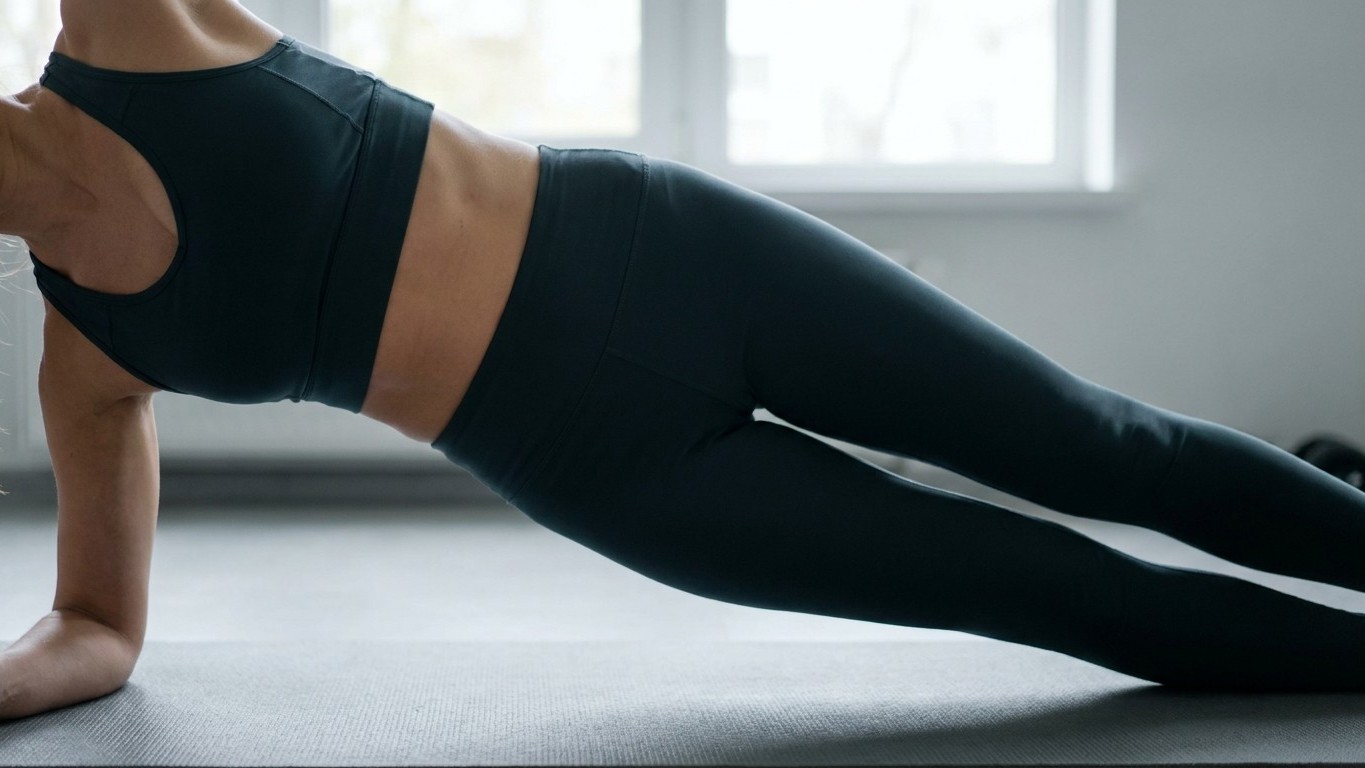
A textbook plank keeps your body in one continuous line from skull to heel, hips neither piked up nor dropped toward the floor. Creating a straight line from head to heels means maintaining a neutral spine and avoiding hip drop or lumbar extension. Once the pelvis tips forward and the hips sink, the lower back is forced into extra extension, and that shape shifts load away from the abdominal wall and onto passive tissue that was never designed to be a primary support system.
Your spine slips into excessive extension as your hips sag, and back pain during the plank may result from this increased compression on the lumbar spine. This isn’t muscle soreness from good work, it’s joint and ligament strain from bad mechanics. As one clinical explainer puts it bluntly: joint strain and muscle effort are two different things, and instead of intense pressure on the lower back, a correct plank should cause tension in the abs. If you’re feeling a pinch or a compressive ache rather than a burn across your midsection, that’s the distinction in action.
The physiology behind why this happens so easily is well documented. People with existing low back trouble often struggle to switch on their deep stabilisers in time. Research published in the Journal of Orthopaedic & Sports Physical Therapy confirms that individuals with low back pain consistently demonstrate delayed activation of the transversus abdominis. Without that deep muscle firing early and holding steady, the hips have nowhere to go but down, and the erector spinae and lumbar ligaments quietly absorb the difference.
Why chasing a longer hold can backfire
Here’s the part that surprises most people: newer research has actually challenged the idea that a longer plank reflects a healthier back at all. A cross-sectional study of 117 adults examined the relationship between plank endurance and low back pain using the Modified Oswestry Disability Index, and it remains unclear whether plank performance accurately reflects trunk function or disability in individuals with low back pain. Coverage of related 2025 findings on this question noted something counterintuitive: a 2025 study on plank performance and back pain found that longer hold times did not translate to a lower risk or reduced severity of back pain, and in some cases, people with back issues outlasted those without.
Spine biomechanics researcher Stuart McGill, whose work has shaped much of modern thinking on trunk training, has gone as far as suggesting “the plank’s usefulness expires once you can hold it for a minute”, after which the exercise stops teaching your body anything new about stability. His own protocol favours shorter, cleaner efforts over grinding endurance tests. Stuart McGill’s research suggests that 3 sets of 10-second holds may build core stability more effectively than 1 set of 60 seconds. That’s a genuinely different training philosophy from the one most of us grew up with, and it explains why someone can hold a wobbling, hip-dipping 90-second plank and still come away with less to show for it than a rock-solid 20-second one.
A comparison from a recent analysis of plank duration research captured this well: a 20-second plank with immaculate posture builds far more spinal stability than a 90-second plank that lets the belly droop. The National Academy of Sports Medicine backs the same principle for anyone starting out, recommending shorter, controlled holds rather than an immediate push for time. Start with 20-30 second holds and progressively increase to 60 seconds or longer as core strength improves, because quality always supersedes duration and a 30-second perfect plank is superior to a 60-second plank with compromised mechanics.
What to actually do about it
The fix isn’t complicated, but it does require ego management. Drop to a shorter hold, or regress to a knee plank, and rebuild from there with strict form. Before you even lift off the floor, brace as though someone is about to prod your stomach, then keep breathing steadily rather than holding your breath through gritted teeth, since holding your breath undermines the position, while slow, steady breathing helps maintain proper muscle engagement.
If the sag keeps creeping back regardless of how hard you brace, that’s usually a sign your deep core and glutes need dedicated retraining outside the plank itself. Dead bugs, bird dogs and side planks are the standard rehab staples for exactly this pattern, and clinical guidance recommends stopping and modifying to a knee plank, strengthening the core with dead bugs, bird dogs, and side planks, and adding gentle hip flexor and hamstring stretches when the sag or the ache won’t resolve with cueing alone.
One detail worth remembering next time you’re tempted to grind out another 20 seconds: a filmed side-on check is far more honest than how the position feels. Most people who think their hips are level are actually sagging by several centimetres, because the muscles doing the compensating (hip flexors, lumbar extensors) don’t send the same fatigue signal that a properly loaded core does. Film yourself from the side once a month, and let that footage, not the stopwatch, decide when you’re ready to hold for longer. And if pain lingers beyond a week or two, or you notice any leg weakness or numbness, that’s a conversation for your GP or physiotherapist, not another set of planks.
Sources : quora.com | betterme.world