
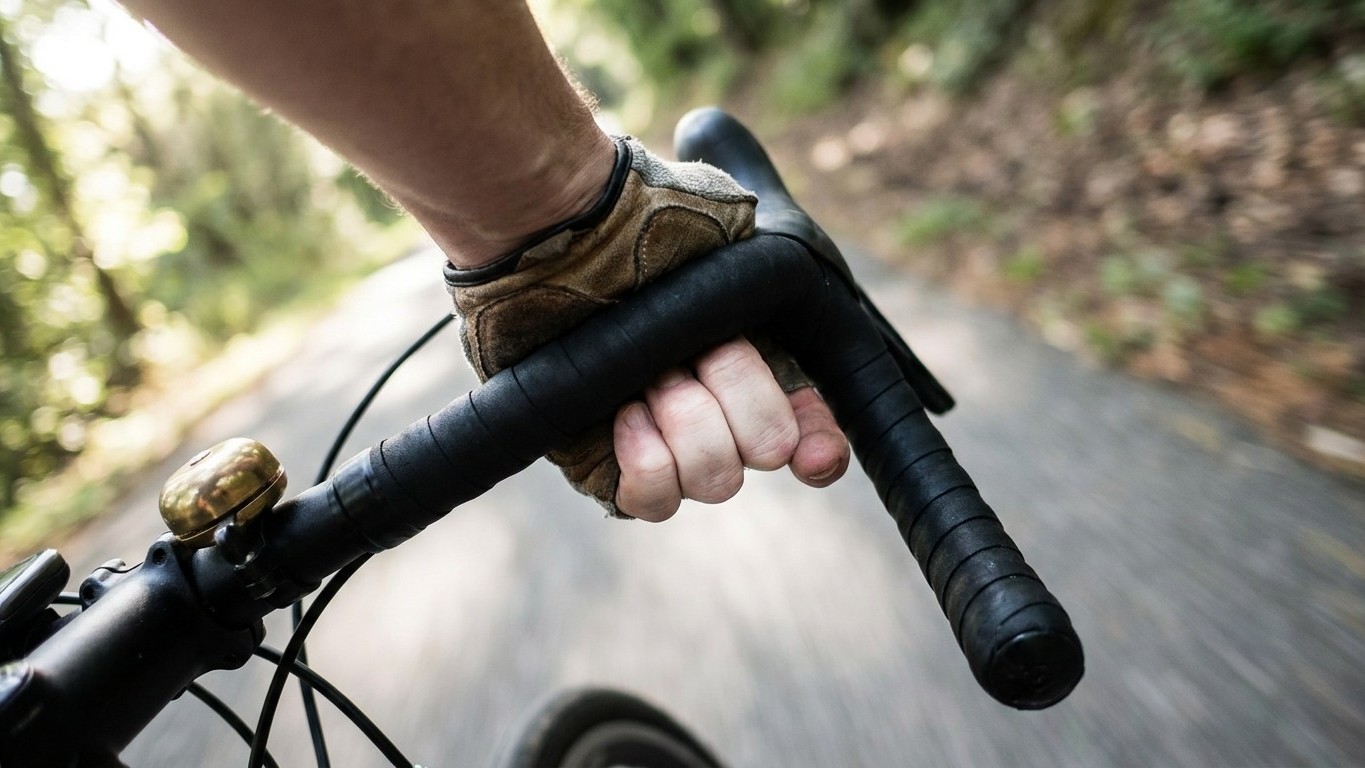
Numbness confined to the ring and little finger while cycling has a specific name: cyclist’s palsy, or handlebar palsy. It happens because the ulnar nerve gets compressed as it travels through a narrow passage in the wrist called Guyon’s canal, and the surprising part for many riders is that the actual fix often has nothing to do with the handlebars themselves. Handlebar palsy, also known as ulnar nerve compression, is a condition commonly experienced by cyclists due to prolonged pressure on the ulnar nerve at the wrist in an area called Guyon’s Canal. Symptoms may include numbness, tingling, and weakness in the ring and small fingers. For a lot of cyclists, myself included when I first started asking patients about this, the instinct is to fiddle with grip tape or buy a fancier glove. That’s rarely where the problem lives.
The pattern of which fingers go numb is actually diagnostic gold, and it’s the first thing I ask patients about in clinic. If your pinky and ring finger go numb, you are compressing your ulnar nerve, and this is the most common type of hand numbness in cycling. Compare that with numbness in the thumb, index and middle fingers, which points somewhere else entirely. If your thumb, index finger, or middle finger goes numb, your median nerve is being compressed, the same nerve involved in carpal tunnel syndrome, which office workers know well from typing all day. Two different nerves, two different mechanical problems, two different fixes. That’s why “just wear thicker gloves” so often fails to resolve things: it treats the symptom without asking which structure is actually under load.
Key takeaways
- The numbness pattern reveals which nerve is compressed—but riders typically blame the wrong part of the bike entirely
- A saddle tilted even slightly downward tips your pelvis forward, loading your hands with body weight they were never meant to bear
- Core strength, wrist posture, and hand position changes during rides all matter just as much as the bike’s geometry
Why the Saddle, Not the Bars, Is Often the Real Culprit
This is the bit that genuinely surprises people. A tilted or misaligned saddle changes how your pelvis sits, which changes how far forward you lean, which changes how much of your body weight ends up braced through your palms. A pattern of numbness in the ring and pinky finger often points to ulnar nerve pressure, commonly called cyclist’s palsy or handlebar palsy. But the root mechanical cause frequently sits several centimetres away from where the symptom shows up. The most common contributors are a saddle tilted nose-down, a saddle too high, reach too long, and bars too low, and addressing all four matters. A saddle nose pointed even slightly downward tips you forward, and your hands become the unwitting kickstand for the rest of your torso.
Bike fitters see this constantly. One rider’s experience shared on a cycling forum captures it neatly: “I spent months buying different gloves and bar tape before someone told me to level my saddle.” That single adjustment, done properly with a level checked against the saddle rails, resolved what months of glove-shopping couldn’t touch. It’s a humbling reminder that the body doesn’t care where you think the problem is; it cares about the actual angle of load through a joint.
Saddle tilt isn’t the only saddle-related variable either. Using a phone bubble level on the saddle rails helps: if the nose tilts down you slide forward and load the hands, if it tilts up you load the soft tissue and create a different problem, and level, or fractionally adjusted for individual comfort, is the safest starting point. Saddle height plays a role too, because a saddle set too high forces you to reach further and rock your pelvis to complete the pedal stroke, both of which push weight forward onto the bars.
What Else Feeds Into It
Saddle position rarely acts alone. Reach and bar height matter just as much, and they’re often adjusted together with the saddle during a proper fitting session. Raising the bars can shift weight off your ulnar nerve and back onto your sit bones. Wrist posture on the bars is the other half of the equation. Your forearm and the back of your hand should form a relatively straight line; avoid “broken” wrists where the hand is bent backward. A wrist cocked upward under load compresses exactly the tissue you’re trying to protect, no matter how good your saddle position is.
Core strength quietly matters here too, something I don’t think gets enough airtime in cycling forums. Weak core muscles lead to more body weight resting on your hands. If your torso can’t hold itself up efficiently through your trunk, it will find support somewhere, and the handlebars are the obvious candidate. This is one reason two riders with identical bike fits can have completely different experiences with numbness.
Practical Steps While You Sort the Fit
Changing hand position frequently on the ride itself buys real relief while you work out the underlying fix. Rotating hand position around the handlebars every few minutes, moving between the hoods, tops, and drops, helps keep the pressure off one specific area of the hand. Keep your elbows soft rather than locked, since a rigid arm transmits every bump in the road straight into the wrist. A handful of quick habits are worth adopting on every ride:
- Shake out each hand for ten to fifteen seconds when numbness starts
- Sit back onto your sit bones rather than perching forward
- Loosen your grip deliberately, as a white-knuckle hold does nothing useful
- Check your saddle is level using a spirit level or a phone app before assuming it’s fine
None of this replaces getting eyes on your actual position, ideally from a bike fitter or physiotherapist who understands cycling biomechanics, but these habits reduce the load while you sort the fit properly.
There is a point where this stops being a fit problem and becomes a medical one, and that distinction genuinely matters. If changes to your bike fit and riding habits do not resolve the numbness within two to three weeks, it’s worth scheduling an appointment with a sports medicine doctor or physical therapist who understands cycling. Persistent weakness, clumsiness with fine tasks like doing up buttons, or muscle wasting near the base of the little finger are signs the nerve has been under sustained strain and deserve a proper assessment, potentially including nerve conduction studies. Please see your GP if numbness persists beyond a couple of weeks off the bike, or if you notice any loss of grip strength: caught early, this settles with the right adjustments; left alone, nerve compression can take considerably longer to reverse.
Sources : handtherapyacademy.com | richmondphysio.ca