
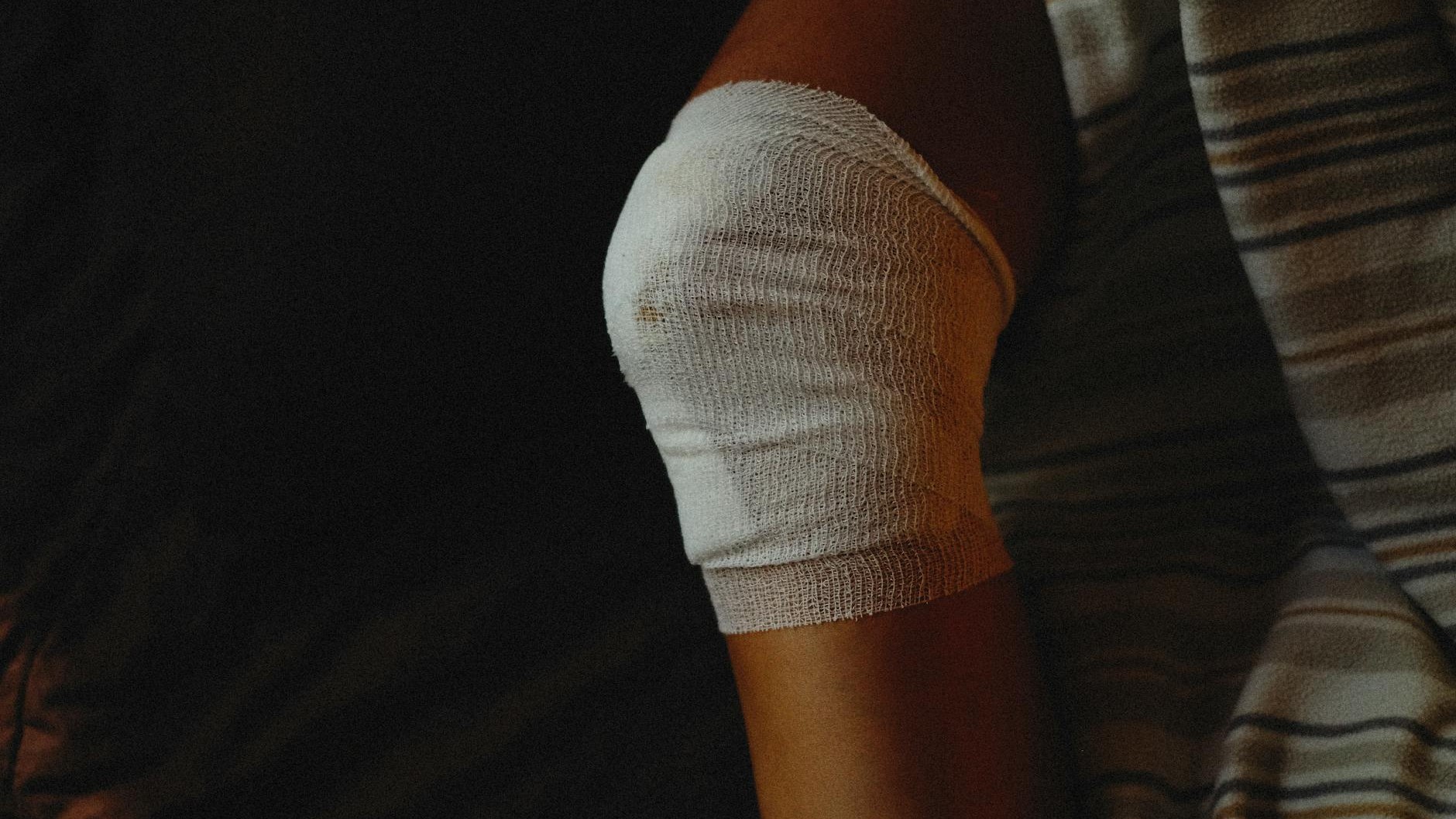
Knee sleeves have become one of the most casually adopted pieces of health equipment in Britain. People pull them on with their morning coffee, wear them through a full working day, and forget they’re even there. The logic feels sound: the knee hurts, compression helps, so more compression for longer must be better. Physiotherapists treating chronic knee conditions are increasingly pushing back on that assumption, and what they’re finding in patients who’ve worn sleeves daily for several weeks is prompting a rethink.
Key takeaways
- Millions wear compression sleeves 24/7 believing it prevents pain, but physiotherapists are documenting serious side effects in just weeks of continuous use
- The biggest risk isn’t athletes—it’s office workers in sedentary jobs who wrap a tight sleeve around a stationary joint for 8 hours straight
- Skin breakdown, circulation problems, and muscle weakness from sleeve dependency can develop silently, and most people have no idea it’s happening
What a knee sleeve actually does to your joint
The therapeutic mechanism behind compression sleeves is real. Moderate, graduated compression can reduce swelling by improving venous return, provides proprioceptive feedback (which essentially helps your brain “feel” the joint more clearly), and offers mild warmth that eases stiffness. For short-term use during activity, that combination is genuinely useful. The problem begins when the sleeve stays on between activities, at rest, during sleep, or across a full eight-hour workday.
Prolonged static compression can gradually reduce circulation to the surrounding soft tissues. The knee joint relies on a healthy blood supply to nourish cartilage, tendons, and the joint capsule, none of which have their own direct vascular supply in the same way muscle does. When you restrict flow for hours at a stretch, you’re potentially limiting the delivery of oxygen and nutrients to tissues that already struggle to repair themselves. Physiotherapists working in musculoskeletal clinics report patients arriving with skin changes, including redness, indentation marks, and in some cases minor skin breakdown, after weeks of continuous wear.
There’s also the question of muscle dependency. The quadriceps and the muscles around the hip and lower leg play a huge role in stabilising the knee. Wearing a sleeve continuously can reduce the neural demand on those muscles, essentially letting the sleeve do the proprioceptive work that muscle activation should be doing. Over weeks, this can contribute to subtle quadriceps inhibition, a phenomenon well-documented in post-surgical knee patients, where pain and swelling suppress voluntary muscle contraction. A sleeve worn preventively, but continuously, can inadvertently recreate some of those same conditions.
The population most at risk is not who you’d expect
You might assume this is primarily a concern for older adults with osteoarthritis. In practice, the patients physiotherapists are flagging most often are middle-aged office workers and people in sedentary roles who developed mild knee pain, bought a compression sleeve from a pharmacy or online retailer, and wore it every day without ever seeing a clinician. They aren’t athletes overtaxing the joint; they’re people sitting at desks for six to eight hours with a sleeve applying constant circumferential pressure to a joint that isn’t even moving.
Sitting with the knee bent at roughly 90 degrees, the popliteal region (the soft tissue behind the knee) is already under some compressive load from the chair. Add a tight sleeve, and you’ve created a scenario where venous drainage from the lower leg can be genuinely compromised. Varicose veins and pre-existing circulatory issues make this significantly riskier, and many people wearing over-the-counter sleeves have never been assessed for those conditions.
Runners and gym-goers face a different pattern of risk. A sleeve worn during a 45-minute run and then kept on for the rest of the day might provide appropriate support during exercise but then sit against a warm, sweaty joint for hours, increasing the risk of folliculitis (inflammation of hair follicles), skin irritation, and, over time, moisture-related skin damage. A small but consistent body of case reports in sports medicine literature documents contact dermatitis developing from the synthetic materials in lower-quality sleeves, with reactions sometimes misattributed to the underlying joint condition rather than the fabric itself.
How to use a sleeve without creating a new problem
The guidance from musculoskeletal physiotherapists is not to abandon sleeves entirely. Used correctly, they remain a legitimate part of managing knee pain, particularly during weight-bearing activity, sport, or long walks. The shift is away from passive, continuous wear toward purposeful, time-limited use.
A reasonable framework looks like this: wear the sleeve during the specific activity that aggravates your knee, remove it immediately afterwards, and do not wear it at rest unless a clinician has explicitly advised otherwise. If you’re experiencing enough pain to feel you need constant support, that’s a signal to seek assessment rather than a reason to increase compression. The sleeve is managing a symptom; it isn’t treating an underlying cause.
Fit matters more than most people appreciate. A sleeve that leaves visible indentation marks on removal was almost certainly too tight. It should provide a firm hug, not a tourniquet. Measuring the circumference of your knee and cross-referencing with the manufacturer’s sizing chart (rather than guessing based on general clothing size) takes two minutes and can make a significant difference to how the sleeve behaves over several hours.
Skin inspection is worth making a habit. After each removal, check for persistent redness, unusual warmth, swelling below the knee, or any change in skin texture. These can be early signs that circulation has been affected, and they’re worth raising with a GP or physiotherapist promptly rather than waiting to see if they resolve.
One detail that rarely appears on packaging: the compression class of most over-the-counter knee sleeves sits in a grey zone below the graduated compression of medical-grade hosiery, but above what many clinicians consider appropriate for sedentary wear. Medical compression stockings prescribed for circulatory conditions are carefully graduated to work with the pumping action of the calf muscles during walking. A static knee sleeve provides uniform, non-graduated pressure with no such mechanism to compensate. That distinction is worth holding in mind the next time the sleeve seems like a sensible, low-effort solution to an aching joint.
Always consult your GP or a qualified physiotherapist before beginning or continuing use of a compression sleeve, particularly if you have any circulatory conditions, diabetes, or skin sensitivities.