
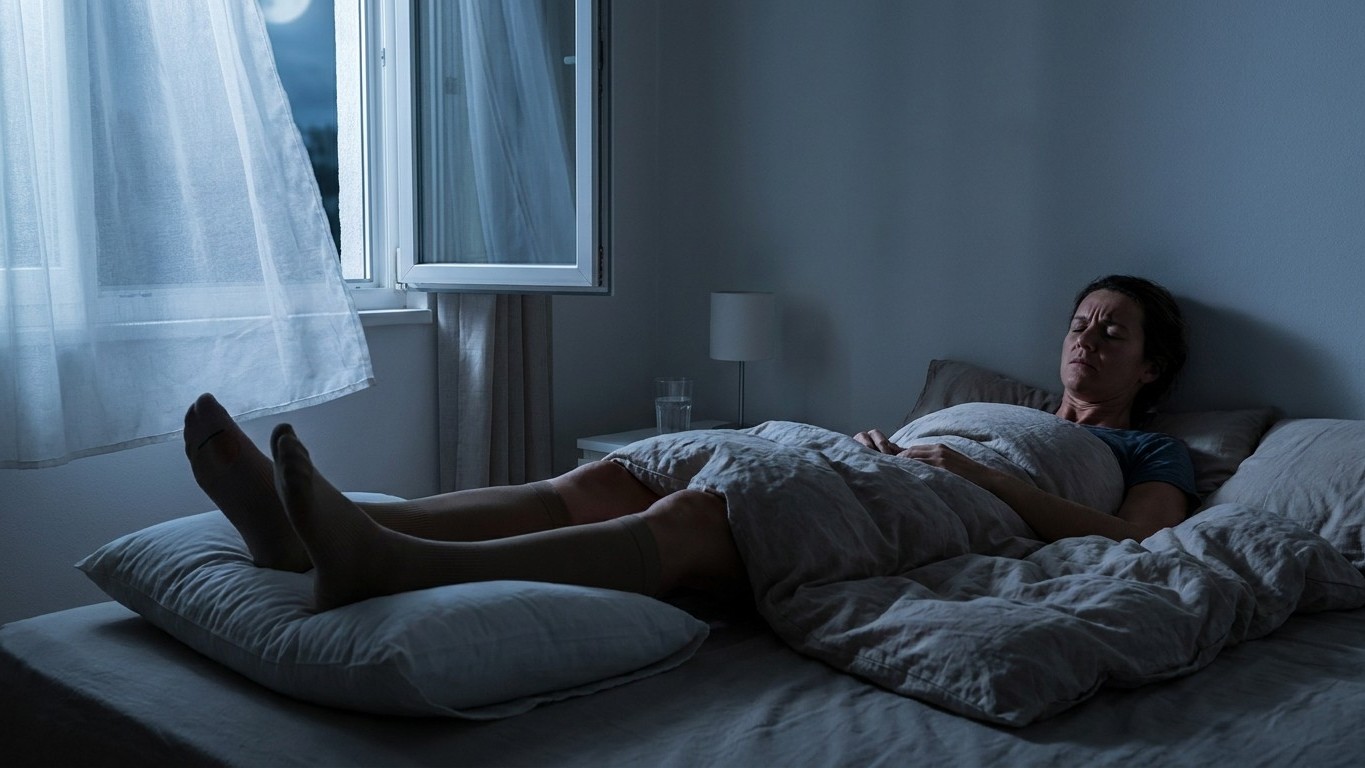
Cracking the window wide open on a stifling August night feels like the obvious fix. The room cools down, the air stops feeling like soup, and sleep seems easier to reach. Yet if you’re an athlete or simply someone who trains hard, that draft sweeping directly across your bare legs at 3am might be doing more harm than good, and the tightness or heaviness you feel in your calves and thighs the next morning could be a direct consequence of that “cooling” strategy.
The confusion comes from mixing up two very different things: a cool room and a cold draft on exposed skin. They are not the same, and your muscles know the difference even if you don’t.
Key takeaways
- Your body has a narrow 15-19°C temperature sweet spot for deep sleep where muscle repair actually happens
- A direct cold draft across legs for hours triggers blood vessel constriction that blocks recovery exactly when your muscles need it most
- One simple layer changes everything—and it’s not what most athletes think
Why a cold draft sabotages tired legs
When cold air moves directly across skin for hours, blood vessels near the surface constrict to conserve heat. Cold temperatures can cause blood vessels to constrict, reducing blood flow to muscles, which can lead to muscle stiffness and increased risk of cramps, particularly in the legs. That’s a mechanism your body uses everywhere, but it’s particularly unhelpful for muscles that spent the evening breaking down fibres during a hard session and now need a steady supply of oxygen and nutrients to repair themselves overnight.
There’s actual research backing the link between cold legs in bed and nocturnal cramping. A study from Newcastle and the Central Coast of New South Wales, comparing adults who cramped regularly with matched adults who didn’t, found that presence of night-time calf muscle cramps was significantly correlated with weakness of foot and ankle movement, restricted hamstring flexibility, lower limb tingling sensations, muscle twitching, and coldness of legs or feet in bed at night. Coldness of the legs specifically showed up as a marker linked to cramping, alongside neurological signs like tingling and twitching. If you’ve trained hard and your legs are already fatigued, throwing a steady stream of cold air over them for six or seven hours is asking for trouble.
Dehydration compounds the problem. A hard August training session already leaves you short on fluids and electrolytes, and even mild dehydration disrupts the balance of sodium, potassium, calcium, and magnesium, electrolytes that are essential for nerve impulse transmission and muscle relaxation. Sleep with the window open all night, sweating slightly under a draft while also carrying an unreplenished fluid deficit from training, and you’ve stacked two separate risk factors for waking up with a locked calf or a dull ache that lingers into your warm-up the next day.
The part of the science people get backwards
None of this means a warm bedroom is better. Sleep researchers are consistent on this point: research suggests that the optimal sleeping temperature for athletes falls between 60-67°F, which in Celsius sits around 15 to 19 degrees. A room that’s too warm genuinely does hurt recovery, because your body needs to cool down to enter deep sleep, and studies have found that a drop in body temperature signals sleep onset, meaning if you’re still overheated from your workout, you may miss out on this vital phase. Deep sleep isn’t just a nice-to-have. The actual repair work of muscle recovery happens once your brain enters deep sleep, during which your body releases the majority of human growth hormone, which drives muscle repair and growth.
So the goal was correct, cooling the room down does support recovery. The method was the flaw. An open window in August rarely gives you an even, gentle 17 degree room; it gives you localised gusts that hit whichever body part happens to be facing the gap, often your legs if you sleep on your side or kick the duvet off during the night (which most of us do once things heat up). A stable, moderately cool room beats a hot room with occasional icy blasts every single time.
Getting the cooling right without the draft
The fix isn’t to shut the window and suffer through the heat. It’s to separate “cool air in the room” from “cold air on the legs.” A few adjustments make a real difference:
- Angle the window so airflow crosses the room rather than blowing straight across the bed, or open a window in another room to create cross-ventilation instead.
- Keep a light sheet over your legs even when it’s warm; a thin layer of cotton barely raises skin temperature but breaks the direct chill of moving air.
- Rehydrate properly after training, not just with water but with something that replaces electrolytes if the session was long or sweaty, since fluid deficit and cold legs together are a worse combination than either alone.
- Do a few minutes of calf and hamstring stretching before bed. Stretching the calf muscles and hamstrings daily, especially before going to sleep, may help prevent cramps, according to guidance from Banner Health.
If you wake at 3am with tight or aching legs despite all this, resist the urge to just tough it out until morning. Gently stretching the cramped muscle, for calf cramps pointing your toes toward your shin, or massaging it or using a cold pack, can help relieve the pain in the moment. Standing up briefly and walking a few steps often helps restore normal circulation faster than lying there hoping it passes.
What surprised me most while looking into this wasn’t the draft-cramp connection itself, but how specific the temperature target really is. Sports scientists aren’t vaguely suggesting “keep it cool”, they’re pointing to a fairly narrow band, roughly 15 to 19 degrees Celsius, that seems to consistently support the deep sleep stages where actual tissue repair happens. Miss that window in either direction, too hot or too draughty, and you’re quietly undoing some of the training you worked so hard for. As always, if leg cramps or pain become frequent or severe, it’s worth mentioning to your GP rather than assuming it’s simply the summer heat.
Sources : mensjournal.com | phyathai.com