
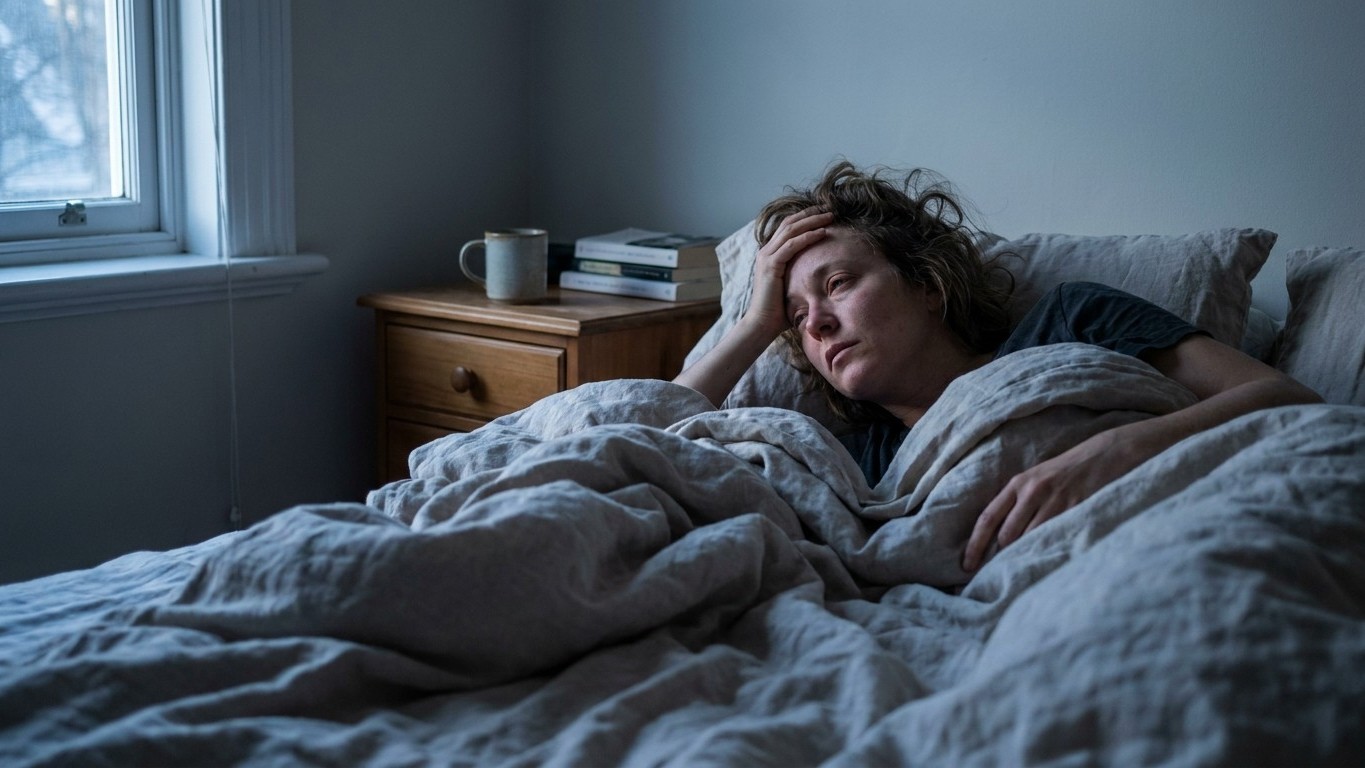
Fourteen days. That’s all it took, in a landmark University of Chicago trial, for identical diets to produce completely different results depending on one single variable: sleep duration. Ten overweight adults followed the same calorie-restricted diet twice, once sleeping 8.5 hours a night, once restricted to 5.5 hours. The participants lost the same amount of weight under both conditions; however, sleep restriction decreased the proportion of weight lost as fat by 55% and increased the loss of fat-free mass by 60%. The scale told one story. The body composition scan told a completely different one.
Key takeaways
- Same calories, same weight loss on the scale—but completely different body composition depending on sleep duration
- A single sleepless night triggers hormonal shifts that reduce muscle protein synthesis by 18% and alter fat oxidation
- Trading sleep for extra gym sessions backfires: your body prioritizes breaking down muscle over fat when sleep-deprived
The same scale number, a completely different body
This is the study that anyone cutting sleep to squeeze in more training sessions should know about, because the numbers are startling. During the well-rested phase of the trial, participants lost roughly 1.4 kg of pure fat over the two weeks. During the sleep-restricted phase, on the exact same calorie deficit, that figure dropped to around 0.6 kg. The rest of the weight loss simply shifted columns, coming instead from muscle, organ tissue and other lean mass. This was accompanied by markers of enhanced neuroendocrine adaptation to caloric restriction, increased hunger, and a shift in relative substrate utilization toward oxidation of less fat. Put another way: short-sleeping dieters weren’t just failing to lose fat as efficiently, their bodies were actively choosing to burn less fat and more protein for fuel.
The researchers also tracked what was happening biochemically during the restricted-sleep phase. Sleep restriction was accompanied by increased hunger and higher fasting and postprandial respiratory quotient and 24-hour acylated ghrelin concentrations at the end of the 5.5-hour time-in-bed condition. A higher respiratory quotient means the body is burning proportionally more carbohydrate and protein and less fat for energy, exactly the shift you don’t want when the whole point of dieting is to strip away adipose tissue. Meanwhile resting metabolic rate and 24-hour plasma epinephrine concentrations were lower at the end of the 5.5-hour compared to the 8.5-hour time-in-bed condition, suggesting the sleep-deprived body was also quietly slowing its own calorie burn.
The hormones doing the damage
What’s remarkable is how quickly this shift kicks in. A separate crossover study out of Physiological Reports didn’t even need two weeks, a single sleepless night was enough. Researchers found acute sleep deprivation reduced muscle protein synthesis by 18%, alongside hormonal swings that explain why. Sleep deprivation increased plasma cortisol by 21% and decreased plasma testosterone by 24% the following morning. Cortisol is a stress hormone that actively promotes the breakdown of muscle tissue, while testosterone (in both men and women, albeit at different baseline levels) helps preserve it. Lose sleep, and you tilt that balance firmly towards breakdown rather than repair. As the study authors put it, cortisol drives catabolism by activating key muscle protein degradation pathways.
Deep, slow-wave sleep is also when the body releases its largest natural pulse of growth hormone, which supports tissue repair and fat metabolism. Skimp on those hours and that pulse gets blunted, meaning muscles miss a genuine recovery window right when training demands, not sleep, are going up. It’s a cruel irony for anyone training harder specifically to accelerate fat loss: the extra sessions increase the need for recovery at precisely the moment sleep is being sacrificed to make room for them.
Why extra training sessions don’t compensate
The instinct to trade sleep for gym time makes a certain logical sense on paper, more training equals more calories burned equals faster results. But the physiology doesn’t cooperate. Ghrelin, the hormone that drives hunger, rises with sleep restriction, which is part of why sleep curtailment in healthy young men is associated with decreased leptin levels, elevated ghrelin levels, and increased hunger and appetite. Training on 5.5 hours of sleep also means arriving at each session with less muscle glycogen replenished overnight, so strength and endurance output tend to suffer even as perceived effort feels harder. A study in the Journal of Science and Medicine in Sport reviewing this literature concluded that short habitual sleep blunts strength and hypertrophy adaptations, meaning the training itself becomes less effective at protecting the muscle mass that a calorie deficit is already threatening.
None of this means training is pointless during a diet, resistance training remains one of the best tools for signalling to the body that muscle should be preserved. The issue is specifically the trade-off of sleep hours for training hours, when both are competing for the same 24-hour window and only one of them actively protects lean tissue while asleep.
What this means for anyone dieting right now
The practical takeaway isn’t complicated, even if it runs against gym culture instinct. Seven to nine hours remains the sensible target for most adults, and during a calorie deficit specifically, protecting that sleep window matters as much as protein intake or training volume. If a schedule genuinely can’t accommodate both extra training and adequate sleep, the sleep should generally win, given what the evidence shows about where the weight actually comes from otherwise.
One detail from the original Chicago trial rarely gets mentioned: the fat-free mass being lost isn’t purely muscle, it includes water, glycogen stores and other lean tissue too, which is partly why the scale numbers matched so closely between the two conditions despite such different underlying outcomes. It’s a useful reminder that the number on the scale, on its own, tells you almost nothing about what’s actually disappearing beneath the skin. As always, anyone making significant changes to diet, sleep or training patterns, particularly alongside existing health conditions, should check in with their GP first.
Sources : physoc.onlinelibrary.wiley.com | researchgate.net