
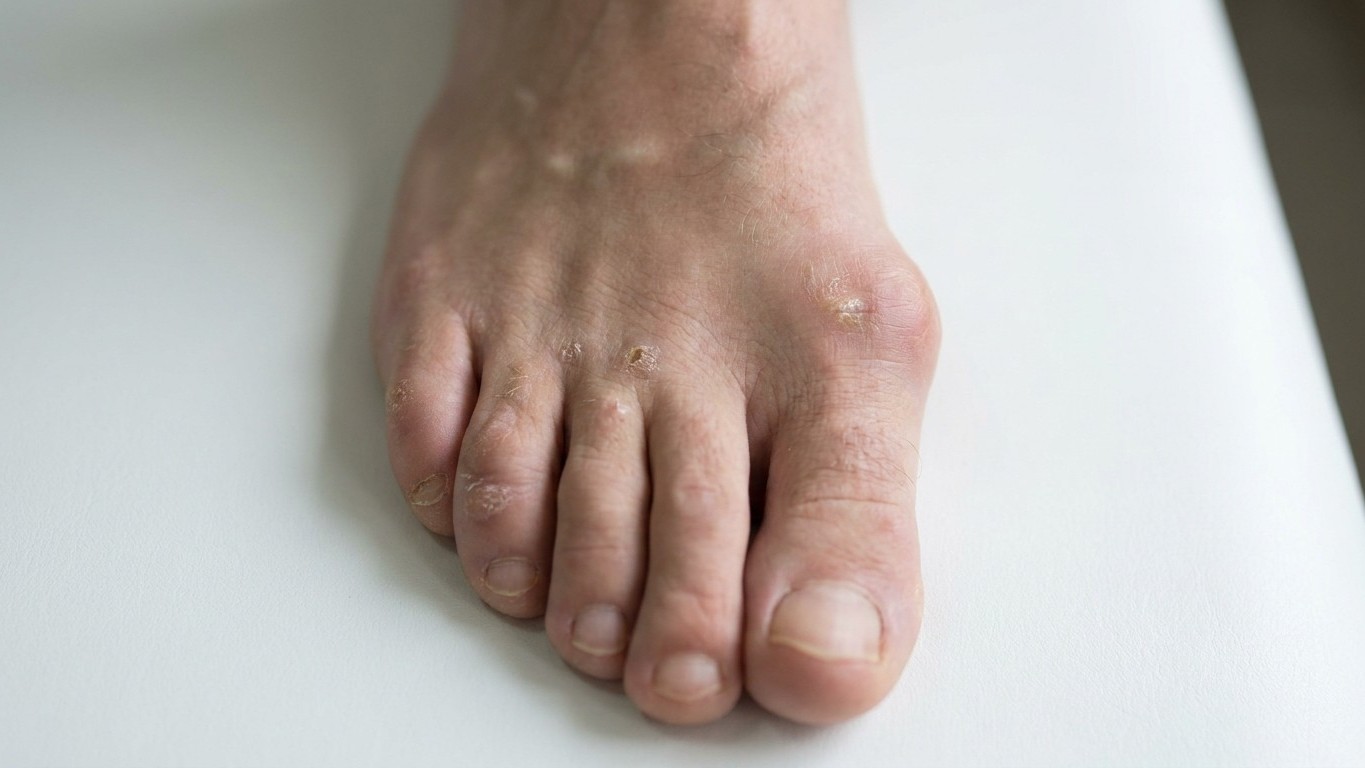
The X-ray told a story I hadn’t been prepared for: a big toe bent inward at an angle that had crept from a barely-there deviation to something a doctor circled twice on the printout. This is precisely what happens inside a climbing shoe that’s been sized down for maximum edging power, and the science behind it has been documented far more thoroughly than most climbers realise.
Researchers using X-ray imaging to compare the same climber’s foot barefoot versus wearing a climbing shoe found a striking jump. The hallux valgus angle increases 14 degrees when barefoot to 21 degrees when placed in a climbing shoe. That’s not a subtle shift. It’s the kind of change that, repeated thousands of times across years of sessions, starts to remodel the joint rather than simply compress it for an hour at a time.
Key takeaways
- Researchers found the big toe joint angle increases by 7 degrees inside a downsized climbing shoe—a shift that compounds over thousands of sessions
- Long-term climbers develop bunions at 10x the rate of the general population, with 73% showing the condition in at least one foot
- The warning signs are subtle and arrive gradually: calluses, stiffness, persistent numbness—until one day the joint has visibly changed shape
What a downsized shoe actually does to the joint
Climbing shoes are deliberately built with a pointed, tapering toe box so the foot narrows to a single pressure point on tiny edges. In order to support your climbing, your feet have to conform to the shape of the climbing shoes, most of which are designed so that toes come together to a pointed tip at the top of the shoe, giving the ability to step on the smallest holds, which puts pressure on the toes. Sizing down intensifies that squeeze, and the big toe joint, the metatarsophalangeal joint at the base of the hallux, bears the brunt of it, particularly during aggressive edging when nearly all of your bodyweight funnels through that single contact point.
A survey-based study looking specifically at climbers’ footwear habits found the scale of the problem is bigger than most people admit to themselves. Ill-fitting and excessively tight footwear was found in 55 out of 56 rock climbers, foot pain during activity was commonplace in 91% of the climbers, and a mean size reduction of almost 4 UK shoe sizes was found between climbers’ street shoe size and their climbing footwear. Perhaps more revealing is who’s doing the squeezing hardest. There is an unfortunate association of climbers of higher abilities seeking a tighter shoe fit. The better you get, the more likely you are to trade comfort for precision, often without weighing what that trade costs over a decade.
The bunion nobody warned you about
Hallux valgus, the medical term for what most people call a bunion, doesn’t appear overnight. It’s a slow drift of the big toe towards its neighbours, and long-term climbers show it at rates that dwarf the general population. In a study of athletes who had spent five years or longer climbing, researchers discovered that 53% had the condition in both feet and 20% had it in one foot, compared to the standard 4.5% of cases found in adults aged 17-44. That’s roughly ten times the baseline rate in the general adult population.
Genetics still calls a lot of the shots here, and I want to be fair to the research rather than turn this into a scare story. Bunions are not actually caused by wearing tight shoes; they’re most often caused by an inherited faulty mechanical structure of the foot, but climbing shoes can worsen the deformity. if you were already predisposed, years of forcing your forefoot into a narrow shell will accelerate and exaggerate a problem your feet might have developed anyway, just more slowly and less severely.
The visible signs tend to arrive well before an X-ray confirms anything structural. Podiatrists who treat climbers regularly describe a fairly predictable pattern of wear and tear that builds gradually rather than suddenly:
- Dorsal calluses forming over the top of the great toe and outer digits
- A deformed or stiffening joint at the base of the big toe
- Persistent numbness that lingers well after the shoes come off
- A visible bump or widening at the joint when barefoot
None of these appear after one aggressive session. They build the way a river carves a canyon, slowly, through repetition, until one day the shape has simply changed.
When to stop guessing and see someone
There’s a meaningful difference between the ordinary ache of a hard redpoint day and a joint quietly reorganising itself. Podiatry guidance for climbers is fairly specific about where that line sits. See a podiatrist if you have persistent toe numbness lasting more than 2 hours after removing shoes, progressive toe deformity, painful or damaged toenails, big toe joint stiffness affecting walking, or any acute foot injury from a fall. Numbness that clears within minutes of unlacing is circulation returning to normal. Numbness that’s still there at dinner time is your nerves asking for a different conversation.
For climbers training seriously, the advice goes further than just watching for red flags. Annual foot health screening is recommended for serious climbers training more than three days per week. That’s not excessive caution; it’s the same logic that has runners checking gait and cyclists getting bike fits. Feet under repeated, unusual load deserve the same scrutiny.
The encouraging bit is that most structural changes in long-term climbers are described by the specialists who see them regularly as manageable rather than catastrophic. Mild structural changes, such as slight bunion progression and toe crowding, are common in long-term climbers but are usually not disabling. That’s a genuinely different message from the pain and pathology, and worth holding onto if your own X-ray ever throws you a surprise.
If you climb outside of shoes for anything, the fix isn’t dramatic. Climbing shoes themselves are too low-volume for orthotics, but custom orthotics in everyday shoes counteract the forefoot compression and arch flattening that climbing shoes cause. Pair that with genuinely roomy trainers on rest days, and resist the pull toward a half-size-smaller pair purely for one more millimetre of edging precision. Your feet are doing the counting anyway, joint by joint, whether you’re paying attention or not.
Sources : ncbi.nlm.nih.gov | theclimbingdoctor.com