
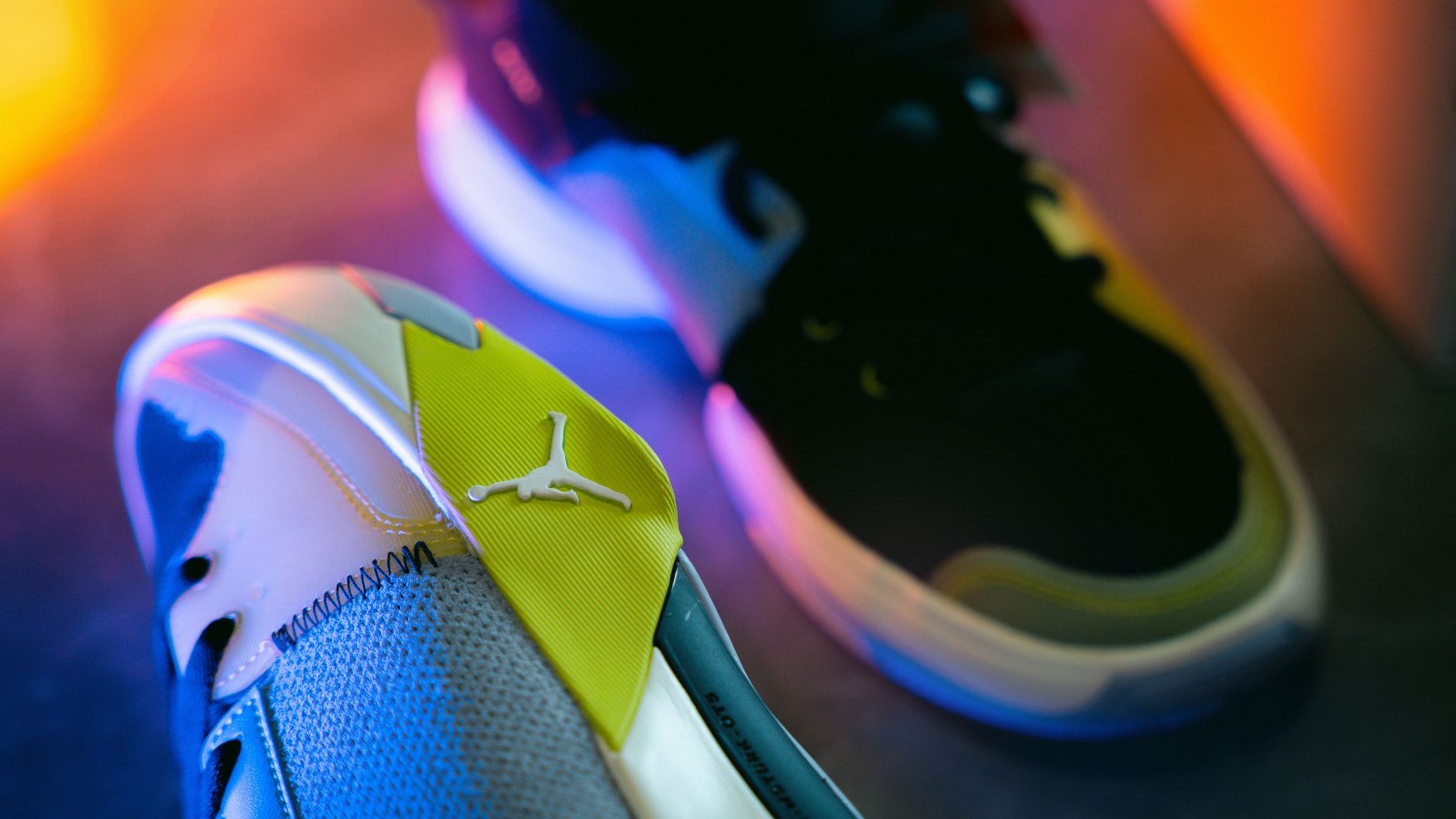
Look down at your trainers right now. The outsole, that grippy rubber sole, is probably what tells you they need replacing: worn tread, smooth patches near the toes, maybe a hole starting to form. But that’s the wrong layer to watch. The real damage happens invisibly, inside the midsole, and it starts long before the rubber shows any wear at all.
The midsole is the foam layer sandwiched between the outsole and the upper, and it’s doing the actual work of protecting your knees, hips and shins from impact. Every time your foot hits the ground, the midsole absorbs the impact, and that layer between the outsole and the upper is the most important part of the shoe from an injury prevention standpoint, and it is also the first part to wear out. Most runners never think about it because it’s hidden. They judge a shoe’s condition by looking at the sole pattern, which is a bit like judging a car’s brakes by the state of its paintwork.
Key takeaways
- The foam layer nobody sees is failing faster than you think—sometimes within the first 50 miles
- Your body masks the problem through silent compensation, right up until injury becomes unavoidable
- A simple thumb-press test reveals what the outsole tread never will—and it takes 10 seconds
What’s actually happening inside the foam
Most running shoe midsoles are made from EVA or PEBA foam, materials engineered to compress on impact and spring back between strides. With enough use, that foam loses its ability to recover. This isn’t a vague marketing claim, either. It’s been measured in laboratories using proper mechanical testing.
One of the earliest and most cited pieces of research on this came from Tulane University in the 1980s. Cook, Kester and Brunet examined the degradation in mechanical shock absorption in a variety of different shoes, using a running machine which simulated the impact associated with running hundreds of miles in a pair of shoes, then tested how the shock absorption changed over time. What they found was striking: cushioning didn’t decline gradually and evenly. In the machine-simulated running, shoes had decreased to 75% of their initial cushion after only 50 miles; this cushioning dropped to 67% after 150 miles and ultimately to 60% after 500 miles. The steepest drop happens almost immediately. That could explain why a shoe that felt brilliant in the shop starts feeling flat after your first few runs, well before you’ve clocked up any serious distance.
Later research using peer-reviewed biomechanical methods confirmed the pattern with real runners, not just machines. A study published in the Journal of Biomechanics tested EVA foam midsoles across 500 kilometres of actual running and found genuinely concerning results. The peak plantar pressure increased on average by 100% after 500 km run, and scanning electron microscopy showed that structural damage, including wrinkling of faces and some holes, occurred in the foam after 750 km run. In plain terms, the foam’s internal cell structure was physically breaking down, not just feeling different underfoot.
Not every study lands on the same number, which is worth being honest about. A separate trial with fifteen amateur runners found a more modest change, a 4.88% (95% CI = 3.40–6.36%) increase in peak force after 500 km of running, and the authors noted that the results were inconsistent with those reported based on machine-simulated running studies, which overevaluated the cushioning deterioration of running shoes. So the exact percentage varies by shoe, foam density and testing method. What doesn’t vary is the direction: cushioning always goes down, never up, and the outsole gives you almost no clue this is happening.
Why your body pays the price quietly
Here’s the part that should concern anyone training for a spring marathon or just doing a regular parkrun habit. Your body compensates for failing cushioning without you noticing, right up until it can’t. Your body adapts to the gradually changing situation beneath your soles, allowing you to maintain an even stride over a range of shoe conditions, but the way your body does this is by altering muscle activation. So when you run in a shoe that’s thinner and stiffer after 500 miles of training, your leg muscles are tuned to be looser, compensating for the shock absorption lost from your shoes.
That compensation has a cost. Sports medicine clinicians who track this describe a clear mechanical chain reaction. Degraded cushioning transfers greater impact force through the knee with every stride, contributing to conditions like IT band syndrome and patellofemoral pain. Other commonly cited overuse issues linked to worn-out cushioning include shin splints and plantar fasciitis. None of this means your knee pain is definitely caused by your trainers, of course, and if discomfort persists you should see your GP or a physiotherapist rather than simply assuming it’s your footwear. But it’s a variable worth ruling out early, particularly if the pain appeared without any change to your training load, terrain or running technique.
So what should you actually do about it
The industry-standard advice, backed by REI’s runner guidance and echoed across sports medicine sources, is to replace running shoes roughly every 300 to 500 miles. You should generally replace your running shoes every 300-500 miles because it’s around this point that the midsole cushioning on most shoes will lose resiliency and stop absorbing shock as well as when newer, which can cause more impact on your muscles and joints. If you’re clocking up around 15 miles a week, that works out to roughly five to eight months per pair.
Body weight and terrain shift that window considerably. Your body weight affects the amount of impact transferred through your shoes with every step, and heavier runners compress the midsoles more quickly, which leads to faster breakdown and reduced cushioning. Road surfaces are harsher on foam than treadmills or trail paths, so pavement pounders tend to reach the end of a shoe’s useful life sooner than someone doing most of their mileage on grass or a gym belt.
Rather than relying purely on a calendar or an odometer, try a simple physical check every few weeks: press your thumb firmly into the midsole foam, ideally against a newer pair for comparison. At 300-plus miles, press into the midsole and compare the response to a newer shoe; dense, unresponsive foam means cushioning has failed. It’s a rough test, not a laboratory measurement, but it takes ten seconds and tells you something the tread pattern never will. Newer foam types such as PEBA and supercritical compounds are proving noticeably more resistant to this kind of compression set than traditional EVA, which is worth bearing in mind if you’re a high-mileage runner shopping for your next pair, since the material listed on the box may matter more to your joints than the price tag does.
Sources : borntorunapparel.com | researchgate.net