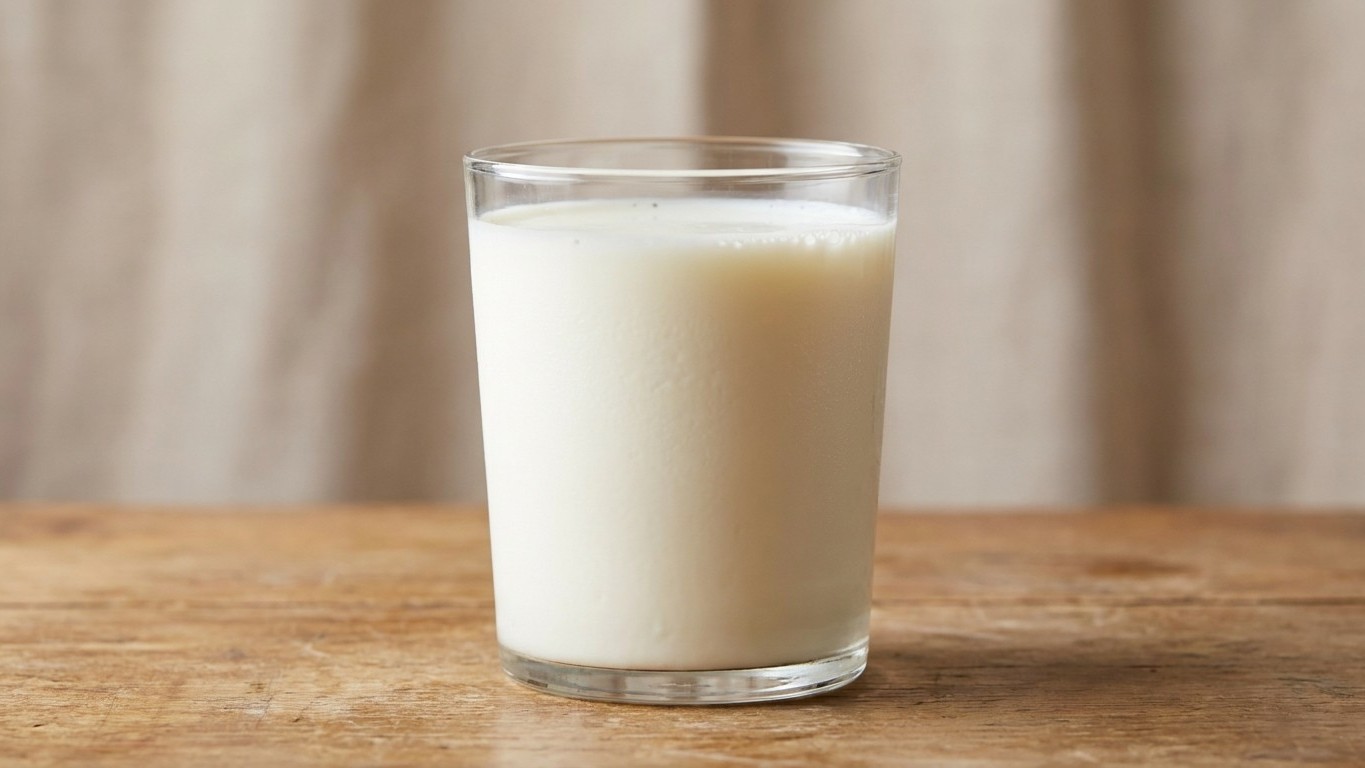
Skimmed cow’s milk tops the list, delivering around 3.6g of protein per 100ml, just ahead of semi-skimmed and whole milk, which both sit close to 3.3-3.4g. Among mainstream options sold in UK supermarkets, dairy milk in any fat variety beats almost every plant-based alternative on the shelf, with one notable exception: pea-protein milks, which some brands have engineered to match or even exceed dairy’s protein content.
That gap between dairy and most plant milks catches people out, especially those switching to oat or almond drinks assuming they’re getting a like-for-like swap. They’re not. A glass of oat milk typically contains somewhere between 0.3g and 1g of protein per 100ml, depending on the brand and whether it’s been fortified. Almond milk fares worse still, often below 0.5g, because almonds themselves are diluted so heavily with water during processing that barely any of their natural protein content survives into the final product.
Key takeaways
- One type of dairy milk consistently outperforms the rest—but the difference might surprise you
- Popular plant-based swaps could be costing you more protein than you realize
- A newcomer to UK shelves is quietly matching dairy’s protein punch
Why skimmed milk edges out whole milk
The reason skimmed milk often shows a slightly higher protein figure than whole milk comes down to processing, not magic. When fat is removed, manufacturers sometimes adjust the remaining liquid to standardise the product, which can concentrate the naturally occurring whey and casein proteins fractionally. According to data compiled in the UK’s official McCance and Widdowson’s Composition of Foods dataset, semi-skimmed and skimmed milk protein values sit within a few decimal points of each other, so the practical difference between them is negligible for most people’s daily needs.
What matters more is consistency. Cow’s milk, regardless of fat level, delivers a complete protein profile containing all nine essential amino acids, alongside casein and whey in a roughly 80:20 ratio. That combination is partly why milk has long featured in sports nutrition circles, casein digests slowly and whey quickly, giving a blend of sustained and immediate amino acid release. Goat’s milk runs a close second to cow’s milk, typically offering around 3.1-3.3g per 100ml, with a slightly different fat structure that some people find easier to digest, though the protein content itself isn’t meaningfully different.
Where plant-based milks fall short (and the exception)
Soya milk has traditionally been the plant-based frontrunner, and for good reason. Unsweetened soya drinks generally provide between 2.8g and 3.6g of protein per 100ml, putting them within touching distance of dairy and streets ahead of oat, rice, or almond alternatives. Soya protein is also considered a complete protein, unlike most plant sources, which makes it a genuinely useful substitute for anyone avoiding dairy but still wanting a protein contribution from their morning cereal or tea.
Pea-based milks have shifted the picture further in the past few years. Formulated specifically to compete with dairy on protein, several UK brands now market pea drinks containing 3g or more per 100ml, in some cases marketed as high as dairy or beyond. The trade-off tends to be texture and taste, pea protein can lend a slightly gritty mouthfeel or an earthy flavour that some people need a few tries to get used to. Rice milk, by contrast, remains one of the weakest choices for protein, often under 0.3g per 100ml, and works better as a flavour-neutral base than a nutritional contributor.
Lactose-free milk deserves a mention too, since it’s frequently misunderstood as a lower-protein product. It isn’t. Lactose-free dairy milk undergoes an enzymatic process that breaks down lactose into simpler sugars, but the protein structure remains essentially untouched, so nutritionally it tracks very closely with standard cow’s milk.
Getting more protein from your daily milk habit
For anyone trying to nudge their protein intake upward without overhauling their diet, small swaps add up. Choosing skimmed or semi-skimmed dairy milk over a plant-based alternative in your daily porridge, tea, or coffee can add an extra gram or two per serving, which sounds trivial until you’re doing it three or four times a day. Fortified milk powders, sometimes stocked in the baking aisle, can also be stirred into standard milk to boost both protein and calcium content, a trick used for decades in hospital and care settings for patients needing extra nutritional support without extra volume.
Greek-style yoghurt and skyr, while not technically milk, are worth a mention for anyone comparing dairy protein sources side by side, since they can contain two to three times the protein of standard milk per 100g thanks to the straining process that removes whey. If you’re specifically shopping for milk though, and want the simplest rule of thumb, skimmed cow’s milk or a protein-fortified pea drink are your best bets on a standard UK supermarket shelf.
One detail that surprises people: full-fat and skimmed milk contain almost identical protein, so choosing skimmed for “extra protein” barely moves the needle, it’s really the fat and calorie content that changes, not the amino acids. If you’re managing a specific health condition or considering major dietary changes around protein intake, it’s worth having a conversation with your GP or a registered dietitian, particularly if kidney function or other medical factors are involved.