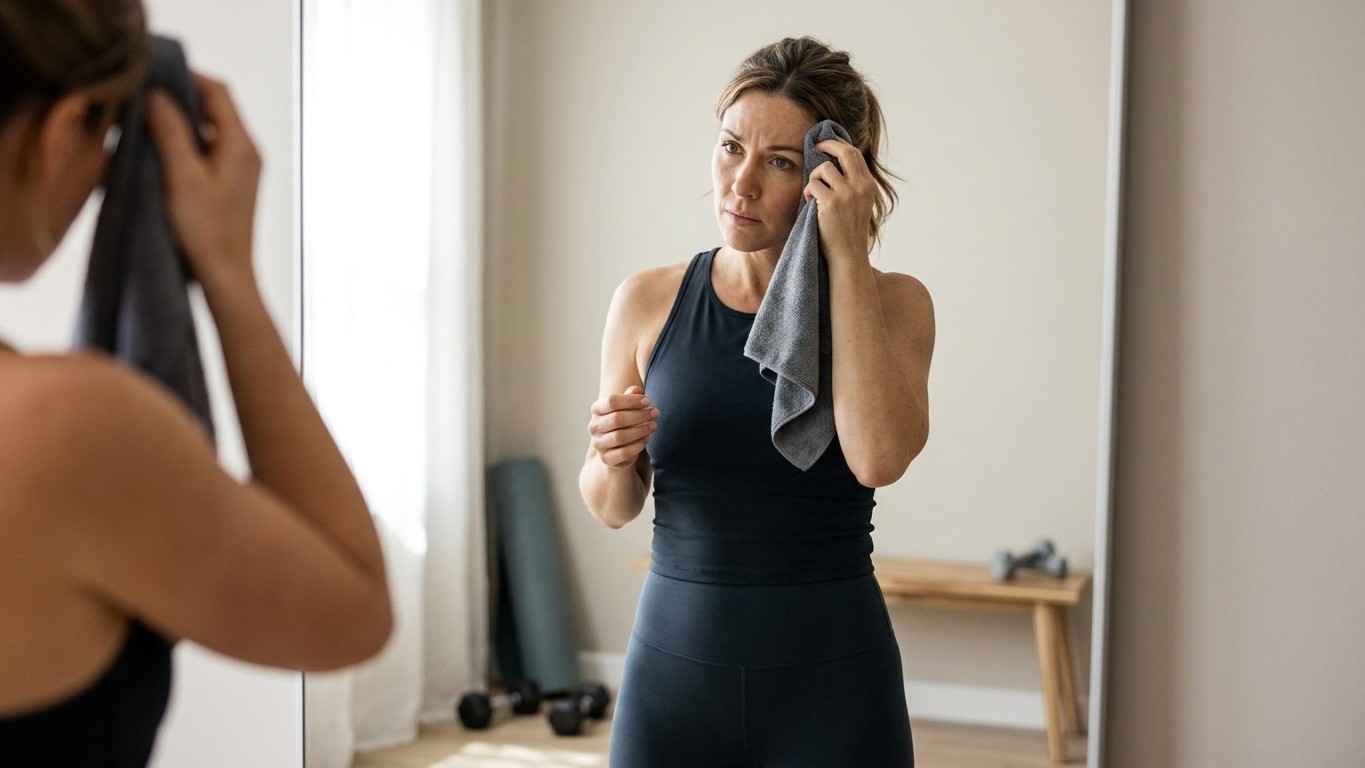
Sweating like a tap left running doesn’t mean you’ve torched more calories than the person next to you who barely glistened. It means your body is regulating its temperature, nothing more, nothing less. A personal trainer at a gym in Leeds put it to me plainly during a particularly soggy spin class: “That puddle under your bike says more about the room’s humidity than your metabolism.” I’d spent two years assuming otherwise, and it turned out to be one of the more useful corrections of my adult life.
Sweat is a cooling mechanism, produced by eccrine glands when your core temperature rises, whether from exercise, heat, stress, or a particularly aggressive bowl of curry. The amount you produce depends on genetics, fitness level, how many sweat glands you happen to have (around two to four million, varying person to person), the ambient temperature, humidity, and even what you ate that morning. None of these factors are calories burned. A very fit person often sweats earlier and more profusely than a beginner doing the exact same workout, precisely because their cooling system has become more efficient at responding quickly. The beginner, red-faced and dry, might actually be working harder relative to their fitness level.
Key takeaways
- A Leeds gym trainer reveals the uncomfortable truth about why you’re soaked while others stay dry during the same workout
- Your body’s cooling system efficiency has nothing to do with the energy you’re actually burning
- The scale never moved because you’ve been measuring the wrong thing all along
What actually burns calories, then
Energy expenditure during exercise depends on the mechanical work your muscles perform: how much force, over what distance, for how long, against how much resistance. This is why a brisk uphill walk in cool weather can burn more calories than a lighter session in a stifling hot studio, even if the second leaves your shirt soaked through. The NHS notes that moderate activities like brisk walking, cycling, or swimming raise your heart rate and breathing rate in ways that reflect genuine energy use, and it’s this cardiovascular and muscular effort that matters, not the visible moisture on your skin.
I found this counterintuitive at first, because sweat feels like proof. It’s tangible, it drips, it stains your kit. But heart rate, perceived exertion, and how sore you are the next day are far better indicators of effort than how wet your t-shirt gets. Some of my hardest strength sessions, the ones where I could barely climb stairs the following morning, left me barely sweating at all, simply because I was lifting slowly and resting between sets rather than moving continuously in a heated room.
Why the scale doesn’t move even when you’re drenched
This is where the frustration usually sets in. You leave a class feeling like you’ve achieved something significant, step on the scale expecting reward, and see nothing. Or worse, an increase. Part of that number is simply water loss, which returns the moment you rehydrate, so any dip on the scale straight after a sweaty class is temporary and meaningless for fat loss. The other part is that calorie burn from a single session, even an intense one, is often smaller than people assume. A 45-minute class might burn somewhere in the region of 300 to 500 calories depending on intensity and body weight, which is easily offset by a post-workout smoothie or a slightly larger dinner portion eaten because you feel you’ve “earned” it.
There’s also a psychological trap worth naming honestly: heavily sweating during a class in a warm studio can trick the brain into a false sense of accomplishment, which sometimes leads to relaxed eating choices later that quietly cancel out the deficit. I’ve done this myself, more times than I’d like to admit, treating a dripping forehead as licence for a takeaway.
How to actually track whether a workout is working
Instead of judging a session by how wet your kit is, a few more reliable signals exist. Heart rate during exercise, tracked with a monitor or even just checking whether you can hold a conversation, tells you far more about intensity than perspiration does. Progressive overload, meaning you’re lifting heavier, running further, or completing more reps over weeks, is a genuine marker of improving fitness. And simple recovery signs, like reduced resting heart rate over time or improved sleep quality, tend to reflect real physiological adaptation far better than a soaked collar.
For those tracking body composition rather than just weight, measurements like waist circumference or how clothes fit often tell a more honest story than the number on the scale, which fluctuates daily with water retention, hormones, and digestion regardless of how hard you trained.
None of this means sweat is meaningless. It’s a sign your body is working to cool itself, which usually accompanies effort, and staying properly hydrated during and after a sweaty session matters for performance and safety, particularly in warm rooms or hot weather. The NHS advises drinking water regularly during exercise rather than waiting until you feel thirsty, especially in heated studios where fluid loss can be substantial. But treating the volume of sweat as a scoreboard for fat loss sets people up for disappointment, and sometimes for the wrong training choices altogether, like gravitating toward hot, humid classes over cooler, more metabolically demanding strength sessions simply because the former feels more dramatic.
The trainer who corrected me that day suggested a habit I’ve kept since: rating each workout on how hard it felt using a simple one-to-ten scale, rather than how much I’d sweated. It’s a small shift, but it realigns your sense of achievement with something your body actually responds to. If you’re chasing fat loss or fitness gains and feeling stuck despite feeling drenched after every session, it may be worth discussing your training plan and diet with a GP or a qualified trainer, because the answer is rarely more sweat. It’s usually more resistance, more consistency, or simply eating in line with what you’re actually burning rather than what you feel you’ve earned.