Light dumbbells, those modest 5 or 8 kg pairs gathering dust in the corner of the gym — have spent decades being dismissed as tools for rehabilitation or gentle warm-ups. The assumption ran deep: real gains required heavy iron, progressive overload measured in plates, and the kind of effort that left you red-faced and shaking. A growing body of research has quietly dismantled that assumption, and serious strength coaches are paying attention.
Key takeaways
- McMaster University research reveals light weights taken to failure activate the same muscle-building mechanisms as heavy iron
- The secret weapon isn’t the load—it’s pushing to genuine muscular failure, a threshold most gym-goers never reach
- Joint protection emerges as the unexpected advantage: identical hypertrophy gains with a fraction of the chronic wear and tear
What the science actually shows
The pivotal shift came from a series of studies comparing high-load and low-load resistance training taken to the point of muscular failure. Researchers at McMaster University in Canada found that participants lifting lighter weights (around 30% of their one-repetition maximum) to failure gained comparable muscle mass to those lifting at 80% of their maximum. The mechanism matters here: muscle growth is driven by metabolic stress, mechanical tension, and muscle damage. When you push a light weight to the point where another rep is genuinely impossible, you recruit the same high-threshold motor units that heavy lifting activates. The muscle, bluntly, cannot tell the difference between struggling on rep 6 with 20 kg or rep 30 with 8 kg. Both produce the same physiological distress signal.
Strength gains are a slightly different story. Neural adaptations, the brain’s ability to coordinate muscle recruitment, do respond better to heavier loads. So if your sole goal is a bigger one-rep max, light-to-failure training alone won’t get you there. But for hypertrophy, the research is now quite clear: load matters far less than effort. The proximity to failure is the variable that counts.
Why “to failure” is doing all the heavy lifting
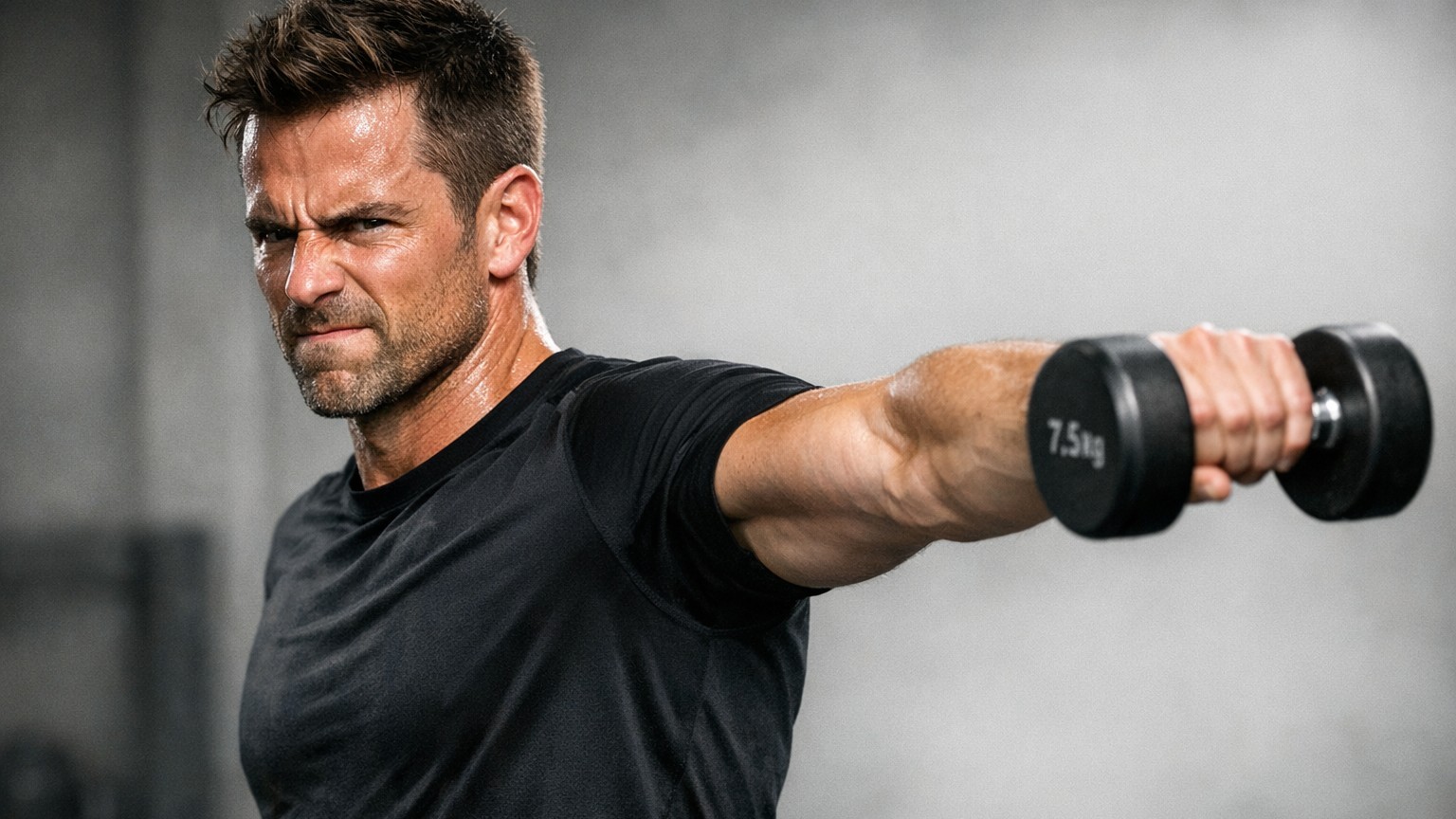
This is where most gym-goers get it wrong. Picking up a 6 kg dumbbell for 12 lateral raises and stopping because the set feels complete is fundamentally different from doing those lateral raises until your shoulder muscles physically refuse to continue. The first approach, common and comfortable, leaves the most growth-promoting stimulus on the table. The second, genuinely uncomfortable, is what separates a productive set from an expensive stretching routine.
The concept of “reps in reserve” (RIR) has become central to how coaches now programme training. An RIR of 0 means you have nothing left. An RIR of 3 means you could have done three more. Research consistently shows that sets completed with 3 or more reps in reserve produce significantly less hypertrophic stimulus than sets taken to 0 or 1 RIR. Most recreational lifters, if they’re honest, rarely train below 3 RIR. They stop when it gets hard, not when it becomes impossible. Light dumbbells expose this tendency ruthlessly: because the sets run long, the discomfort accumulates slowly, and quitting early feels more justifiable with a weight that looks unimpressive.
There is also a practical case for higher-rep failure training that has nothing to do with ego. Joint stress accumulates over years of heavy loading. Tendons, in particular, adapt more slowly than muscles, and the chronic strain of always training heavy is a significant contributor to the overuse injuries, elbow tendinopathy, rotator cuff issues, knee discomfort, that eventually sideline dedicated lifters. Achieving the same hypertrophic result with a fraction of the compressive load on joints is, from a long-term perspective, not a compromise. It’s an advantage.
How to actually programme light-to-failure work
Incorporating this approach requires some adjustment in mindset before it requires any adjustment in programming. The goal is to make every working set count, not to make every set look impressive. A useful starting point: select a weight you can lift for around 20 to 30 controlled repetitions before reaching failure, then do exactly that, without stopping early to preserve your composure.
Isolation exercises lend themselves particularly well to this method. Lateral raises, bicep curls, tricep extensions, and cable flyes are all movements where joint integrity matters and heavy loading often causes compensatory technique breakdown. Taking these to failure with a light-to-moderate load is both safer and, per the evidence, equally effective for muscle building. The discomfort at rep 25 of a lateral raise is genuinely unpleasant, a deep, accumulating burn that heavy lifters often haven’t experienced and frequently underestimate.
Compound movements are trickier. Squats and deadlifts taken to true muscular failure carry real injury risk as technique deteriorates under fatigue. Here, moderate loads (60 to 70% of one-rep max) with a careful approach to failure, perhaps stopping at 1 RIR, tend to be a more sensible application. The light-to-failure principle is most powerfully applied to accessory work, where the risk profile is lower and the volume can be meaningfully increased.
One practical consideration worth flagging: rest periods need to be longer than they feel like they should be when you’re holding a 6 kg dumbbell. Because the sets are long and the metabolic fatigue is real, shortchanging rest will compromise performance on the next set. Two to three minutes between sets is appropriate, even when the weight looks trivial to anyone watching.
A note on who this is actually for
Light-to-failure training isn’t a beginner shortcut or a consolation prize for those avoiding the squat rack. Many competitive bodybuilders have used high-rep failure work as a deliberate tool for decades, often without the scientific vocabulary to explain why it worked. What’s changed is the research catching up to the practice, giving coaches and athletes a clearer framework for applying it strategically rather than accidentally.
One detail that often surprises people: at very low loads (below 20% of one-rep max), the hypertrophic response does appear to diminish even when taken to failure, suggesting there is a floor below which light is simply too light. The sweet spot sits between 30 and 60% of maximum, a range that gives you flexibility, joint comfort, and, if you’re willing to push through the burn, results that match anything the heavy rack can offer.
Always consult your GP or a qualified healthcare professional before making significant changes to your exercise routine, particularly if you have existing joint or musculoskeletal concerns.