
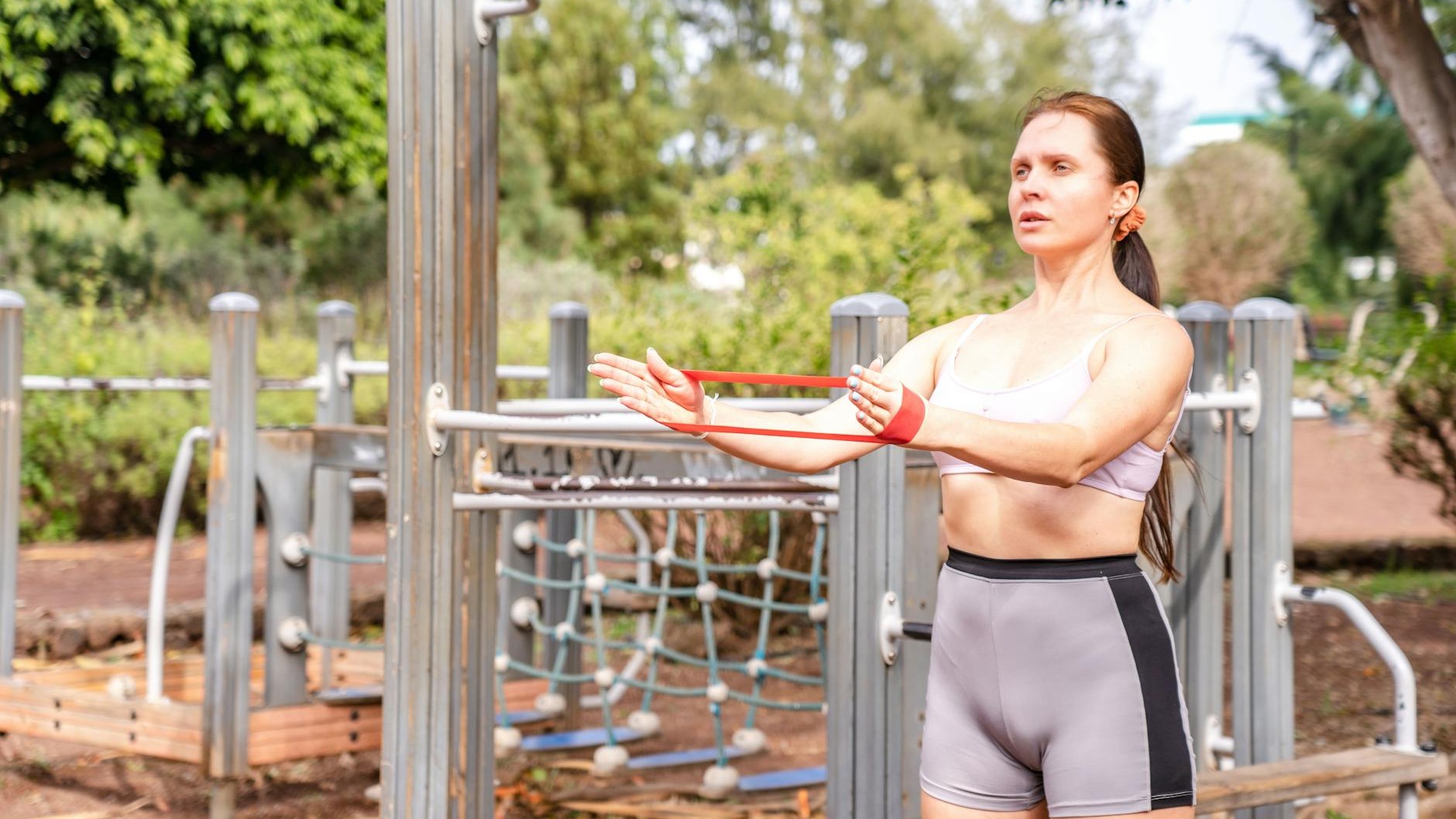
Resistance bands snap. Not always dramatically, not always dangerously, but they do fail, and when they do, the consequences range from a startled yelp to a genuinely nasty injury. A snapped band recoils at speed, and if it catches your face, your eye, or the soft skin of your inner arm, the experience tends to concentrate the mind rather sharply. Mine caught me across the cheekbone mid-bicep curl on a Tuesday morning in March, and the welt lasted four days. The chalky, slightly sticky texture I’d been ignoring on the band’s surface for months was, I later learned, textbook latex degradation, and I had been warned by the material itself.
Key takeaways
- That powdery chalky coating on your bands is telling you something critical about their structural integrity
- A band sitting unused in poor storage can become dangerous faster than one used regularly in good conditions
- Where you keep your resistance bands matters more than how often you use them
What that chalky texture is actually telling you
Natural latex, which makes up most resistance bands, is a living material in the sense that it continues to react with its environment long after manufacture. Exposure to ultraviolet light accelerates a process called oxidation, which breaks down the polymer chains within the rubber. The visible result is a chalky, powdery residue on the surface, sometimes accompanied by small surface cracks if you stretch the band and look closely. My windowsill habit was, in retrospect, almost perfectly designed to ruin rubber: direct sunlight for several hours a day, temperature fluctuations between cold mornings and warm afternoons, and the occasional blast of condensation from the glass.
Ozone is another culprit that gets little attention. Produced naturally in the atmosphere and also by certain household appliances including air purifiers and some printers, ozone attacks the double bonds in rubber’s molecular structure. You cannot see or smell it at low concentrations, but the material notices. A band stored in a room with an ozone-generating device will degrade faster than one kept in a plain drawer, even if both are away from sunlight. The rubber industry has known this for decades, which is why high-grade latex products are often stored in sealed, opaque packaging until use.
How age and use interact (and why age usually wins)
Most manufacturers recommend replacing resistance bands every six to twenty-four months depending on frequency of use, though these figures rarely appear on the packaging itself. A band used daily at high resistance should probably be retired closer to the six-month end of that range. One used twice a week in moderate workouts might last comfortably to eighteen months. But here is the thing most people miss: a band that sits unused in poor storage conditions can become dangerous faster than one used regularly in good conditions. Active use means regular visual inspection. Passive storage means slow, invisible decay.
The physical signs to look for before each session take about fifteen seconds to check. Run the band through your fingers feeling for any surface tackiness or roughness that differs from the original texture. Hold it up to a light source and stretch it gently to around twice its resting length, looking for white stress lines or small tears in the material. Any visible crack, however superficial, is a retirement notice. Snap tests, where you release a stretched band suddenly to hear whether the sound is clean, are not a reliable safety measure and are best avoided for obvious reasons.
Fabric-covered bands, increasingly popular in recent years, present a different problem. The outer sleeve hides the latex core from visual inspection almost entirely. Some manufacturers use TPE (thermoplastic elastomer) rather than latex in these designs, which resists UV degradation better but can still crack with age and mechanical stress. The practical advice is identical: check the fabric for pilling or deformation at stress points, particularly at the loops, and if the band feels at all different from when new, replace it.
Storage that actually preserves them
The ideal storage environment for latex resistance bands is cool, dark, and away from electrical equipment. A lidded box or an opaque bag in a wardrobe or drawer is genuinely better than a hook on the wall or a tidy pile on a shelf. Temperature should ideally stay below 25°C, which in most British homes is achievable except perhaps during an unusually warm summer in a south-facing room. Avoid storing bands near radiators, even in winter when you’re training indoors more frequently and proximity is tempting for convenience.
Cleaning matters too. Sweat contains salts and oils that accelerate surface degradation, and wiping bands down with a damp cloth after use, then allowing them to dry completely before storage, extends their life meaningfully. Some people apply a very thin layer of talc to prevent bands sticking together in storage, which is fine, though it does make the chalky-degradation warning sign harder to read. If you use talc regularly, you’ll need to rely more heavily on the visual stretch test.
One detail that surprised me when I looked into this: temperature shock is a legitimate risk factor. Using a Resistance band immediately after taking it from a cold environment, a garden shed in January for example, puts stress on the material before it has warmed to room temperature. Allowing cold bands to acclimatise for ten to fifteen minutes before use is a minor inconvenience that reduces the risk of micro-tears developing at the point of maximum stretch.
The British Standards Institution and similar bodies do not currently publish consumer-facing replacement timelines for resistance bands specifically, which means the guidance available comes largely from manufacturers and sports physiotherapy sources rather than formal safety standards. That gap is worth keeping in mind when assessing how seriously to take a band whose purchase date you cannot remember. If you cannot recall when you bought it, that itself is probably your answer.