Eight weeks into working with a personal trainer, feeling genuinely proud of my consistency, I was not prepared for what came next. After watching me push, press, lunge, and crunch my way through session after session, my trainer simply pointed at the back of my body and said: “You’ve never once trained any of that.” She was right. I had spent two months completely ignoring my posterior chain, the long interconnected network of muscles running down the entire backside of my body, and I had no idea the damage that oversight was quietly doing.
Key takeaways
- A personal trainer discovered the author had spent 8 weeks completely ignoring an entire muscle group without realizing it
- 74% of gym-goers neglect at least one major muscle group, with posterior chain training being the most common blind spot
- Ignoring your back-side muscles leads to imbalances that cause knee pain, lower back injury, and poor posture—even if you feel strong
The Body You Can’t See in the Mirror
There is a deeply human tendency to train what you can see. The muscles on the front side of the body are often trained the most, simply because the front side is what you see in the mirror. The muscles on the backside of the body, the posterior chain, are neglected precisely because you can’t see them. Yet these are the muscles that do the most important work.
The posterior chain muscles live on the backside of your body and include the glutes, hamstrings, calves, erector spinae, lats, and rear shoulder muscles. Think of everything from the base of your skull to your heels, forming one continuous, coordinated system. Regardless of your sport, a strong posterior chain is the key to improved athletic performance. Explosive movements such as sprinting, jumping, and throwing heavily rely on the muscles in your backside. Developing the posterior chain can help you run faster, jump higher, and throw with greater power and precision.
A survey of 1,000 people by fitness researchers painted a sobering picture of how widespread this blind spot is. Only 26% give equal attention to all muscle areas, meaning almost three quarters of people are neglecting at least one muscle group during their workouts. While nearly half say they prioritise leg day, critical muscles like hamstrings, calves, and quads are getting left behind. In fact, only 13% claim to focus on their hamstrings, showing a clear discrepancy between what people think they are training versus what they actually are. That gap between intention and reality is where injuries are born.
What Happens When the Back Half Stays Silent
Ignoring certain areas during strength training can cause muscle imbalances that could wreck Performance and predispose you to injury. The posterior chain is particularly vulnerable to this neglect because of how most of us live day to day. Sitting “turns off” the posterior chain muscles, often leading to muscle imbalances, weakness, and tight hip flexors, which can wreak havoc on your lower back.
The gluteus maximus is one of the largest and strongest muscles in the entire body. It is considered an anti-gravity muscle because it helps us get up and down from sitting, and propels us when we jump, lift heavy objects, and climb stairs. When it is neglected and under-active, other muscles have to work harder and joints absorb extra wear and tear. The knock-on effects ripple outwards: when the gluteus maximus is weak, the hamstrings are forced to work harder and withstand additional stress, which predisposes them to strains and tears.
The hamstrings themselves are a notorious blind spot. Most of the neglected muscles are on the posterior side of the body, which can’t easily be seen when looking in a mirror. The quads tend to get more attention than the rear-facing hamstrings, which can result in muscular imbalances that cause knee pain and discomfort. The upper back tells a similar story. Trainees generally focus on vertical pulling exercises, such as pull-ups and lat pull-downs, and forget to train horizontal pulling exercises. This can lead to an imbalance between the lats and the rhomboids, which can also contribute to shoulder pain.
There’s also a posture dimension that most gym-goers completely underestimate. The muscles on the back of the body, which we tend to neglect because they’re out of sight, get over-stretched and under-strengthened relative to the anterior muscles. Over time, this can lead to chronic poor posture, painful rounded shoulders, and neck issues. If you find yourself regularly hunching over a laptop, the posterior chain is likely already paying a price.
The Science Is Fairly Compelling
A systematic review and meta-analysis published in a peer-reviewed journal looked specifically at posterior chain resistance training versus general exercise for people with chronic low back pain. Both approaches were effective in improving outcomes, but these effects were often greater in posterior chain resistance training, especially with longer training durations of 12-16 weeks compared to 6-8 weeks. The researchers concluded that clinicians should strongly consider dedicated posterior chain programmes for patients experiencing chronic back complaints. This is not niche advice, lower back pain affects an enormous proportion of the UK adult population at some point in their lives.
Strengthening the posterior chain is also important for preventing age-related bone and muscle mass loss. As you get older, if you don’t strength train these muscle groups properly and often enough, you may see even more decline in your muscle mass, and you might succumb to an increased risk for arthritis and other health issues, including injuries. Framed that way, posterior chain training is not just a performance upgrade, it’s a long-term investment in how your body ages.
How to Actually Start Training It
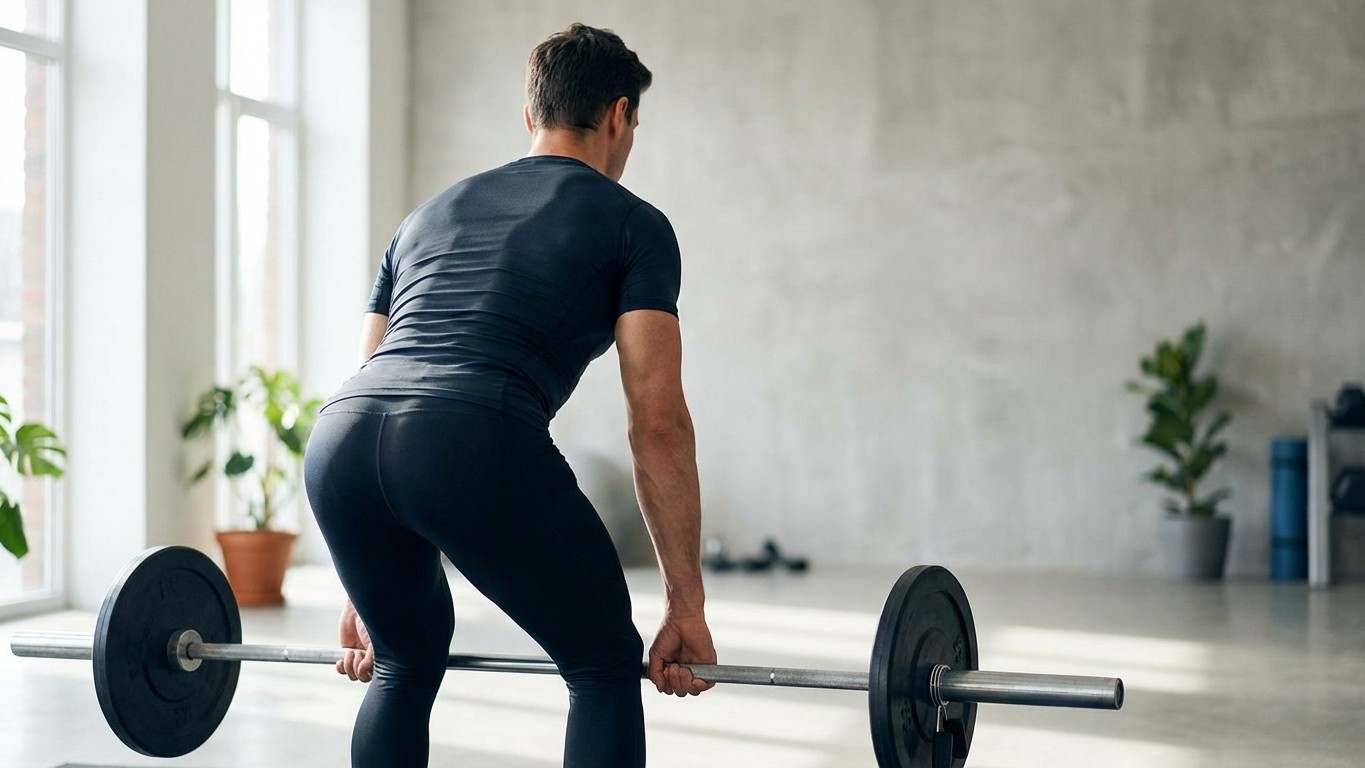
The good news is that you do not need to overhaul your entire programme. A few well-chosen movements, added consistently, can begin to redress the balance. Each variation of the deadlift works nearly every muscle of the posterior chain, with primary emphasis on the glutes, hamstrings, and spinal erectors. Since it works multiple muscles at once, it’s an extremely efficient exercise for those with limited time.
The adductors, located on the inner thigh, play a bigger role in squatting than most people realise. In a deep squat, they can contribute over 50% of the hip extension force, especially the large adductor magnus. If your adductors are weak, you’re leaving strength and power on the table. Similarly, the serratus anterior, known as the “boxer’s muscle,” helps move your shoulder blade forward and rotate it upward, which is key for overhead movements. It’s often neglected because pressing exercises like the bench press focus on pulling the shoulders back, not forward. Over time, this can limit mobility and lead to tightness or discomfort overhead.
For the hamstrings, Romanian deadlifts are a reliable starting point, keeping the movement hinge-based rather than knee-dominant. Doing each of these exercises once or twice per week, performing 3 to 6 sets of 5 to 10 reps per muscle group per week, is a great starting point for most people. Face pulls and band pull-aparts are low-barrier options for the upper posterior chain that can even be done at home with a resistance band.
My trainer’s observation changed how I think about training entirely. It reframed exercise from being about the muscles I admire to being about the ones that actually hold Everything together. The question worth sitting with is this: if someone filmed your workout over the next eight weeks, which half of your body would they never see you train?
As always, if you experience pain during exercise or have a pre-existing condition, please consult your GP or a qualified physiotherapist before making changes to your training programme.
Sources : pmc.ncbi.nlm.nih.gov | pubmed.ncbi.nlm.nih.gov