
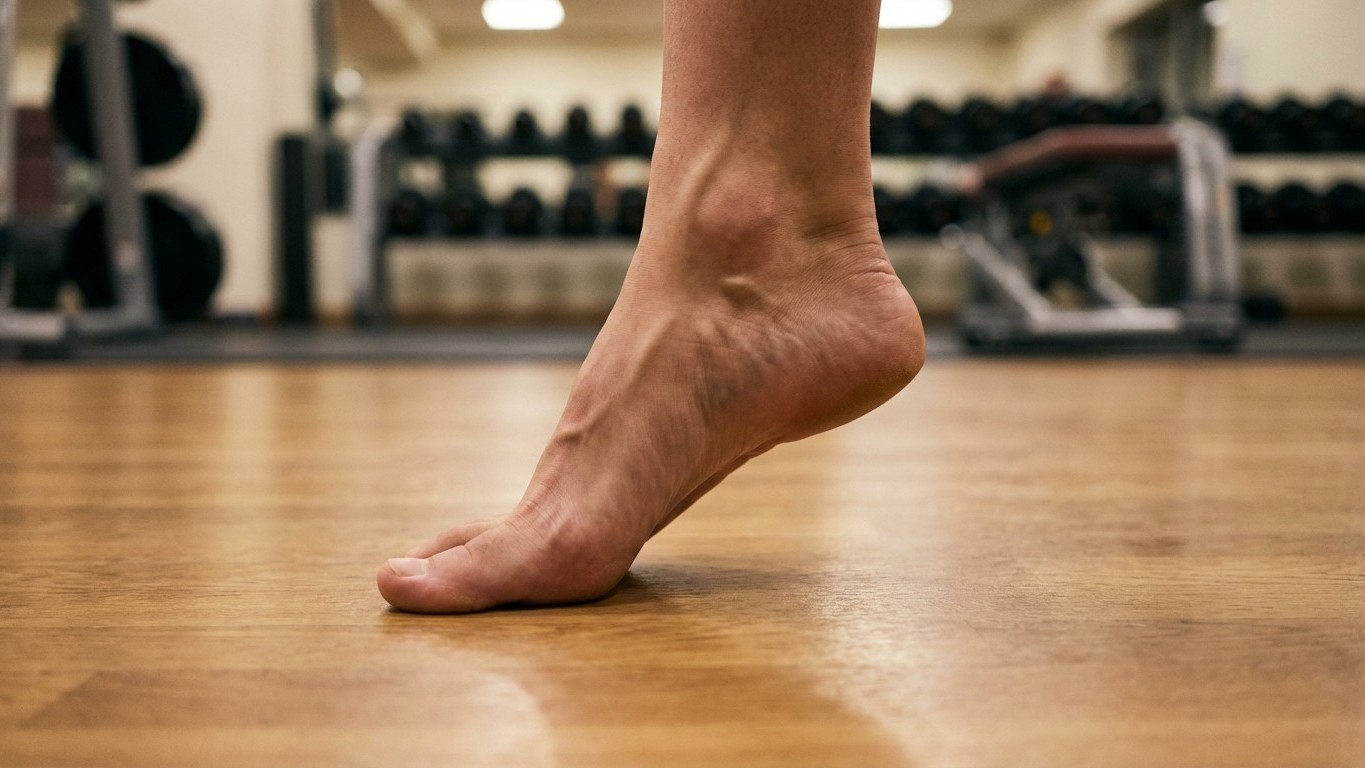
Sixty days of barefoot training in the gym sounds like the kind of experiment that ends with a bruised ego and a tetanus concern. For me, it ended with a realisation about a muscle most people have never heard of, and a completely different relationship with how my body moves from the ground up.
The muscle in question is the flexor digitorum brevis, a small, flat structure that sits right in the arch of your foot. It fans out from your heel bone to the base of your four smaller toes, and its job is to help flex those toes, stabilise the arch, and distribute load as you walk, run, or lift. For most of us who spend our lives in cushioned Trainers, it is chronically underused, almost hibernating. Mine certainly was. Six weeks into ditching my shoes on the gym floor, I could feel it working for the first time. By day sixty, it had quietly rearranged the way I thought about Strength training entirely.
Key takeaways
- Most people have never heard of the muscle that could be limiting their entire kinetic chain
- The first two weeks felt awkward—but something unexpected shifted by week three
- Small changes at the foot level created unexpected improvements high up the body
Why the foot is the most neglected part of the body in fitness
We obsess over glutes, hamstrings, core stability, rotator cuffs. We foam roll, we stretch, we do mobility drills. And then we strap our feet into thick-soled shoes and wonder why our hips feel off, or why one knee always complains during squats. The foot contains 26 bones, 33 joints, and more than 100 muscles, tendons, and ligaments. It is not a passive platform. It is a dynamic sensory and mechanical system that informs everything above it.
The research on foot strength is genuinely eye-opening. Studies in sports medicine have consistently shown that intrinsic foot muscle weakness (the small muscles within the foot itself, as opposed to the larger extrinsic muscles that originate in the lower leg) is associated with reduced balance, altered gait mechanics, and increased risk of injuries like plantar fasciitis and stress fractures. Wearing highly cushioned footwear reduces sensory feedback from the ground, which means the nervous system gets less information about how to stabilise the body. Over time, the foot essentially forgets how to do its job.
I am not anti-shoe, to be clear. Running on tarmac, lifting heavy barbells, playing sport outdoors, footwear serves real protective purposes. But the controlled environment of a clean gym floor offers a rare opportunity to let the foot do what it evolved to do.
What actually happened during those 60 days
The first two weeks were humbling. I started with bodyweight squats, lunges, and some light deadlift work without shoes, and my feet felt almost clumsy, like hands that had been in mittens too long. My balance during single-leg exercises was noticeably worse than usual, which was irritating but also telling.
Around week three, something shifted. I began to notice a kind of spreading sensation in my forefoot during squats, as though my foot was actively gripping the floor rather than just resting on it. The arch felt engaged. My coach (who was initially sceptical) commented that my squat pattern looked more symmetrical. I had also started adding some targeted work: short-foot exercises, where you try to shorten the foot by drawing the ball of the foot towards the heel without curling the toes, are a surprisingly good way to consciously recruit the intrinsic foot muscles, including the flexor digitorum brevis.
By weeks five and six, the changes had rippled upward in ways I had not anticipated. My hip alignment during Romanian deadlifts felt more stable. The persistent nagging sensation I had in my left knee during Bulgarian split squats largely disappeared. This is not as mysterious as it sounds: the foot is the base of a kinetic chain, and when it functions well, it sends cleaner mechanical signals up through the ankle, knee, and hip. There is solid biomechanics literature supporting the idea that improving foot intrinsic strength can reduce medial knee stress, though individual results will always vary.
The practical side: how to try this safely
Before you kick off your trainers mid-session, a few honest caveats. If you have diabetes, peripheral neuropathy, plantar fasciitis, or any history of foot injuries, speak to your GP or a Physiotherapist before experimenting with barefoot training. This is not advice to diagnose or treat any condition, and everyone’s feet are different.
For those without contraindications, a gradual approach is everything. The foot muscles, having been cushioned for years, are not conditioned for sudden load changes. Starting with just ten to fifteen Minutes of barefoot bodyweight work per session and building slowly over several weeks gives the soft tissues time to adapt. Think of it like starting a new exercise entirely, because in a sense, you are.
The short-foot exercise is worth incorporating consciously. Stand barefoot, try to create a dome shape in the arch by contracting the foot’s intrinsic muscles, hold for a few seconds, release. It sounds trivially easy. Your first attempts will likely prove otherwise.
Yoga mats and rubber gym flooring are fine surfaces. Avoid dirty or wet floors for obvious hygiene reasons, and be aware of your gym’s policy on barefoot training before you start. Some facilities require you to wear at least minimal footwear at all times.
A small muscle with a large argument to make
The flexor digitorum brevis will never be the star of anyone’s training programme. You will not see it in fitness magazine headlines or influencer workout videos. But spending sixty days paying attention to it taught me something that no amount of glute work or core activation had: strength starts at the ground, and if you ignore what is happening at your feet, you are building on a foundation you have never actually tested.
There is something almost philosophical in that. We train mirrors muscles, the ones we can see and measure. The foot, hidden in a shoe, does its work invisibly. Give it some attention, and it may quietly reorganise everything above it. Whether that is enough reason for you to train barefoot is a question only your own sixty-day experiment can answer.
Always consult your GP or a qualified physiotherapist before making significant changes to your exercise routine, particularly if you have existing foot, ankle, or joint conditions.