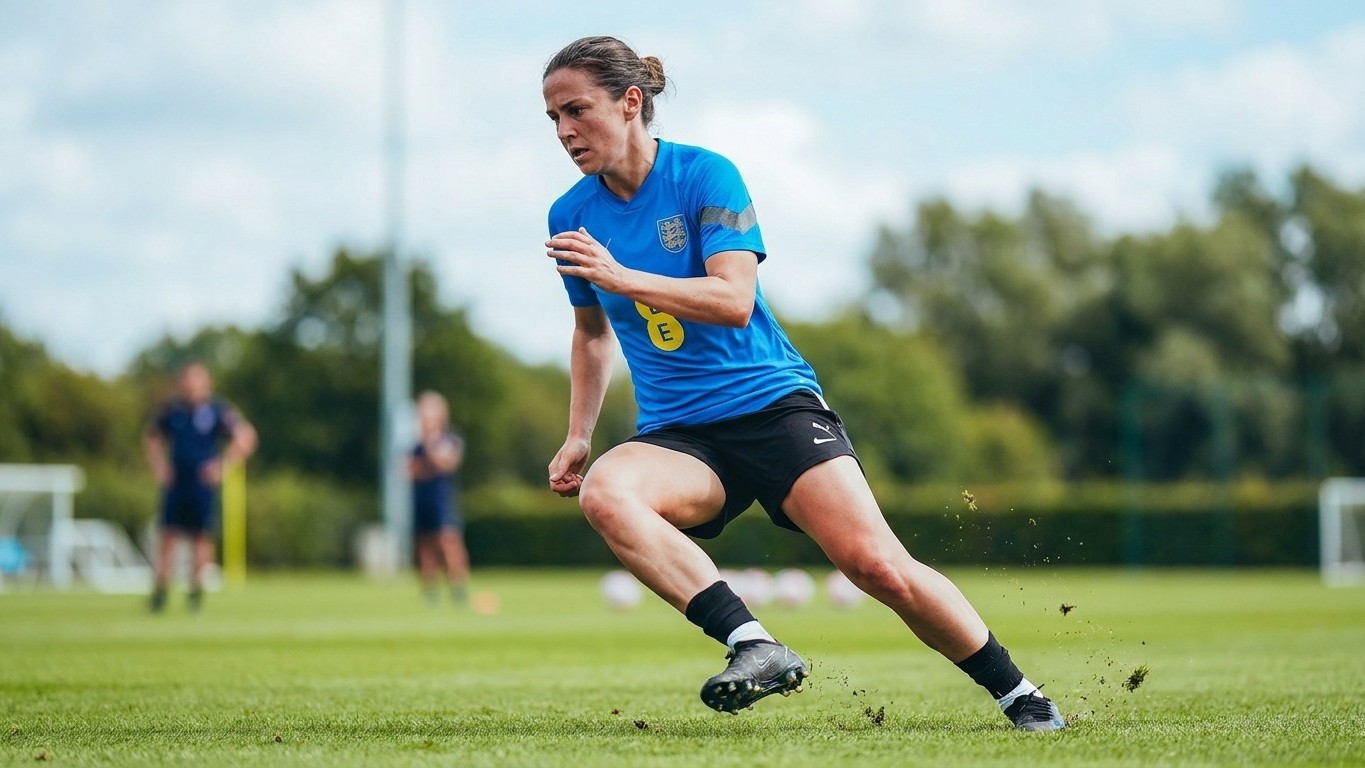
Three anterior cruciate ligament ruptures on the same team, all from a routine sidestep, all within days of each other. It sounds like terrible luck, but it isn’t random. Sports medicine research increasingly shows that ACL injuries cluster around identifiable windows, shared training loads, congested fixture periods, seasonal ramp-ups and, for female athletes, hormonal timing that can affect several people on the same squad simultaneously.
The sidestep itself is not an odd way to injure a knee. It is the textbook mechanism. A large video analysis of ACL injuries in Professional men’s football examined the mechanics behind these ruptures in detail, and the injury pattern was overwhelmingly non-contact, occurring during cutting and pressing actions rather than collisions. Della Villa and colleagues conducted a systematic video analysis of ACL injuries in professional male football, examining injury mechanisms, situational patterns and biomechanics across 134 consecutive cases. A sidestep cut loads the knee with rotational and abduction forces at exactly the moment the ligament is least able to absorb them, particularly when the player is fatigued, decelerating from a sprint, or reacting under pressure rather than moving on their own terms.
Key takeaways
- Three players, one team, one brutal week—but the clustering wasn’t chance
- The same training spike that caught one athlete catches three others at the exact moment their tissues can’t adapt
- The menstrual cycle connection remains hotly debated, even as the evidence keeps shifting
Why one bad training week can catch several players at once
Squads train together, travel together and absorb the same spikes in workload together, which is precisely why injuries so often bunch up in the fixture list. Environmental and training factors seal the deal: artificial turf increases risk by 1.5-2 times versus grass due to higher friction, while congested fixtures spike cumulative load. A pre-season block, a sudden return from a training camp, or a run of matches with barely 72 hours between them all push everyone’s tissues through the same acute rise in demand. If your diary and your teammates’ diaries all point to the same week, there is a reasonable chance that week also saw a jump in sprint volume, cutting drills, or match density that none of you had properly adapted to yet.
Age and exposure matter too. A meta-analysis of 17,108 young players revealed that under-16s face the steepest curve, with incidence rising 26% among teens from 2014-2023. Growth spurts, rapid increases in training hours, and less mature neuromuscular control all compound the effect of a heavy week. Even experienced senior players are not immune once fatigue sets in; tired muscles are slower to stabilise the knee joint, so the tenth sidestep of a gruelling session carries more risk than the first.
The menstrual cycle question, and why the evidence is still murky
For female athletes, several teammates rupturing an ACL in the same week raises an obvious question: could cycle timing be involved? The research here is genuinely mixed, and I think it is important to be honest about that rather than overstate a tidy story. Older work pointed towards a preovulatory spike. In a study of recreational alpine skiers, skiers in the preovulatory phase were more likely to tear their ACLs than skiers in the postovulatory phase, with 74% of injured women in the preovulatory phase compared with 26% postovulatory. Yet other research on team sport athletes tells a different story. Myklebust and colleagues studied competitive European team handball players over three years and found an increased risk of ACL injury during the week before or just after the onset of menstruation. More recent international football data adds a further layer: the range and median time “overdue” at injury suggest clustering of injury occurrence in the initial days following the expected date of menstruation.
A newer meta-analysis pooling over 60,000 patients actually points the other way, identifying the luteal phase, not the days around ovulation, as the lower-risk window, though the authors are careful to flag weak underlying evidence. A meta-analysis looking at 21 studies and over 60,000 female patients found that the lowest risk interval for sustaining an ACL injury was during the luteal phase, although the strength of evidence generating this data was low. A systematic review of the biomechanical evidence reached a similarly cautious verdict. It remains inconclusive whether a particular menstrual cycle phase predisposes women to greater non-contact ACL injury risk, and practitioners should be cautious about manipulating physical preparation or screening practices based on current evidence. There may be something real happening with hormonally driven ligament laxity, since oestrogen makes ligaments, like the ACL, stretchy and loose, but the studies disagree on exactly when the danger window falls, and cycle-tracking is nowhere near precise enough yet to schedule training around it with confidence.
What actually reduces the odds of it happening again
None of this means a cluster of injuries is simply bad luck to be shrugged off. Structured neuromuscular training remains the most consistently effective intervention available, and the evidence for it has kept accumulating. A 12-week therapeutic exercise regimen, blending neuromuscular training and eccentric work, reduced ACL risk by 45% in a 2025 trial. Balance-inclusive programmes further drop lower-limb injuries by 40%, per a 2025 meta-analysis. The catch is adherence. Programmes must be fun, integrated into routines and coached by certified staff, since fidelity to the programme correlates with substantially greater efficacy. One club’s experience makes the point vividly: a Spanish La Liga club halved ACL incidents after mandating FIFA 11+ pre-training.
If you and your teammates are staring at the same week circled in three different diaries, it is worth asking your coaching and medical staff a blunt question: what changed in training load, surface, or fixture congestion in the fortnight beforehand? That conversation, backed by proper screening such as single-leg hop testing or landing assessments, does more to protect the next player than any amount of hindsight ever will. And if you’re recovering from a rupture yourself, know that return-to-play programmes running through a full year of structured reconditioning have been shown to restore the vast majority of players’ neuromuscular control, so the setback, while brutal, is rarely the end of the story. As always, discuss your specific rehabilitation and return-to-sport timeline with your GP or physiotherapist rather than relying on a teammate’s recovery as a template, since knees and healing rates vary enormously from one person to the next.
Sources : journals.plos.org | cdn.clinicaltrials.gov