
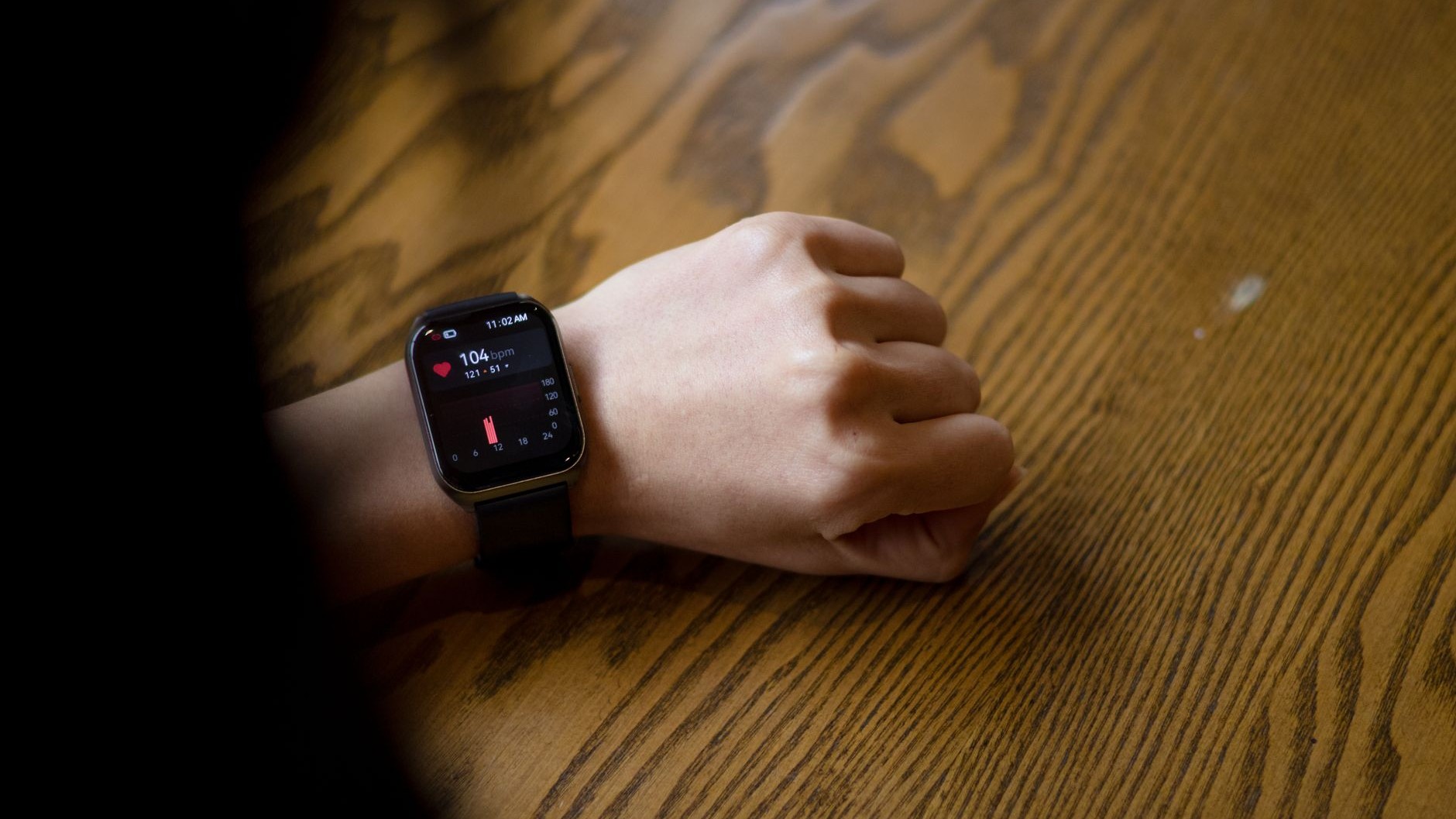
That graph wasn’t tracking Your Heart Rate through those squats. It was tracking your grip. When a barbell sits across your shoulders or you’re clutching dumbbells through a full range of motion, the muscles and tendons in your wrist tighten and shift with every rep, and that mechanical squeeze is precisely what confuses an optical sensor sitting on top of it. The spikes that looked like effort were, more often than not, your wrist flexing rather than your heart working.
Key takeaways
- Your watch isn’t measuring heart rate during squats—it’s measuring something else entirely
- The graph shows a pattern that matches your rep tempo exactly, not your actual cardiovascular response
- Even cardiologists confirm wrist trackers can be dangerously inaccurate for people managing heart conditions
What the sensor is really seeing under load
Wrist-based trackers use photoplethysmography, shining light into the skin and measuring how much bounces back as blood volume changes with each heartbeat. It’s a clever workaround for not wearing an ECG strap, but it depends on a stable, undisturbed patch of skin. Squats destroy that stability. Researchers running a structured protocol that specifically included weight training consisting of squats, biceps curls, lunges, and abdominal crunches found that this category of movement behaved differently from steady cardio precisely because of how much the wrist itself moves and tenses during resistance work, not just how hard the heart is beating.
What happens next has a name: signal crossover. Scientists studying wearable accuracy describe it as a situation wherein the optical HR sensors on wearables tend to lock on to the periodic signal stemming from the repetitive motion and mistake that signal as the cardiovascular cycle. Runners know this phenomenon as cadence lock, and the same trap catches lifters. A wearable analysis of a rhythmic treadmill session found the watch read 157 bpm against a reference of 131 bpm, with the false signal tracking foot-strike frequency rather than the pulse. Swap footsteps for rep tempo and grip cycles, and you get the same false rhythm on a squat rack.
Why the wrist is a poor witness under strain
Grip tension isn’t the only culprit. Manufacturers themselves list the conditions that throw off their own sensors. Garmin has acknowledged that wearing a watch too tightly, participating in activities that cause flexing of the wrist, tattoos can all distort readings, while Apple has flagged skin perfusion, tattoos, rhythmic movements as sources of trouble. Squats tick several of these boxes at once: gripping the bar tightens forearm muscles that run up into the wrist, and the isometric hold changes blood perfusion at exactly the spot the sensor is reading.
Cardiologists have been sounding this alarm for years, not just for gym enthusiasts chasing PBs but for anyone relying on the number for safety. A cardiology team comparing wrist devices against a chest strap across various workout types concluded that the standard chest strap was the most accurate regardless of the intensity of the workout or whether someone was using the treadmill, elliptical or stationery bike. One of the study’s authors put it plainly: “If you need to know your heart rate with accuracy when exercising, either because you are training for a marathon or have safe heart rate limits set by your doctor, perhaps due to coronary artery disease, heart failure or other heart conditions—wrist-worn monitors are less accurate than the standard chest strap”. That’s a meaningful gap if you’re using heart rate zones to pace a session, not just to admire a number afterwards.
The scale of that gap is worth spelling out. A comparison against a clinical Holter ECG found a chest strap produced a mean absolute percentage error for HR was 0.76% with chest strap, an error margin so small it’s practically irrelevant for training purposes. Nothing in the wrist-based literature comes close to that when movement enters the picture.
Reading the graph like a detective
Here’s the giveaway once you know what to look for. A genuine heart rate response to a heavy set climbs gradually as you push through reps, then eases down during rest, following the shape of effort and recovery. A cadence-locked reading does something odder: it jumps in sharp, almost mechanical steps that match your rep timing exactly, sometimes settling on a suspiciously round number and refusing to budge even when you’re clearly between sets and breathing hard. If your “heart rate” during a heavy squat set looks identical set after set, down to the shape of the curve, you’re probably staring at a rendering of your rep tempo rather than your cardiovascular effort.
Skin tone adds another layer of uncertainty here too. Research into wrist-worn PPG devices has found that greater melanin concentrations are associated with greater green light absorption, which may impact the optical sensors’ ability to detect PPG signal changes with increased HR, potentially leading to measurement errors, meaning the size of the error isn’t even consistent across users.
What actually helps
None of this means binning your watch. For step counts, sleep patterns and steady cardio, the wrist sensor does a reasonable job. But for resistance training, where grip and wrist tension are unavoidable, the fix is straightforward: a chest strap for the sets that matter, or at minimum a forearm or upper-arm band, since researchers assessing multi-site wearables specifically noted the need for higher accuracy during movement at those alternative sites. Snugging the watch tighter than usual, resetting the sensor between exercises, and treating any number that mirrors your rep count with suspicion are all sensible habits.
If you’re managing a heart condition or training with prescribed heart rate limits, don’t take a wrist reading as gospel during resistance work; the discrepancy has been measured, published, and repeated across multiple independent teams. Speak to your GP about what monitoring method suits your specific situation, particularly if heart rate accuracy affects a medical decision rather than just a training log.
One curious detail from the wearable research deserves a mention before you next strap in: several teams found their devices didn’t just get noisy under load, they systematically underestimated the true heart rate even when the numbers looked stable, which means a “calm” reading during your heaviest set might be reassuring for entirely the wrong reason.
Sources : acc.org | sciencedaily.com