
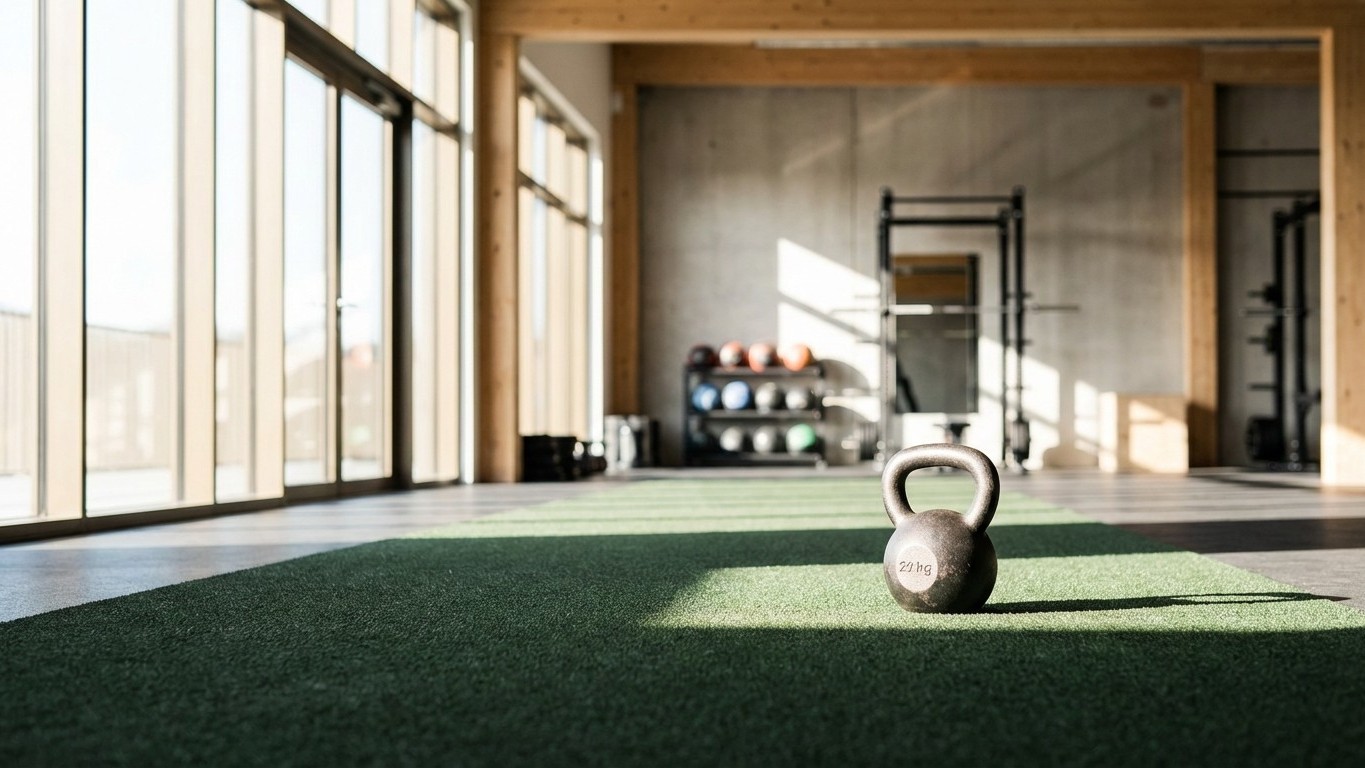
Walk into almost any gym that’s had a recent refurbishment and you’ll notice something odd: the rows of treadmills are getting shorter. In their place, you’ll find open floor space, turf strips, and a surprising array of equipment that wouldn’t have looked out of place in a rugby pre-season camp a decade ago. Sleds, battle ropes, kettlebells, SkiErgs, assault bikes, and rigs for climbing and hanging are quietly displacing the cardio machines that once defined what a gym looked like. This isn’t a passing trend. It’s a structural shift in how Fitness professionals, gym operators, and exercisers themselves think about what movement should feel like.
Key takeaways
- Gym owners are quietly removing rows of treadmills in favor of functional equipment—but the reasons might surprise you
- The science suggests compound movements can match treadmill cardio in less time, but there’s a catch that researchers won’t ignore
- Most gym-goers have no idea how to use the new equipment sitting empty while they queue for the same machines they’ve always used
The economics (and the complaints) behind the treadmill exodus
Treadmills are expensive to maintain. A commercial-grade machine can cost several thousand pounds and, with heavy use, the belts, motors, and electronics require regular servicing. For a gym running 30 to 50 of them, the maintenance budget alone is substantial. When those machines sit unused during peak hours while members queue for the free weights section, gym managers start asking hard questions about floor space. Functional training equipment, by contrast, is relatively affordable, requires almost no maintenance, and can serve multiple people simultaneously. A single turf lane with a prowler sled, a set of kettlebells, and a rope station might cost the equivalent of two treadmills and serve ten times as many uses per hour.
There’s also been consistent feedback from members themselves. Many people find sustained treadmill running monotonous, and that boredom has a real cost: they simply stop coming. The rise of home fitness equipment during the pandemic accelerated this, as people who wanted to run could do it on a home treadmill or, more commonly, outside. Gyms offering nothing but rows of cardio machines lost their competitive edge almost overnight.
What the research actually says about functional training
The appeal of functional training isn’t just aesthetic or commercial. There’s a reasonable body of evidence suggesting that compound, multi-joint movements (the kind you do when pushing a sled, swinging a kettlebell, or rowing) engage more muscle groups simultaneously and can produce meaningful improvements in both cardiovascular fitness and muscular endurance in less time than steady-state cardio alone. Research published in sports Science journals has consistently found that high-intensity interval training on equipment like assault bikes or rowing ergometers can improve VO2 max comparably to longer bouts of moderate-intensity running, at least for healthy adults.
That said, the Science isn’t a clean argument against treadmills. Running remains one of the most studied and well-supported forms of aerobic exercise for long-term health. People training for distance running events still need to run. Those with specific cardiovascular rehabilitation goals may have clinical reasons to use a treadmill under controlled conditions. The shift isn’t about one being objectively superior; it’s about recognising that the treadmill was never the only answer, and for a large proportion of gym-goers, it probably wasn’t the best one.
One genuinely underappreciated aspect of functional kit is what it does for people who struggle with traditional gym formats. Older adults, for example, often benefit more from loaded carries, balance challenges, and mobility work than from running on a belt. These movements translate directly to everyday life in a way that 30 minutes at a steady pace rarely does. The ability to get up from a chair, carry shopping bags, or stabilise yourself on uneven ground draws on exactly the kind of strength that functional equipment develops.
How this changes what you should be doing
If your gym has already made this shift, or if you’re choosing a new one, the practical question is how to take advantage of it. A few honest observations from someone who’s watched this space closely: most people massively underuse the functional areas that gyms install. The turf lane sits empty while the remaining treadmills stay occupied, partly out of habit and partly because people aren’t sure what to do with a sled or a set of parallettes.
Starting doesn’t require a complete overhaul of your routine. A kettlebell swing, done with good form, is one of the more efficient movements you can add to any session. It trains the posterior chain (glutes, hamstrings, lower back), elevates heart rate considerably, and takes about two minutes to learn the basics of. A sled push is similarly accessible: load it lightly, push for 20 metres, rest, repeat. There’s no eccentric loading, which means it’s remarkably low-impact on joints and recovers quickly, making it a useful tool on days when your legs are tired but you still want to move.
Battle ropes deserve a special mention for anyone who finds upper-body cardio difficult to programme. The learning curve is minimal, the intensity is scalable, and the cardiovascular demand is genuinely high. For people who can’t run due to knee or hip issues, ropes and seated rowing machines have opened up a form of intense conditioning that a treadmill simply couldn’t provide.
The assault bike, universally loathed and universally effective, is perhaps the starkest symbol of this new era. It looks brutal, it feels brutal, and that honesty is part of its appeal. Unlike a treadmill that can be set to a comfortable pace and maintained without much engagement, the assault bike gives back exactly what you put in. That immediate feedback loop, between effort and resistance, Changes how people relate to their own training.
There’s a deeper question lurking here, one worth sitting with: if the equipment we’ve spent decades assuming was the default for fitness is being reconsidered, what else about conventional gym culture might be due for a rethink? The answer might not be in any single machine, but in how we define the purpose of showing up in the first place.
Always consult your GP before beginning a new exercise programme, particularly if you have any existing health conditions or injuries.