
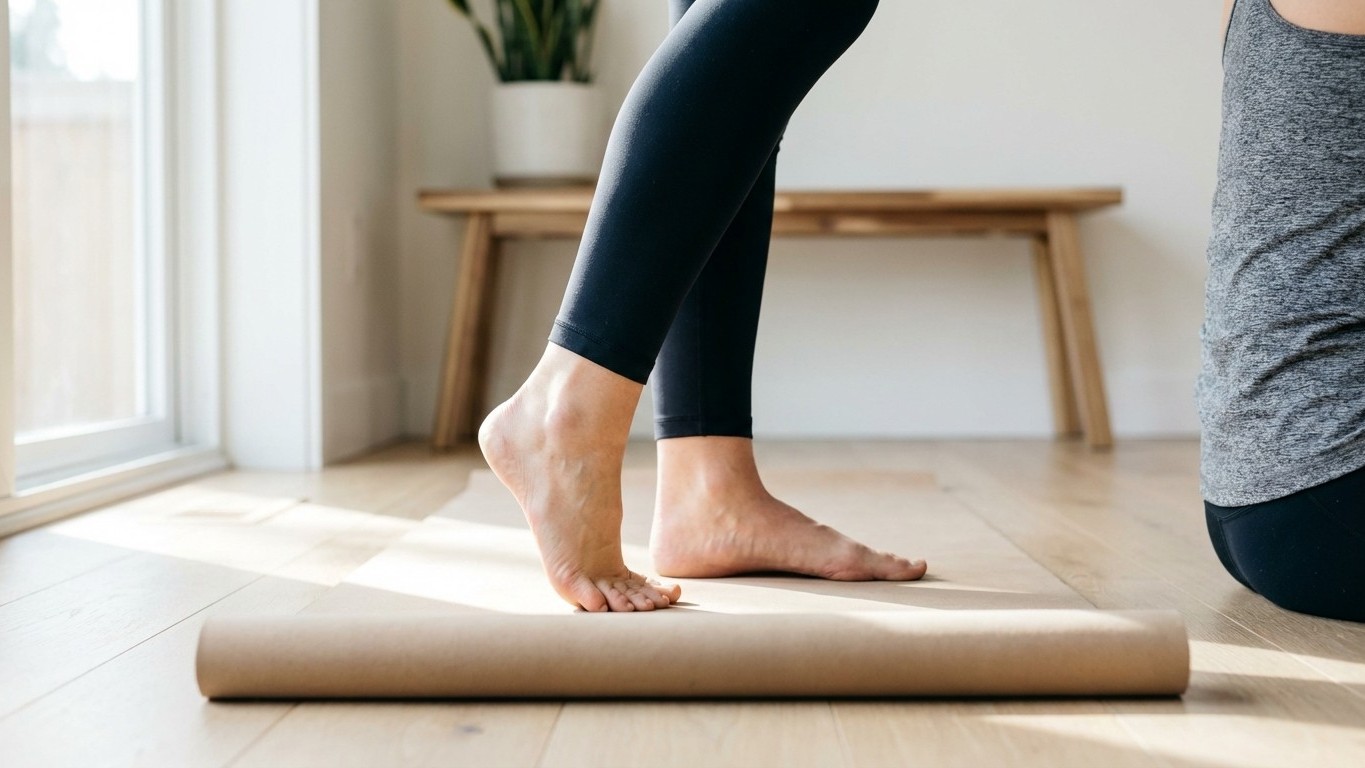
Static stretching before a run has been a fitness ritual for decades, the kind of advice passed down from PE teachers and well-meaning gym enthusiasts alike. Then a podiatrist demonstrated a two-minute foot drill to me, and my entire pre-run routine quietly collapsed. Not because stretching is useless, but because I had been spending my preparation time on the wrong part of my body entirely.
Key takeaways
- A podiatrist convinced one runner to ditch pre-run stretching in favor of something entirely different
- Your feet contain over 100 muscles, tendons, and ligaments—yet most runners ignore them completely
- A two-minute routine transformed foot fatigue and ankle responsiveness in just ten days
Why your feet deserve more credit than your hamstrings
Most runners obsess over calves, quads, and IT bands. The foot, with its 26 bones, 33 joints, and more than a hundred muscles, tendons and ligaments, is somehow treated as an afterthought. That’s a strange omission when you consider that every single running stride begins and ends with ground contact through the foot. The way your foot loads, distributes force, and pushes off determines what happens further up the kinetic chain, at the ankle, knee, hip, and beyond.
Research published in sports medicine literature has consistently shown that intrinsic foot muscle strength plays a meaningful role in running economy and injury prevention. The small muscles that live entirely within the foot help control arch deformation during impact and contribute to propulsion at toe-off. When these muscles are weak or simply unprepared before activity, the surrounding structures, particularly the plantar fascia and Achilles tendon, absorb more stress than they should. This is precisely where many common running injuries take root.
The podiatrist’s argument was simple and, frankly, hard to dispute: static stretching a cold muscle before exercise offers questionable benefit according to current evidence, and stretching the calf or hip flexor does nothing to wake up the intrinsic foot muscles you’re about to depend on for the next five kilometres.
The two-minute drill itself
The routine takes roughly two Minutes when done properly, though “properly” is the operative word. Rushing through it defeats the purpose entirely.
The first component is short foot exercise, sometimes called the “foot dome.” Standing barefoot (or in thin socks on a non-slip surface), you shorten the foot by drawing the ball of the foot toward the heel Without curling your toes. The goal is to create a domed arch shape using only intrinsic muscle activation, not cheating by gripping the floor with your toes. Hold for three seconds, release, repeat ten times on each foot. It feels almost imperceptible at first. Within a week, you’ll notice the muscles actually working.
The second component involves single-leg balance with small perturbations. Stand on one foot for thirty seconds while gently shifting your weight forward, backward, and side to side in a controlled manner. This activates the proprioceptive pathways in the foot and ankle, essentially calibrating your balance system before you ask it to function at speed on unpredictable surfaces. Trails, pavements with kerbs, wet leaves in autumn: your foot’s ability to sense and respond quickly matters enormously in all of these.
The third piece is toe spreading. Actively spreading all five toes as wide apart as possible, holding briefly, then releasing. Many habitual shoe-wearers find this nearly impossible at first, a quiet indictment of how much modern footwear compresses the forefoot over years of use. The exercise begins to restore neuromuscular control over individual toe movements, which has downstream effects on how the foot stabilises at push-off.
Two minutes. Barefoot on the mat by the front door. That’s the whole thing.
What changed when I actually tried it
Honesty feels appropriate here. The first few sessions felt slightly absurd. Standing in the hallway spreading my toes while my running watch beeped impatiently is not the athletic origin story anyone imagines. But within about ten days, something shifted. The arch of my left foot, which had always felt vaguely tired after longer efforts, stopped complaining. My ankle felt more responsive on uneven ground. Whether this was genuine physiological adaptation or placebo is genuinely difficult to say with any certainty. I suspect a combination of both, with the former doing most of the heavy lifting.
What the science does support clearly is that intrinsic foot muscle training improves arch height and reduces navicular drop during dynamic loading. A foot that has been properly activated before a run handles ground reaction forces differently to one that hasn’t been primed. The difference may be subtle on a three-mile jog, but accumulates meaningfully over weeks and months of training.
The podiatrist also made a point that has stayed with me: most people spend considerable money on running shoes designed to support their feet, then spend zero time developing the muscular capacity that would make that support less necessary. There’s nothing wrong with supportive footwear, but treating it as a substitute for foot strength is a bit like wearing a back brace instead of strengthening your core.
Where static stretching still fits
Abandoning pre-run static stretching doesn’t mean abandoning stretching altogether. Post-run, when tissues are warm and pliable, calf stretches and plantar fascia mobilisation genuinely help maintain range of motion and may assist recovery. The distinction the evidence draws is between pre-exercise static stretching (which can temporarily reduce muscle force production) and post-exercise stretching (which most bodies respond to well). Dynamic movements before a run, leg swings, ankle circles, and walking lunges, remain a sensible warm-up complement to the foot drill.
The broader question this routine raises is worth sitting with: how many other preparation habits do runners carry out simply because they were never given a reason to question them? The foot drill isn’t a cure for injury, and if you’re experiencing pain when running, the right conversation to have is with your GP or a qualified podiatrist, not a two-minute YouTube routine. But as a daily ritual for keeping the foundations of your movement healthy, it takes less time than a traffic light.
If you are experiencing foot pain, persistent discomfort during or after exercise, or any changes in your gait, please consult your GP or a registered podiatrist before modifying your exercise routine.