
You’ve been training consistently, skipping rest days you probably needed, and wondering why your upper body still looks the same. The answer might not be your effort level or your nutrition. It might be hiding inside the two exercises you rotate between most loyally: push-ups and dips. Both are brilliant, both are free, and one of them, depending on how your body is built and what your weak points are, could be quietly Sabotaging-your-real-results/”>Sabotaging the very progress you’re chasing.
Key takeaways
- Most people do push-ups with a hidden flaw that stresses the shoulder joint and invites injury by week six
- Dips demand mobility most desk workers simply don’t have—and the wrong setup makes it dramatically worse
- There’s a simple wall test that reveals which exercise your body is actually ready for right now
The Case for Push-Ups (and Why They’re Not as Simple as They Look)
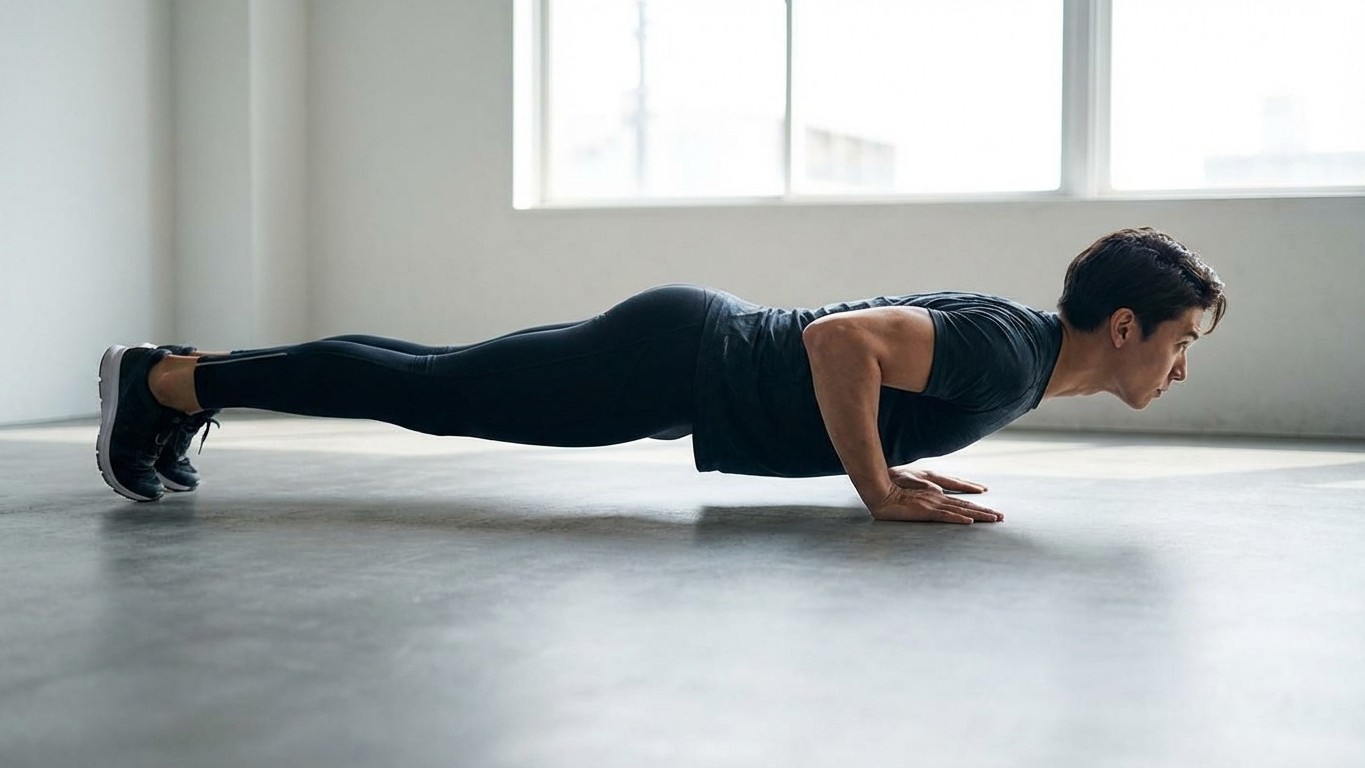
Push-ups have survived every fitness trend of the past century, and for good reason. They train the chest, shoulders, and triceps in a closed kinetic chain, meaning your hands stay fixed while your body moves. This recruits stabiliser muscles across your core, scapulae, and even your hips in a way that a bench press simply cannot replicate. For most people with no equipment, they form the backbone of any upper body programme.
The problem is that most people do them badly, and badly here doesn’t mean aesthetically imperfect. It means biomechanically expensive. Flaring elbows are the main culprit. When your elbows splay out at 90 degrees from your torso, you shift enormous stress onto the front of the shoulder joint, specifically the anterior deltoid and the rotator cuff tendons. Over time, this is a recipe for impingement pain that creeps up on you around week six or eight, right when you Thought you were finally making progress.
Tuck your elbows to roughly 30 to 45 degrees from your sides instead. You’ll feel more chest engagement, less shoulder strain, and your triceps will begin pulling their actual weight. Depth matters too: stopping halfway through the range of motion dramatically reduces the stretch reflex in the pectoral fibres, which is much of the point of the exercise. Go all the way down until your chest grazes the floor, pause for half a second, then press.
Dips: The Exercise That Rewards the Mobile and Punishes Everyone Else
Bodyweight dips, done on parallel bars or on the edge of a sturdy chair or bench, are often described as the upper body squat. That comparison flatters them. When they work, they truly work: deep triceps activation, lower chest recruitment that push-ups barely touch, and a loading pattern that builds genuine pressing strength. The problem is the “when they work” part of that sentence.
Dips demand significant shoulder mobility, specifically the ability to extend and externally rotate the shoulder under load. A large proportion of people who sit at desks for extended periods (which is most of us) have restricted anterior shoulder mobility and tight pectorals. Put these people on dips and they’re not building strength so much as grinding their shoulder capsule against anatomical limits it wasn’t designed to tolerate regularly.
The tell-tale sign is leaning forward during the movement. If your torso pitches more than 15 to 20 degrees forward during a dip, your shoulders are compensating for insufficient mobility. You’ll feel it as a deep, achey Discomfort at the front of the shoulder joint, usually within the first two or three weeks of adding dips to a programme. Some people push through this. They shouldn’t.
This doesn’t mean dips are inherently bad. For those with the mobility to perform them correctly, they’re a brilliant exercise. But using a chair or low surface for bench dips actually makes the problem worse, not better, because it forces the shoulder into deeper extension than parallel bar dips do. If you’re going to dip, proper parallel bars with a controlled range of motion are the safer starting point.
How to Know Which One Is Holding You Back
Here’s a simple self-assessment worth doing before your next session. Stand against a wall and press both arms flat against it from shoulder height. Can you press your entire arm, including the back of your wrist and elbow, flush to the wall without your lower back arching away? If not, your shoulder mobility is restricted enough that dips will likely irritate rather than build. Push-up variations should form the core of your programme until that mobility improves.
If the wall test is easy and your push-ups have stalled despite good form, the problem is probably insufficient progressive overload. Push-ups are a bodyweight exercise, which means your weight is your load, and that load doesn’t change. Dips become the more productive tool here, because adding a backpack with books or water bottles turns them into a genuinely progressive resistance exercise without any equipment cost.
There’s also the question of muscular imbalance. Doing only push-ups for months, without any horizontal pulling to balance them, creates a predictable tightening of the anterior shoulder. This eventually makes your push-ups feel harder, not easier, because your pectoral muscles are shortening and reducing your pressing range of motion. Pairing either Exercise with rows, whether using a table edge, a bedsheet, or a low bar, is what separates a training programme from just doing exercises repeatedly.
The Real Reason One Is Wrecking Your Progress
Neither exercise is inherently dangerous or ineffective. What wrecks progress is mismatching the exercise to your current mobility profile and then repeating that mismatch hundreds of times a week. The body doesn’t forgive volume errors the way it forgives occasional dietary ones. A nagging shoulder injury from poor dip form can sideline you for weeks, while a plateau from sloppy push-ups just quietly steals the results you should have earned.
The honest answer to which one is wrecking your progress is the one you’re doing with compensations you haven’t noticed yet. That’s worth sitting with for a moment before your next session. What might you be ignoring?
This article is intended for general informational purposes only. Always consult your GP or a qualified physiotherapist before beginning a new exercise programme or if you experience joint pain.