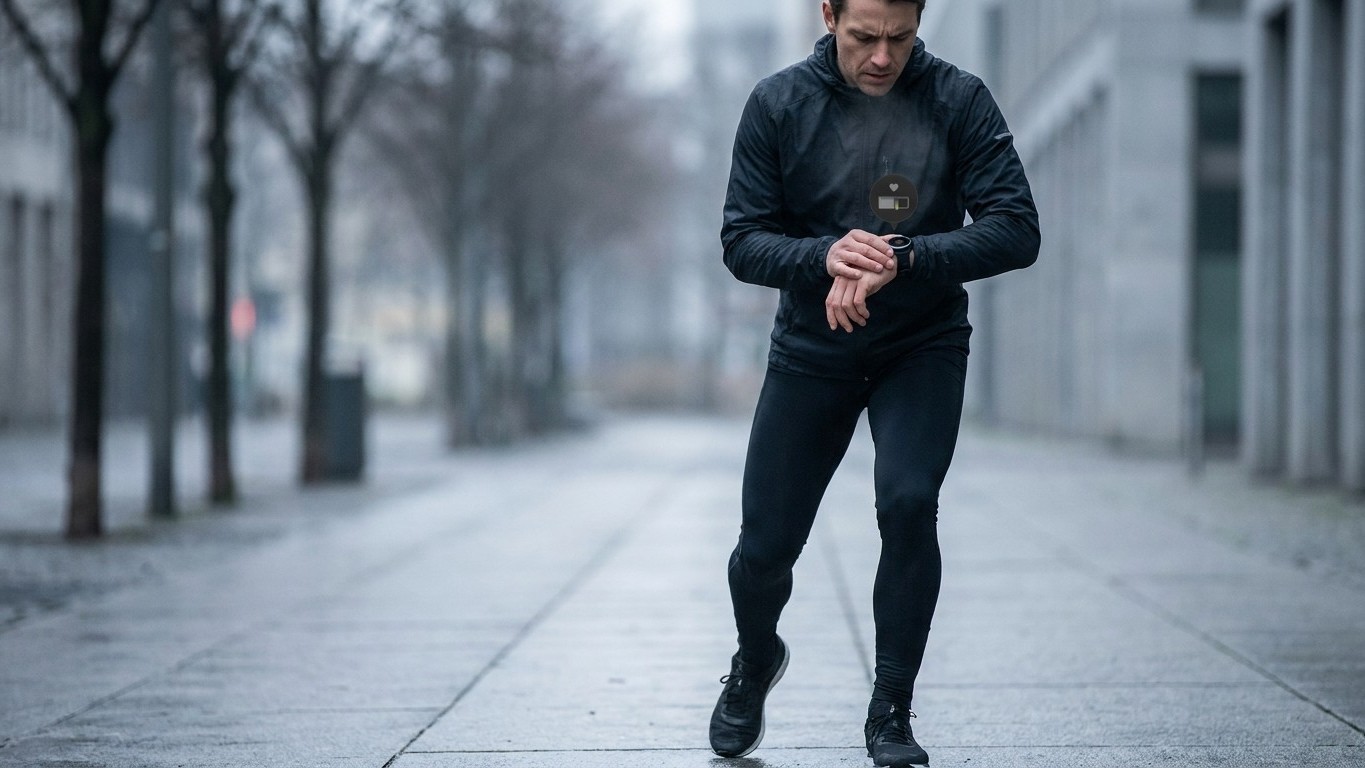
Black coffee before a fasted morning run feels like the perfect pairing. The caffeine sharpens your focus, suppresses the appetite you’re already ignoring, and supposedly nudges your body towards burning fat. Millions of people do it. For years, so did I. Then I strapped on a heart rate monitor one grey Tuesday morning, glanced down at my wrist twenty minutes into a “steady” jog, and saw a number that made me stop on the pavement.
My heart rate was sitting at 174 beats per minute. I wasn’t sprinting. I was plodding along at a pace I’d describe as “conversational,” if only I could breathe well enough to speak. That moment sent me down a rabbit hole of cardiovascular physiology that genuinely changed how I structure my mornings.
Key takeaways
- One glance at a heart rate monitor during a ‘conversational’ jog revealed the wearer’s heart was actually working dangerously hard
- Black coffee on an empty stomach amplifies adrenaline and cortisol simultaneously, undermining the fat-burning goal it’s supposed to support
- The perceived effort versus actual cardiovascular load gap was so wide that it forced a complete rethink of pre-dawn training habits
What caffeine actually does to your heart rate on an empty stomach
Caffeine works by blocking adenosine receptors in the brain, which delays the sensation of fatigue and increases the release of adrenaline. In a fed state, with food in your system acting as a kind of buffer, this effect is relatively manageable for most healthy adults. On an empty stomach, the caffeine absorbs faster and the adrenaline response is more pronounced. Your sympathetic nervous system, the branch responsible for “fight or flight” responses, gets an outsized nudge before you’ve even laced up your trainers.
Research published in the Journal of the International Society of Sports Nutrition has confirmed that caffeine raises both resting heart rate and exercise heart rate, with the effect being dose-dependent. A standard double espresso contains roughly 120-140mg of caffeine. Many people drink far more than that before training, particularly if they’re using pre-workout supplements that combine caffeine with other stimulants. Add in the physiological stress of fasted exercise itself, which elevates cortisol and adrenaline by default, and you’re stacking stimulant upon stimulant before your feet hit the ground.
The result, as my monitor showed me, is a heart rate that can sit stubbornly in the higher aerobic zones even during what feels like an easy effort. This matters for a specific reason: fasted cardio is typically promoted as a low-intensity, fat-burning modality. The fat oxidation argument depends on you staying below roughly 65-70% of your maximum heart rate. Push beyond that, and your body shifts towards burning glycogen instead. Caffeine, on an empty stomach, can quietly sabotage the very goal it was meant to support.
The cortisol problem nobody talks about
Cortisol peaks naturally in the first hour after waking, a phenomenon called the cortisol awakening response. It’s one of the body’s primary mechanisms for mobilising energy in the morning, which is partly why fasted training advocates suggest this window as optimal for fat metabolism. The problem is that both caffeine consumption and exercise independently raise cortisol further. Stack all three together and you’re creating a hormonal environment that, for some people, tips from productive stress into something their body treats as genuine threat.
Chronically elevated cortisol, particularly in people who are already under sleep or life stress, can impair recovery, suppress immune function, and over time contribute to muscle breakdown. A single morning session won’t do lasting damage. But if this is a daily ritual, the cumulative hormonal load is worth thinking about. Some sports scientists have started referring to this pattern as “sympathetic overdrive,” where the body spends so much time in an activated state that the parasympathetic recovery window gets crowded out entirely.
There’s also a blood sugar angle. Caffeine impairs insulin sensitivity in the short term, a finding replicated in multiple studies including work from the National Institutes of Health database. On an empty stomach, your blood glucose is already low. Add impaired insulin signalling to the mix and some people experience reactive dips that manifest as dizziness, shakiness, or that peculiar feeling of bonking during what should be an easy run.
What I changed, and what the evidence actually supports
Stopping mid-run was, in retrospect, the right call. My perceived exertion was a 5 out of 10. My cardiovascular system was operating at something closer to an 8. That mismatch, between how hard something feels and how hard your heart is working, is exactly the kind of thing a monitor reveals that pure intuition cannot.
The adjustment I made was modest. I now wait 45 to 60 minutes after waking before drinking coffee, which allows the cortisol awakening response to naturally subside rather than compounding it. For fasted cardio specifically, I’ve shifted to either training before caffeine entirely, or having a small amount of plain water and beginning at a genuinely low effort before caffeine is in play. The runs feel slower initially. The heart rate data shows they’re actually appropriate.
The NHS and most major cardiovascular bodies recommend that healthy adults keep moderate-intensity aerobic exercise within 50-70% of maximum heart rate for sustained sessions. Working out the rough ceiling is straightforward: subtract your age from 220 to get an estimated maximum, then calculate the percentage range. It’s not a precise science, but it gives you a reference point that a number on a monitor can speak to directly.
One thing worth knowing: caffeine’s effect on exercise heart rate tends to diminish with tolerance in regular consumers. People who drink coffee daily show a blunted cardiovascular response compared to occasional users. That might explain why many habitual coffee-before-cardio enthusiasts never notice a problem. The body adapts. But adaptation isn’t the same as the effect disappearing entirely, and on higher-stress days, poor sleep, illness recovery, or a particularly strong brew, that underlying amplification can resurface without warning.
If you’ve never worn a heart rate monitor during your fasted morning runs, the data might surprise you. Not because something is necessarily wrong, but because the gap between perceived effort and actual cardiovascular load is often wider than we assume, and the combination of caffeine, empty stomach, and exercise is one of the more reliable ways to widen it.