
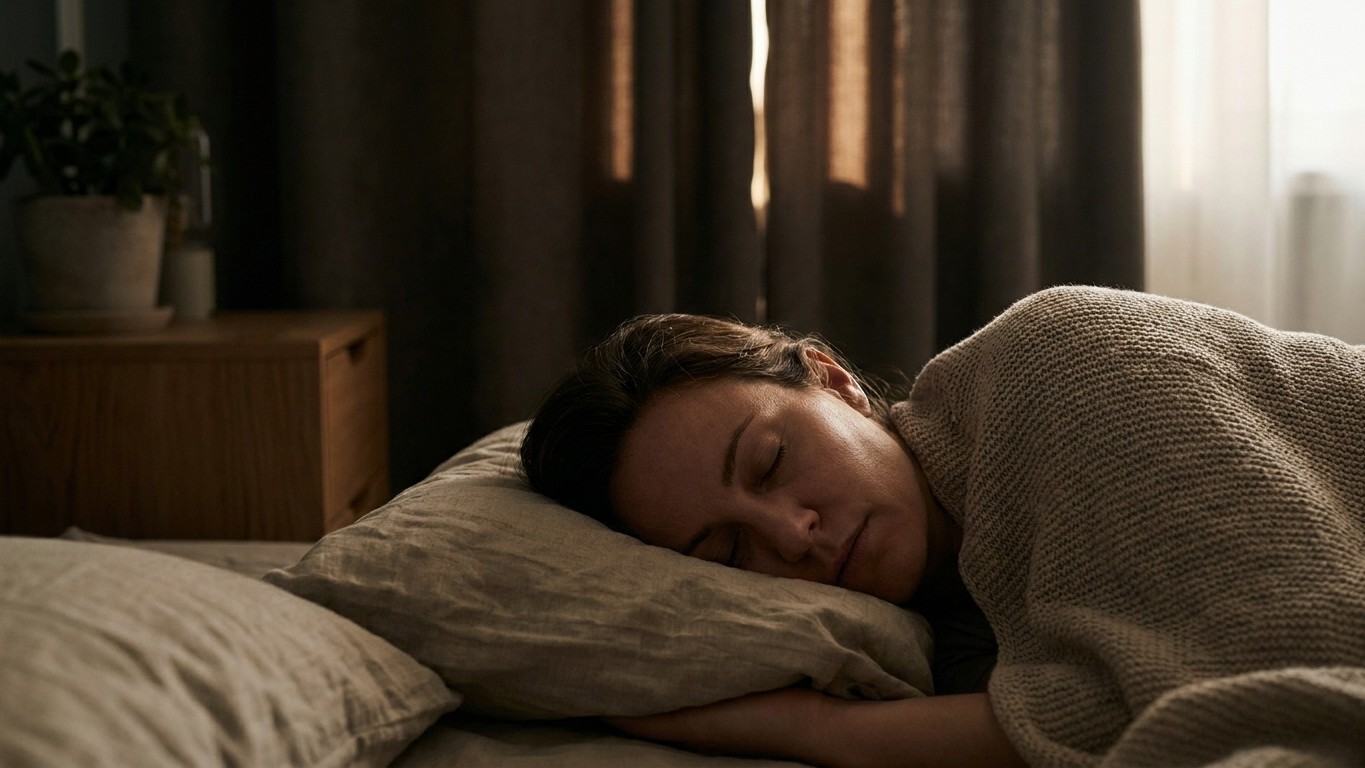
A single night hooked up to sleep-monitoring electrodes can explain something that baffles even seasoned gym-goers: why endless extra rest days rarely translate into better recovery. The answer lies in timing, not duration. Research using overnight EEG monitoring has shown that in adults the most reproducible pulse of GH secretion occurs shortly after the onset of sleep in association with the first phase of slow-wave sleep. Miss that window, through a late night, a disrupted first sleep cycle or one too many drinks, and you don’t get a delayed release later on. You simply lose it.
Key takeaways
- Most people unknowingly sabotage the exact 90-minute window when their body releases the majority of nightly growth hormone
- A single late-night drink or interrupted first sleep cycle can suppress this surge entirely—no makeup dose comes later
- The secret isn’t more rest days; it’s protecting one specific stage of early deep sleep that declines with age and disappears by older adulthood
What the overnight test actually measures
Polysomnography, the gold-standard sleep study used in labs and clinics, tracks brainwave activity, breathing, and hormone samples drawn at intervals throughout the night. When researchers layered blood growth hormone measurements onto this data, a striking pattern emerged: in men approximately 70% of the GH pulses during sleep coincide with slow-wave sleep, and the amount of GH secreted during these pulses correlates with the concurrent amount of slow-wave sleep. Clinical trial documentation for growth hormone therapies puts it even more plainly, noting that the majority of secretory pulses, up to 70% of daily secretion, occur with the first episode of slow-wave sleep.
That first episode typically arrives within the opening 60 to 90 minutes of sleep, long before most people have settled into what they’d call “proper” rest. It’s a narrow, largely unrepeatable window. Later slow-wave episodes happen too, but they’re shorter and shallower, and the hormone pulses that ride alongside them are correspondingly smaller. Sleep researchers have found that the amount of GH secreted during the first slow-wave sleep episode is quantitatively correlated with the duration of slow-wave sleep as well as with the intensity of slow-wave activity, meaning both how long you stay in deep sleep and how deep that sleep actually is matter enormously.
The chemistry behind the 70% figure
None of this happens by chance. The pituitary gland is essentially waiting for a hormonal green light. Sleep-onset GH secretion appears to be primarily regulated by GHRH stimulation during a period of relative somatostatin withdrawal, and GH secretion during early sleep may be nearly totally suppressed by administration of a specific GHRH antagonist. In plain terms, growth hormone-releasing hormone opens the gate, while somatostatin normally keeps it shut. That gate only swings open properly during the deepest part of your first sleep cycle.
This is why simply adding rest days doesn’t fix a stalled recovery. Rest days give your muscles time between sessions, but they do nothing to protect that specific 90-minute biochemical window each night. A person could sleep nine hours and still barely touch this pulse if the first cycle is shallow or interrupted. Conversely, someone with a shorter but well-structured night, uninterrupted deep sleep early on, may release more of the hormone than someone who spent longer in bed but woke up twice in the first two hours.
What quietly wrecks that first deep sleep cycle
Several everyday habits sabotage this window without people realising it. Alcohol is a notable culprit: it helps you fall asleep faster but disrupts the very sleep stage it should be protecting. It’s known to increase somatostatin activity, the hormone that inhibits GH release, which explains why a nightcap can quietly undo a hard training session even though it feels relaxing at the time.
Fragmented sleep is another common thief, and not always an obvious one. People with untreated sleep apnoea, restless partners, noisy environments or simply erratic bedtimes often never reach a stable, uninterrupted first deep sleep phase, which is one reason growth hormone deficiency is frequently observed alongside sleep apnoea. Age plays a role too, and not a small one. Between the ages of 30 and 40, the total amount of GH secreted over a 24-hour span decreases by two- to threefold, and this tracks closely with a decline in slow-wave sleep itself. By later adulthood the change becomes dramatic: in older adults, the decrease in slow-wave sleep often represents less than 5% of the sleep period or sometimes disappears entirely, and growth hormone secretion is simultaneously and markedly decreased. This isn’t a reason to panic about ageing, but it is a reason to take sleep quality more seriously rather than less as the decades go by.
Protecting the window that actually matters
Rather than stacking rest days indefinitely, the more useful strategy is defending that first sleep cycle. A consistent bedtime helps, since the body’s GHRH release is tightly coupled to sleep onset rather than the clock on the wall. Cutting alcohol on training nights, even a single glass, gives that early deep sleep phase a fair chance. A cool, dark, quiet bedroom for the first couple of hours Matters More Than for the rest of the night, precisely because that’s when the biggest hormonal pulse is meant to happen.
Anyone who suspects fragmented sleep, loud snoring, frequent waking, unrefreshing rest despite adequate hours, might get more out of raising it with their GP than from another rest day. Sleep apnoea in particular is treatable, and treating it has been shown to restore some of the deep sleep architecture that drives this nightly hormone surge.
One detail rarely mentioned: this same first-cycle pulse isn’t unique to humans chasing muscle recovery. The mechanism appears conserved enough across species that researchers studying nocturnal versus diurnal animals have used it to map how deeply sleep architecture and endocrine timing are wired together, suggesting this isn’t a quirk of modern lifestyles but a genuinely ancient biological rule about when the body chooses to rebuild itself.
Sources : sciencedirect.com | science.org