
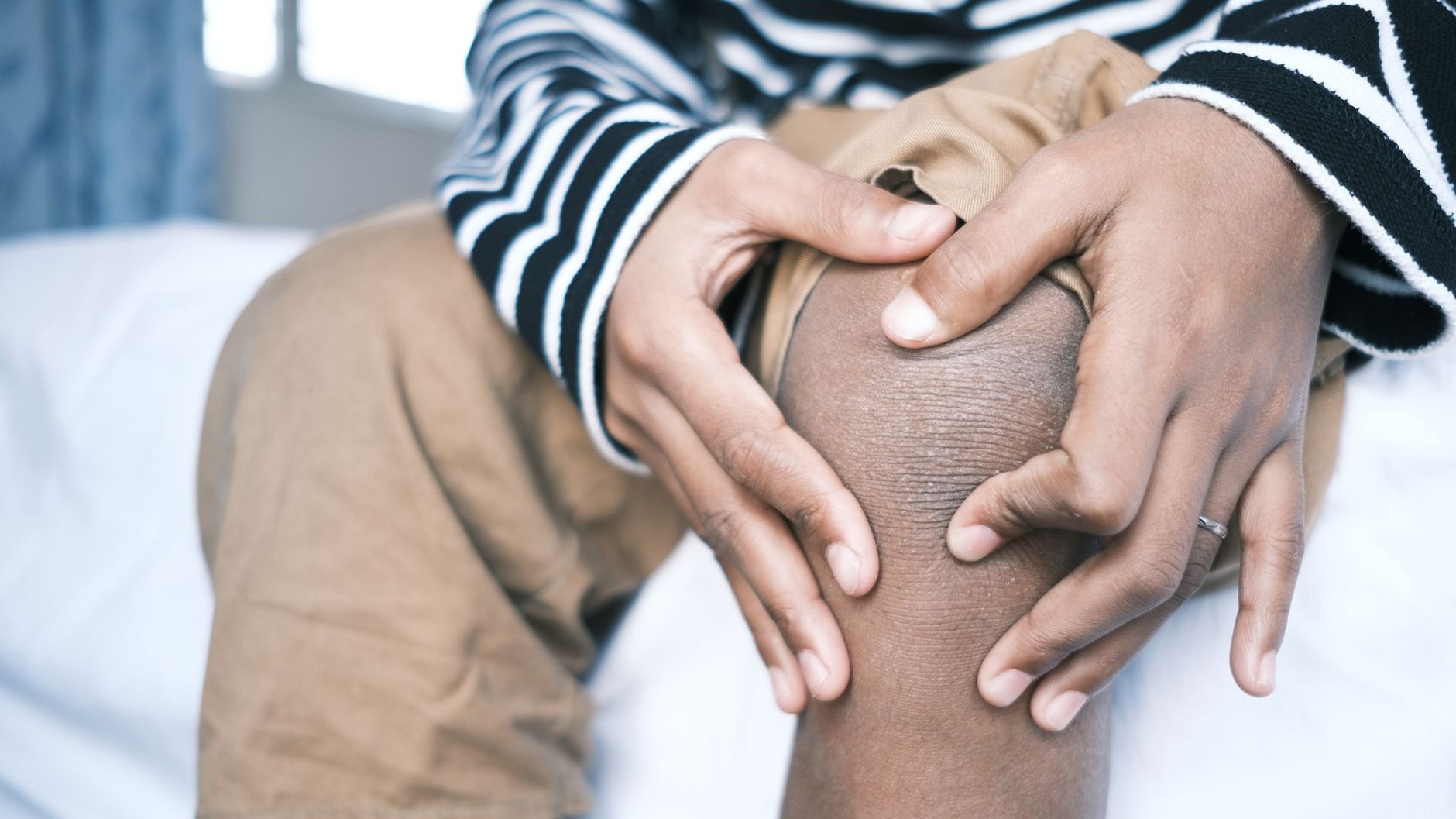
That heavy, slightly hollow sensation in your thigh the moment you peel off a compression sleeve isn’t your imagination, and it isn’t your quadriceps giving up on you either. What you’re noticing is a sudden change in sensory feedback: for hours, your brain had been receiving a steady stream of pressure signals from the skin around your knee, and your thigh muscles had quietly adjusted how hard they were firing in response. Take the sleeve off, and that input vanishes instantly. The muscle hasn’t weakened. It’s recalibrating.
Key takeaways
- Your thigh isn’t weakening; it’s adjusting to a sudden loss of sensory input from the sleeve
- Compression changes muscle activation patterns, not strength—but the science is more complex than ‘support’
- Wearing a sleeve all day can become a comfort crutch your knee doesn’t actually need
What Compression Actually Does to the Muscle Underneath
Sports scientists have looked closely at this, and the findings are more nuanced than “compression makes you stronger” or “compression makes you lazy”. A study using isokinetic testing on healthy athletes found that compression exerted no significant effect on peak moment and total work during the isokinetic contractions, while the overall EMG root mean square amplitude was significantly lower in the compression garment than in the control condition, with the EMG mean power frequency of the rectus femoris and vastus lateralis significantly higher. In plain terms: the muscle produced exactly the same force, but it did so with less overall electrical “noise” and a shift towards patterns associated with efficiency. The researchers noted that these effects may potentially improve muscle endurance and fatigue resistance during prolonged muscle actions.
So the sleeve isn’t doing your thigh’s work for it. It’s changing the recruitment pattern, likely nudging the nervous system towards using muscle fibres more economically. That’s genuinely useful during a long walk or a day on your feet. It also explains why removing the sleeve can feel odd rather than simply neutral, because the muscle activation pattern you’d settled into all day suddenly has to reset without that background input.
The Proprioception Piece: Why Your Knee Feels “Aware”
The sensation of support you get from a sleeve is largely a proprioceptive effect, not a mechanical one. Neoprene and compression fabrics compress the skin, and the skin is packed with mechanoreceptors that feed information about joint position and movement into the central nervous system. One review of the literature summarised it plainly: neoprene knee sleeves have shown positive effects in overcoming the deficit in knee proprioception caused by muscle fatigue, and separate studies found the sense of knee joint position improved in healthy subjects and adolescent female athletes wearing neoprene sleeves. Researchers examining the mechanism suggest it isn’t really about the joint itself. As one analysis put it, the increased effects caused by a brace may result from the increased sensation of movement of skin and underlying tissue during joint movement, because the tightening of the brace causes the skin to move over muscle and underlying tissue, allowing better awareness of distance moved.
It’s worth being honest that the evidence isn’t unanimous. A separate trial testing threshold detection of passive knee movement in healthy sports students did not find any statistically significant change in the threshold of detection of passive knee movement wearing a brace or sleeve compared to the unsupported condition, concluding that knee supports do not influence either positively or negatively knee proprioception in uninjured active subjects. My reading of this conflicting picture is that the sleeve’s biggest benefit for most healthy people is psychological confidence and comfort under fatigue, rather than a measurable upgrade to your joint’s internal GPS. That doesn’t make the feeling of support fake, it just means the mechanism is subtler than “the sleeve is doing the stabilising job”.
Why All-Day Wear Isn’t Really What Sleeves Are Designed For
Here’s the practical bit that matters if you’ve fallen into wearing yours from breakfast to bedtime. Clinicians are fairly consistent on this point. Banner Health’s guidance states plainly that you should only wear a sleeve when you’re exercising or doing something where you need additional support and stability, because they aren’t designed to be worn all day. That’s not because the sleeve will sap your strength, current evidence doesn’t support that fear directly, but because constant compression for comfort can quietly become a habit your knee doesn’t actually need. One industry review of daily-wear compression put it this way: while there is no evidence that wearing compression weakens your muscles, listening to your body and taking regular breaks is wise, and moderation is key. Most guidance suggests capping continuous wear and building in breaks so your skin and circulation get a rest, and so you keep giving your own stabilising muscles a chance to work unassisted.
There’s a separate, more clinical reason this matters if you have an existing knee problem rather than just achy joints after gardening or a long shift on your feet. Persistent swelling and joint dysfunction can trigger something called arthrogenic muscle inhibition, a reflex neural inhibition that stops the quadriceps from being fully activated, and researchers studying knee osteoarthritis found individuals with osteoarthritis of the knee joint commonly display marked weakness of the quadriceps muscles, with strength deficits of 20 to 45% compared with age and gender-matched controls. A sleeve won’t cause this, but it also won’t fix it, and masking discomfort with constant compression instead of addressing swelling or weakness with your GP or a physio is where things can go quietly wrong.
Getting the Balance Right
None of this means ditch the sleeve. For a long shift, a hike, or a day you know will involve a lot of kneeling and bending, the sensory feedback and mild reduction in muscular effort are a genuine, evidence-backed benefit. The smarter approach is treating it like any supportive tool: on for the demanding stretch, off once you’re resting, with proper quad and hip strengthening work done separately so the muscle itself keeps getting stronger rather than just feeling supported. If that hollow, slightly unstable feeling after removing your sleeve happens every single day and lingers for more than a few minutes, that’s worth mentioning to your GP or a physiotherapist rather than solving by simply putting the sleeve straight back on.
Sources : doi.org | ncbi.nlm.nih.gov