
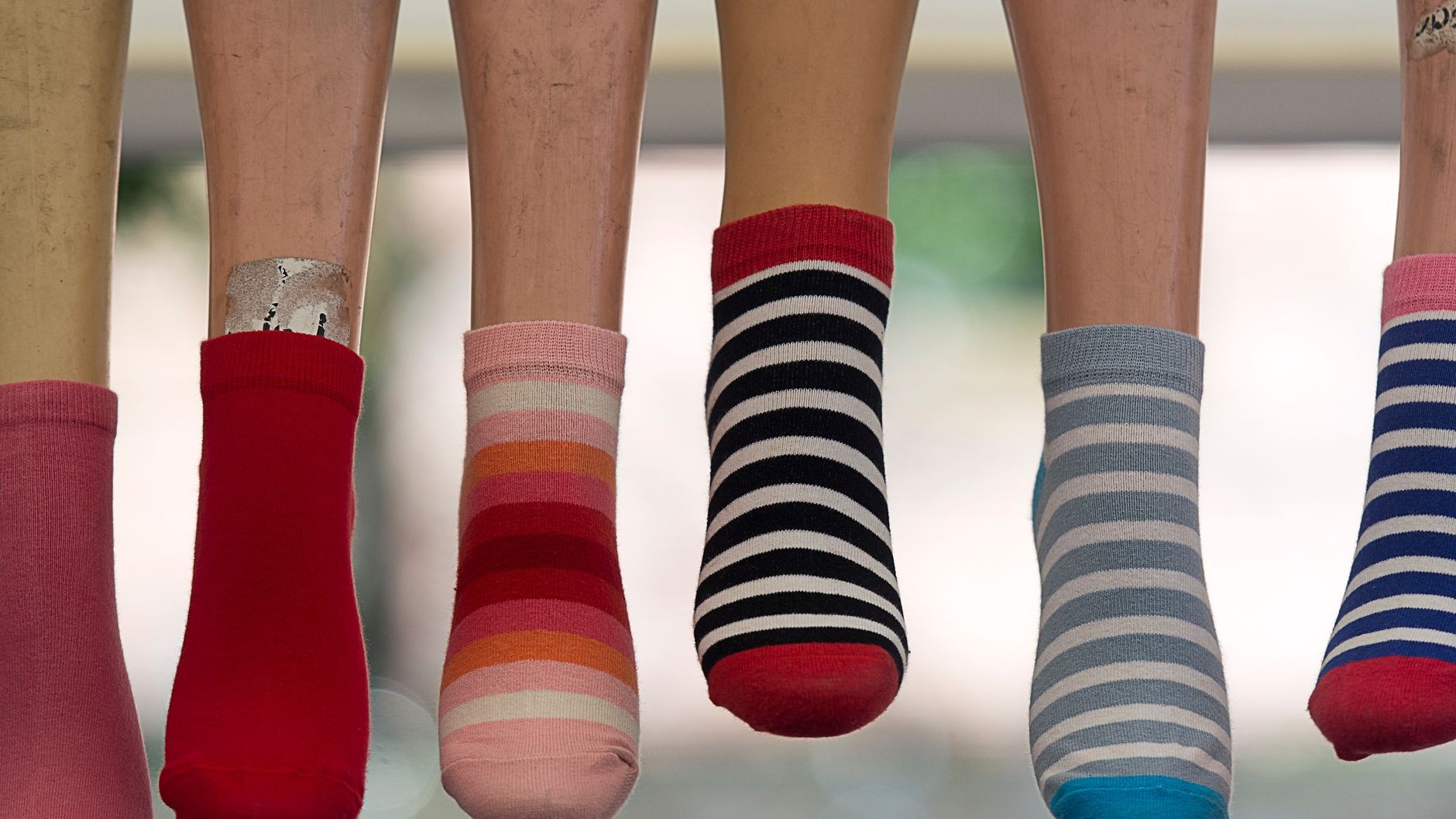
Sweat has nowhere to go in a cotton sock. The fibre is hydrophilic, meaning it grabs onto water molecules and holds them close to the skin rather than pushing them outward to evaporate. Cotton is a hydrophilic fiber, and it holds a lot of water, which inhibits moisture wicking. That soggy, swollen sensation after mile four isn’t just discomfort. It’s the exact mechanism that turns a normal run into a blister factory.
The physics is straightforward once you understand friction. Dry skin slides against fabric with relatively little resistance. Wet skin doesn’t. Moisture wicking at its core is a coefficient of friction reduction strategy: dry skin has a low friction level compared to moist skin, and that low friction means a more slippery surface between skin and sock. Once cotton fibres swell with sweat, they stop channelling that moisture away and instead sit there, damp, rubbing repeatedly against the same patch of skin with every stride. A saturated cotton sock increases friction against the skin by reducing the fabric’s surface lubricity, which raises blister risk. That’s what the fabric was really holding: not softness, but a small reservoir of friction waiting to be activated by 10,000 footstrikes.
Key takeaways
- Cotton absorbs sweat instead of pushing it away—turning your sock into a friction trap with every mile
- Research proves cotton socks cause twice as many blisters, three times larger, compared to synthetic alternatives
- One simple swap in fabric choice can eliminate foot pain that runners often accept as inevitable
What the research actually found
This isn’t guesswork dressed up as science. Researchers at the University of Missouri-Columbia ran a proper Comparison across ten popular sock brands using a device built specifically to measure moisture and friction together. Biological engineering students tested the socks and separated the good from the bad with a device that measured moisture and friction, finding that all-cotton socks were most likely to cause blisters on sweaty feet, while nylon socks performed the best. Blended socks landed somewhere in the middle, which tells you something useful: it’s not that cotton is uniquely evil, it’s that hydrophilic fibres in general behave badly under sustained sweat load.
An older but often-cited pair of studies pushes the point further. Sports scientists Herring and Richie tracked blister rates among 35 long-distance runners wearing identically constructed socks, the only difference being cotton versus acrylic fibres. The result wasn’t subtle. There were twice as many blisters, and blisters were three times the size, in the cotton socks. Curiously, when the same researchers repeated the experiment years later with thinner socks, neither sock performed better than the other, suggesting that thickness and padding density matter almost as much as fibre choice. A thick, well-constructed cotton sock and a flimsy synthetic one can end up roughly equivalent, which is a nuance most kit adverts conveniently skip.
Why “moisture-wicking” isn’t just marketing noise
The term gets slapped on packaging so often it starts to sound meaningless, but the underlying mechanism is real. Synthetic fibres like polyester and nylon, along with merino wool, are built to pull sweat away from the skin through capillary action and push it to the outer surface where it can evaporate. Merino wool insulates even when wet, keeping feet warm in cool conditions, and its wicking fibres keep feet dry, which means merino socks prevent blisters better than moisture-trapping cotton. Runners who’ve made the switch tend to notice the difference within a few sessions rather than months. Runners who swap standard cotton socks for technical running socks report fewer blisters, less foot pain, and a noticeable upgrade in comfort, especially during long-distance training.
Construction details matter alongside fibre type. Seamless toe closures, anatomical left-right shaping, and a snug (not tight) fit all reduce the bunching and shifting that create hot spots in the first place. None of that fixes a fundamentally poor fabric choice, but combined with a synthetic or merino blend, it closes most of the gaps that cotton leaves wide open.
Building a sock strategy that actually holds up
None of this means cotton deserves a permanent ban from your sock drawer. For a walk to the shops or a lazy Sunday, it’s perfectly fine, and podiatrists tend to agree the risk is context-dependent. “Really, it depends, if you’re not on your feet all day, cotton socks are fine,” one Podiatrist noted, adding that “it’s those special instances that you want to pay more attention to what you wear.” Running for an hour in July heat is precisely one of those special instances.
A few practical adjustments make a bigger difference than most people expect:
- Choose merino wool, polyester, or nylon blends over cotton for anything longer than a short jog
- On long runs or in hot weather, carry a spare pair and change socks once the first pair feels damp
- Keep toenails trimmed and apply a friction balm to known hot spots before setting off
- Make sure shoes have enough room in the toe box; a snug sock inside a cramped shoe still creates friction
A survey by the American Podiatric Medical Association found that 29 percent of people buy socks made for specific activities such as running, hiking or skiing, which leaves a sizeable majority still running errands and marathons alike in whatever’s on top of the drawer. If your feet have ever swollen inside a sock that felt soft on the shop shelf, that gap between comfort at rest and performance under sweat is worth remembering the next time you’re tempted by the softest-looking pair on the pegboard. If blisters persist despite the right socks and properly fitted shoes, it’s worth mentioning to your GP or a podiatrist, particularly if you notice signs of infection or have a condition like diabetes that affects circulation.
Sources : scmp.com | airgarb.com