
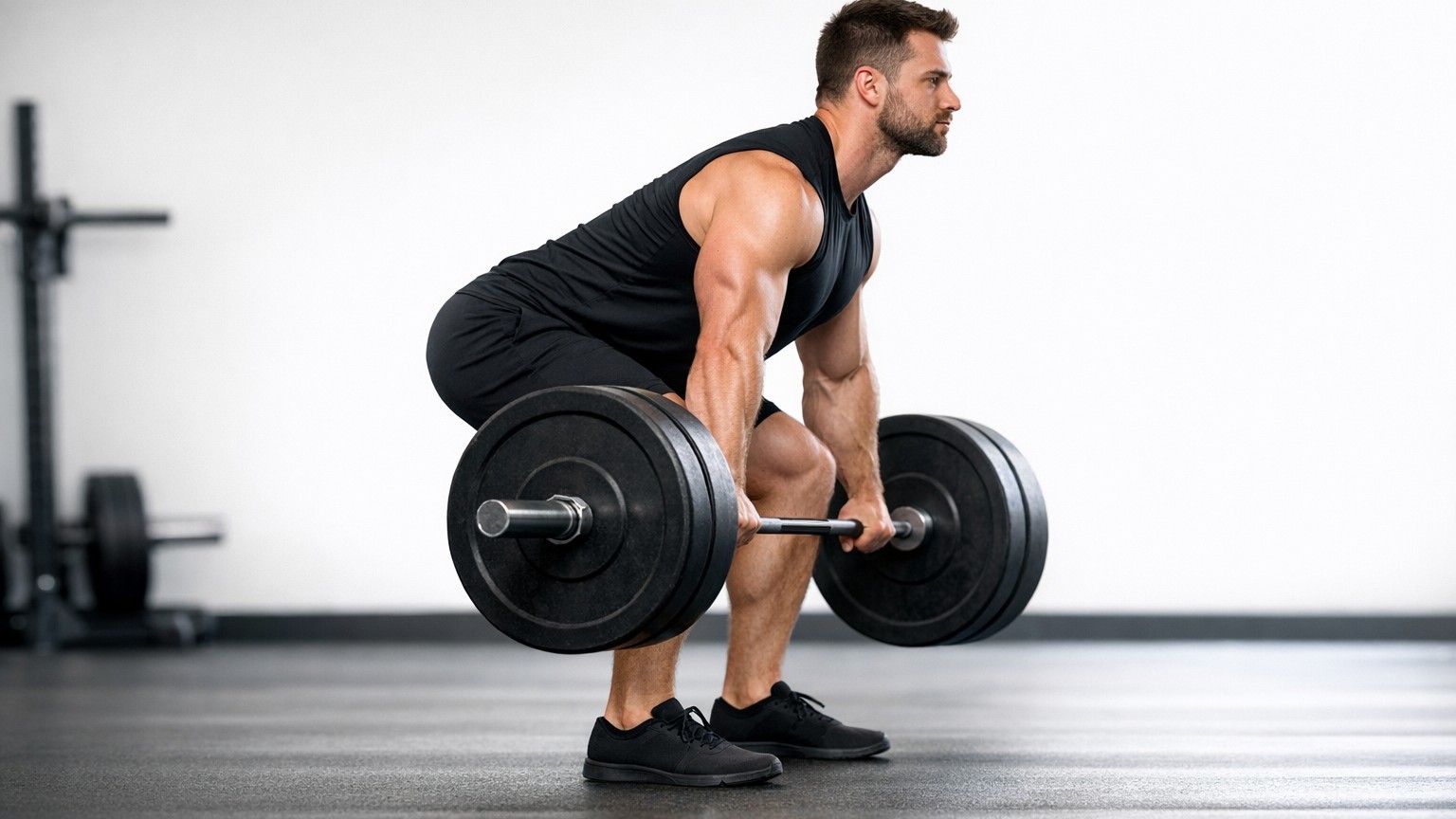
The bar was loaded, the grip was set, and for three years I genuinely believed my deadlift was solid. Then a strength coach pointed a phone at me from the side, hit record, and everything I thought I knew collapsed along with my lumbar spine. The footage showed my lower back rounding aggressively the moment the plates left the floor, a flexion pattern I had never felt, never noticed, and would have continued ignoring indefinitely. The culprit, at least in part, was sitting right on my feet.
Key takeaways
- A strength coach’s side-angle video exposed years of unnoticed lower back rounding in the deadlift
- Heel elevation shifts your center of mass forward, forcing your spine to compensate with excessive flexion under maximum load
- One simple footwear change—flat shoes instead of squat shoes—can immediately fix form and eliminate the injury risk
Why shoe heel height changes everything below the bar
Squat shoes, the hard-soled, elevated-heel footwear favoured by Olympic weightlifters — are genuinely excellent for squatting. The raised heel, typically between 0.6 and 1 inch, allows the ankle to achieve greater dorsiflexion without mobility, which lets the torso stay more upright and the knees to track forward cleanly. For a front squat or a high-bar back squat, this geometry is a real advantage.
The deadlift is a different movement entirely. When you pull from the floor, the goal is to hinge at the hip and keep the bar as close to the body as possible, with the hips loading the hamstrings and glutes as primary drivers. A heel elevation shifts your centre of mass forward. The bar, which must start over the mid-foot, now sits further behind your elevated heel, and your body compensates by pitching the torso forward and dropping the hips lower than biomechanically ideal. The result is a pull that looks more like a squat than a deadlift, and that extra lumbar flexion under load is precisely where injuries happen.
A study published in the Journal of Strength and Conditioning Research found that lifting in flat shoes or socks produced greater hip extensor activation during the deadlift compared to heeled footwear, suggesting the mechanics are genuinely altered, not just cosmetically different. The numbers aren’t dramatic, but over hundreds of training sessions, those small shifts in joint loading accumulate.
What “technical rounding” actually means, and where the danger line sits
Here’s where it gets nuanced. Some lumbar flexion during a maximal deadlift is normal and essentially unavoidable among elite lifters. The spine is not a rigid rod, and treating any curve as catastrophic would rule out most competitive powerlifters from the sport entirely. The problem is excessive flexion, and the shoe-induced version is particularly insidious because it happens at the start of the lift, when the load is greatest and the bar has zero momentum.
When the heel is elevated, the hips tend to sit too low in the setup. As you initiate the pull, the hips rise faster than the bar, converting the movement into what coaches sometimes call a “stiff-leg deadlift with a bad start.” The lumbar spine is asked to extend under load mid-rep rather than maintaining tension from the floor. That transition is where the disc stress is highest, and it’s also the frame that looks alarming on video.
Watching my own footage was genuinely uncomfortable. The rounding I saw wasn’t the controlled, braced flexion of a lifter managing load intelligently. It was a reactive collapse, the kind your body produces when the geometry is wrong from the outset. I had felt tightness after heavy sessions for years and attributed it to fatigue. It was feedback I hadn’t learned to read.
The practical fix: footwear, positioning, and what coaches actually look for
Switching to flat shoes, or even pulling in socks on a clean gym floor, immediately changes your relationship with the movement. The heel-to-floor distance drops, the hips naturally sit higher in the setup, and the Hamstrings load into tension before the bar moves. Many lifters report that the movement “clicks” for the first time after this single change, not because they’ve become stronger overnight, but because they’re finally using the muscles the deadlift is designed to train.
Minimal or zero-drop shoes are the standard recommendation among strength coaches for conventional and sumo deadlifts alike. Converse Chuck Taylors have been a gym-floor staple for decades for exactly this reason: the sole is flat, relatively thin, and hard enough to prevent energy loss. Purpose-built deadlift shoes exist as well, with an almost paper-thin sole that minimises the distance between your foot and the floor. Every millimetre matters when the bar starts at a fixed height.
Beyond footwear, the coaching cue that transformed my setup was thinking about “pushing the floor away” rather than “pulling the bar up.” This reframe encourages leg drive from the outset and naturally positions the hips correctly before tension is applied. Paired with a deliberate lat engagement (imagine trying to put your shoulder blades in your back pockets, as one common cue goes), the lower back stops being the first point of flex and becomes part of a braced, stable column.
If you train alone and haven’t been filmed from the side, book a single session with a qualified strength coach or ask a gym-going friend to record a set from a true lateral angle. The self-perception of how a lift feels and how it actually looks are frequently misaligned, this is not a character flaw, it’s simply how proprioception works. You cannot feel angles you’ve normalised over years of repetition.
One detail worth knowing: ankle mobility restrictions, which elevated heels compensate for in squatting, do not limit the deadlift in the same way. The ankle stays relatively neutral throughout a conventional pull. So if squat shoes are masking a mobility deficit, the deadlift won’t expose that same restriction, meaning there’s no mechanical justification for the heel height, only habit. And habit, as any side-angle video will cheerfully remind you, is not the same as technique.
Please consult your GP or a qualified physiotherapist if you are experiencing lower back pain, particularly during or after resistance training.