
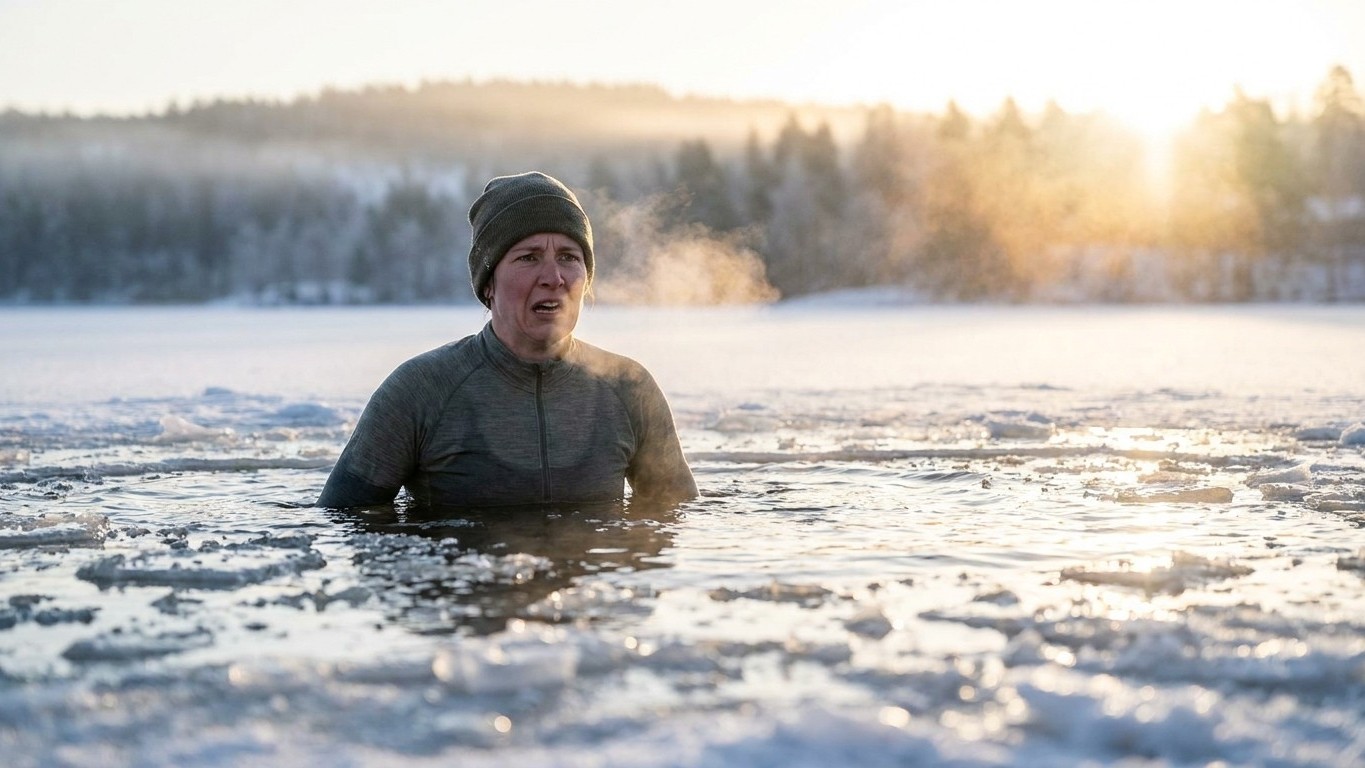
Cold-water immersion has a habit of turning otherwise sensible people into evangelists. Thirty days in, the alarm goes off before dawn, you’ve stopped flinching at the tap, and somewhere between the gasping and the glow, you’ve convinced yourself you’ve unlocked a biological superpower. The problem is that when you sit down with the actual research, the picture looks rather different from what the wellness influencers promised.
Key takeaways
- Your brain chemistry genuinely changes after cold water—dopamine spikes 250% and stays elevated for hours
- The inflammation your body experiences isn’t healing; it’s a stress response that some studies link to heart muscle damage in athletes
- The ‘invincible’ feeling may owe as much to placebo, ritual, and novelty as to the actual temperature
What the research actually shows (and what it doesn’t)
A systematic review published in PLOS One in January 2025 analysed 11 studies involving 3,177 participants and found that people who used cold plunges could experience stress reduction for a limited time following exposure, a decrease in sickness absences, and improvements in quality of life. That sounds convincing, until you read the fine print. Clear conclusions from most studies were hampered by the fact that they were carried out in small groups, often of one gender, with differences in exposure temperature and composition of the water. we’re not looking at the kind of robust, long-term clinical evidence that would support the sweeping claims circulating on social media.
The metabolic signal is probably the most credible part of the story. Cold-water immersion seems to reduce and/or transform body adipose tissue, as well as reduce insulin resistance and improve insulin sensitivity. This may have a protective effect against cardiovascular, obesity and other metabolic diseases, and could have prophylactic health effects. That’s genuinely interesting science, though it comes with a caveat: most of the supporting studies are short, small, and conducted on people who were already regular cold-water swimmers, not people who started because they watched a video online.
Then there’s the inflammation paradox, which is the detail most cold-plunge advocates quietly skip past. Cold-water immersion increased inflammation immediately after and one hour post-exposure. The immediate spike in inflammation is the body’s reaction to cold as a stressor, it helps the body adapt and recover, similar to how exercise causes muscle damage before making muscles stronger. So when you feel invincible stepping out of that tub, you’re also briefly inflamed. The body treats cold water as a threat, not a gift.
The brain chemistry behind that euphoric feeling
Here is where things get genuinely compelling. The “invincible” sensation many people describe after a cold plunge is not imaginary, it has measurable neurochemical roots. Cold-water immersion triggers the release of important hormones and neurotransmitters, such as dopamine, serotonin, cortisol, norepinephrine, and beta-endorphins, which are all linked to modulation of the neural responses to stress and other emotion-related circuits affected in depression, anxiety, and posttraumatic stress disorder.
The dopamine response alone is striking. After a cold bath, dopamine levels have been found to increase by approximately 250% and remain elevated for up to two hours. Norepinephrine, which governs arousal, attention, and the brain’s readiness to act, has been documented increasing by 300% or more following cold-water immersion. For comparison, a shot of espresso barely scratches the surface of that kind of catecholamine release. Participants in one study felt more active, alert, attentive, proud, and inspired, and less distressed and nervous after a cold-water bath.
The catch, recognised even by researchers sympathetic to cold-water therapy, is the placebo-and-context problem. The positive effects could be the result of the placebo effect, the benefits could come from meeting people, the exercise itself, or the simple act of accepting a challenge and completing it, which can improve self-confidence. That’s not a reason to dismiss the practice. But it is a reason not to credit the cold water alone. The ritual of commitment may be doing as much work as the temperature itself.
What the readings really tell you
Plunging the body into cold water triggers a sudden, rapid increase in breathing, heart rate and blood pressure, known as the cold shock response. For most healthy adults doing a supervised, controlled plunge of a few minutes at around 10–15°C, this is not dangerous, your body adapts to the shock over time, and the shock response can be lessened by acclimating the body to increasingly colder water. But the readings become genuinely sobering when you look at what’s happening inside.
Some studies suggest that people who adapt to cold water immersion through routine ice bathing or winter swimming may reduce inflammation and other cardiovascular risks, but others have found evidence of higher levels of troponin in people who compete in winter swims, suggesting that prolonged cold-water immersion could lead to heart muscle damage. Troponin is a protein the heart releases when it’s under stress, the same marker used in hospital A&E departments to flag a potential heart attack. Seeing it rise in otherwise healthy athletes is not a headline anyone is putting in their motivational morning content.
Cold water exposure stimulates the release of norepinephrine levels, which may decrease the threshold for cardiac arrhythmias. Individuals with pre-existing cardiovascular conditions must exercise caution, as the rapid fluctuations in blood pressure and heart rate could potentially trigger life-threatening cardiac events such as arrhythmias and cardiac arrests. Even in young healthy volunteers, cold-water submersion can induce a high incidence of cardiac arrhythmias. The risk is low for the right person doing it correctly; it is not zero for anyone.
How to do it sensibly, if you’re going to do it
The honest position on cold-water immersion is that there are real, biologically plausible benefits, and real, biologically documented risks. Although blood pressure rises briefly upon immersion, regular exposure may lead to long-term reductions in baseline blood pressure through improved autonomic balance, reduced inflammation, and enhanced vascular function. That’s worth something, particularly for cardiovascular health over time. Cold-water swimming has also been linked to improved lipid profiles, especially in women.
The practical guidance is straightforward. A deliberate plunge of 2–10 minutes at 10–15 degrees Celsius is well within the margins of safety for a healthy adult without contraindications. Below 10 degrees Celsius, the cold shock response is more severe, and even short sessions require greater respect for physiological limits, sessions longer than five minutes at these temperatures in unacclimatised individuals are not recommended. Never go alone. That is not overcaution; never doing a cold water swim on your own is basic safety — doing so is a recipe for disaster. Individuals with cardiovascular disease, diabetes, or hypertension should consult a healthcare provider before beginning cold-water swimming. As always, your GP is the right first conversation, not a podcast.
The 30-day challenge crowd rarely mention one particularly interesting finding that puts the whole enterprise in perspective: quality-of-life improvements observed in one large study were no longer statistically significant after 90 days, raising questions about participant compliance. The initial buzz, the dopamine surge, the pride, the novelty, may be part of what the readings are measuring. When the novelty wears off and the alarm still rings at 6am in January, the biology of cold water has to carry the show on its own. Whether that’s enough depends entirely on who you are, what you’re treating, and how honestly you’re reading the results.
This article is for informational purposes only and does not constitute medical advice. Always consult your GP before beginning any new health practice, particularly one involving physiological stress.
Sources : sciencedirect.com | rspublisher.org