
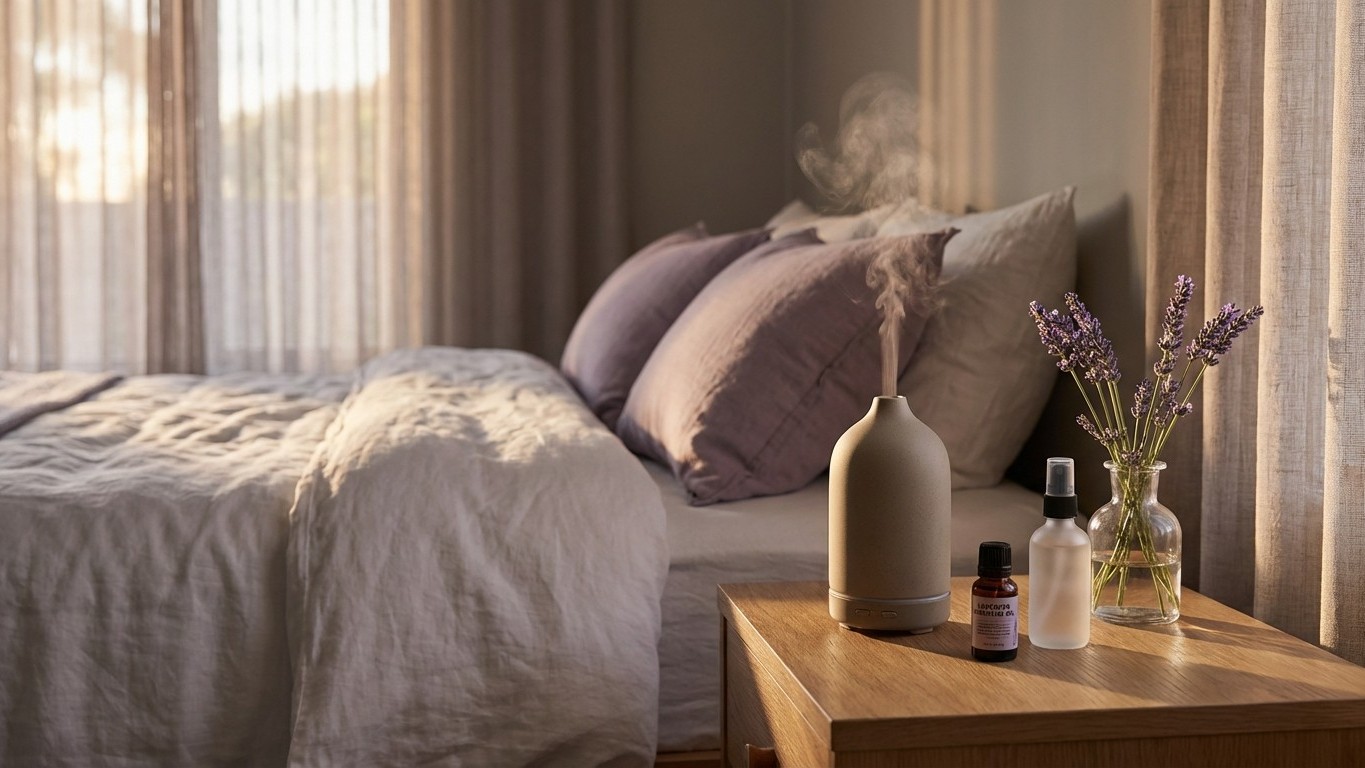
Few scents are as instantly calming as lavender. A single breath of it and something shifts, your shoulders drop, your jaw unclenches, your mind quiets just enough to let sleep edge closer. This isn’t wishful thinking or marketing folklore. The use of lavender for sleep aromatherapy is one of the most studied areas in natural sleep support, and the evidence, while still growing, is genuinely encouraging. Whether you’re reaching for a diffuser, a pillow spray, or drawing a warm bath before bed, lavender offers several practical routes to a more restful night.
Why lavender is recommended for sleep
Active compounds and how they work
Lavender essential oil is a complex mixture of naturally occurring compounds, but two stand out in sleep research: linalool and linalyl acetate. These aromatic molecules, when inhaled, interact with the olfactory system and appear to influence the nervous system in ways that promote relaxation. Animal studies have suggested that linalool may affect GABA receptors, the same receptors targeted by certain anti-anxiety medications, though the mechanisms in humans are less straightforward and dose-dependent in ways we don’t fully understand yet.
What we do know is that the effect is primarily mediated through inhalation. Unlike ingested supplements, aromatherapy works through the olfactory pathway, sending signals to the limbic system, the part of the brain closely tied to emotion and memory. This explains why scent can shift mood so rapidly. The relaxation response triggered by lavender isn’t just placebo; it appears to involve genuine physiological changes, including modest reductions in heart rate and blood pressure in some study participants.
What the scientific evidence actually says
The honest answer is: lavender research is promising but not conclusive. Several small clinical trials have found that lavender aromatherapy improves self-reported sleep quality, reduces nighttime waking, and decreases daytime fatigue, particularly in people experiencing mild to moderate sleep difficulties. Studies conducted in hospital settings have found that patients exposed to lavender scent during the night reported sleeping better than those in unscented rooms.
A word of caution, though. Many of these trials are small, use different lavender preparations, and rely heavily on subjective sleep reports rather than objective measures like polysomnography. The science supports lavender as a gentle, low-risk sleep aid with real potential, not a pharmaceutical-grade insomnia treatment. If you’re struggling with chronic insomnia or a sleep disorder, please speak with your GP rather than relying solely on aromatherapy. For the vast majority of people dealing with everyday stress-related sleep disruption, lavender is a sensible, accessible tool.
How to use lavender in aromatherapy for better sleep
Diffusion in the bedroom: methods, precautions, and effectiveness
An ultrasonic diffuser is probably the most popular way to fill your bedroom with lavender. These devices use water and a small disc to create a cool mist, dispersing essential oil molecules into the air without heat (which can degrade the more delicate compounds). Run your diffuser for around 30 to 60 minutes before bed, then either turn it off or set it to an intermittent cycle if your model allows. Continuous overnight diffusion is generally not recommended, your olfactory system adapts quickly, and prolonged exposure in a small, poorly ventilated room can cause headaches or mild irritation in some people.
Use three to five drops of lavender essential oil per 100ml of water as a starting point. You don’t need more than that. The temptation to increase the dose when you don’t notice an immediate effect is understandable, but more is rarely better with essential oils. Place the diffuser at a safe distance from your bed, ideally on a bedside table or dresser, and keep the bedroom reasonably well ventilated.
Candles scented with lavender are widely available and create a lovely pre-sleep ritual, but they’re not equivalent to aromatherapy in the strict sense. Most commercial candles use synthetic fragrance rather than genuine essential oil, and you should always extinguish them before you actually fall asleep.
Lavender pillow spray: a simple homemade recipe
A pillow spray is possibly the most immediate and personal way to use lavender for sleep. You apply it directly to your pillow and bedding minutes before lying down, creating a localised scent cloud right at nose level. The effect is immediate and surprisingly effective for something so simple.
Making your own is straightforward. Combine 15 to 20 drops of lavender essential oil with a small amount of high-proof vodka or witch hazel (around a teaspoon) in a 100ml spray bottle, then top up with distilled water. The alcohol helps disperse the oil in the water rather than leaving it floating on the surface. Shake well before each use. Mist your pillow lightly, two or three spritzes at most, about ten minutes before bed, giving it time to settle and the alcohol to evaporate.
If you’re buying a ready-made pillow spray rather than making your own, check the ingredient list. A product built on genuine lavender essential oil will behave differently to one using synthetic lavender fragrance, which lacks the therapeutic compounds. Neither is harmful, but they’re not the same thing.
A relaxing lavender bath: how to prepare and build it into your evening
A warm bath taken 60 to 90 minutes before bed is already one of the better evidence-based sleep strategies we have. The warmth raises your core body temperature, and the subsequent cooling as you get out mimics the natural temperature drop your body undergoes as it prepares for sleep. Adding lavender to that bath is a logical, pleasant enhancement.
Never add essential oil directly to bathwater. Oil and water don’t mix, meaning undiluted drops will float on the surface and come into direct, potentially irritating contact with sensitive skin. Instead, mix five to eight drops of lavender essential oil into a tablespoon of full-fat milk, a teaspoon of fractionated coconut oil, or a small amount of unscented bath gel before adding it to the water. This simple step ensures the oil disperses properly.
Treat the bath itself as the beginning of your wind-down, not just a hygiene routine. Dim the lights, leave your phone in another room, and spend at least 20 minutes in the water. The combination of warmth, scent, and deliberate stillness is genuinely powerful as a pre-sleep ritual.
Who is lavender suitable for? Contraindications and precautions
Children, pregnant women, and older adults: what to know
Lavender is often perceived as universally safe because it’s natural, but essential oils are highly concentrated plant extracts and deserve more care than that assumption allows. For children under three, diffused lavender should be used only with considerable caution and in well-ventilated spaces, with shorter exposure times. Pillow sprays and direct skin application are not appropriate for very young children. If in doubt, skip the essential oil and try a lavender-scented room spray based on hydrosol (flower water) instead, which is far more dilute.
For pregnant women, the general guidance from aromatherapy practitioners is to avoid most essential oils during the first trimester entirely, and to use lavender only in very low dilutions (around 1%) during later pregnancy, ideally with guidance from a qualified aromatherapist or midwife. The evidence base for safety in pregnancy is limited, and caution is the sensible default.
Older adults can generally use lavender aromatherapy safely, though those with respiratory conditions like asthma should be careful with diffusion, as strong scents can trigger symptoms in some people. Always start with low concentrations and observe how you respond.
Possible side effects and when to avoid lavender
Allergic reactions to lavender do occur, though they’re not common. Skin contact with undiluted essential oil is the most frequent cause. If you experience skin redness, itching, or a rash after using lavender topically, discontinue use. Some people report headaches or nausea from prolonged exposure to any strong scent, lavender included, ventilation and shorter diffusion times usually resolve this.
There’s a small body of evidence suggesting that topical lavender products applied repeatedly to the skin might have mild hormonal effects in prepubescent children; this relates specifically to skin application rather than inhalation aromatherapy, but it’s worth being aware of if you’re considering lavender massage oils or lotions for children.
Combining lavender with other natural sleep strategies
Pairing lavender with herbal teas, routines, and relaxation techniques
Lavender works best as part of a layered approach to sleep rather than a standalone solution. Think of it as one thread in a fabric. Pair your diffuser or pillow spray with a cup of chamomile tea for sleep benefits — the two have complementary calming effects and turn your pre-bed routine into something genuinely sensory and intentional.
If you’re exploring the broader landscape of natural sleep remedies herbs, you’ll find lavender sits comfortably alongside other botanicals with sleep-supporting properties. Some people find that alternating or combining herbal support with aromatherapy covers both the physiological and psychological dimensions of winding down. Valerian, for example, has a different mechanism of action to lavender; if you want to understand how to use it properly, the guide on valerian root for sleep how to use covers dosing and timing clearly.
Breathing exercises, light stretching, and screen-free reading all complement lavender aromatherapy well. The scent can act as an anchor, a consistent sensory cue that signals to your brain that sleep is approaching. Over time, with repetition, this conditioned association can itself become part of the mechanism. For a broader view of how to bring all these elements together, the natural sleep remedies guide offers a practical framework that goes well beyond any single herb or technique.
Frequently asked questions about lavender and sleep
Which type of lavender essential oil is most effective for sleep? Two species are most commonly used: Lavandula angustifolia (true or fine lavender) and Lavandula x intermedia (lavandin). True lavender generally has a higher linalool content and is the one used in most sleep studies, so it’s the better choice for this purpose. Lavandin has a sharper, more camphorous scent and is more commonly found in cheaper products.
Should I prefer diffusion, a spray, or a bath? There’s no universally correct answer, it depends on your lifestyle and sleep challenges. Diffusion creates a sustained background scent ideal for those who find it hard to switch off mentally. A pillow spray is direct, quick, and portable (useful for travel). A lavender bath addresses physical tension as well as psychological stress, making it the most holistic option. Many people find rotating between the three depending on the evening works well.
How quickly does lavender work for sleep? Most people notice a relaxation effect within 10 to 15 minutes of exposure, though the impact on sleep quality tends to be cumulative when used consistently over several nights rather than dramatic after a single use.
Can I use lavender every night? Yes, with sensible precautions (proper dilution, adequate ventilation, avoiding prolonged uninterrupted diffusion). Some practitioners suggest occasional breaks to prevent olfactory adaptation, where your brain simply stops registering the scent.
Lavender as a genuine sleep ally
There’s something quietly subversive about choosing a flower over a screen before bed. Lavender aromatherapy won’t fix structural sleep problems, but for the everyday version of poor sleep, the racing thoughts, the tension that won’t release, the mind that refuses to settle — it offers a genuinely useful, low-risk, and rather pleasant intervention. The ritual of it matters as much as the chemistry. In building a pre-sleep routine around sensory cues like scent, warmth, and quiet, you’re training your nervous system to recognise the approach of rest. That’s a habit worth cultivating, one evening at a time.