
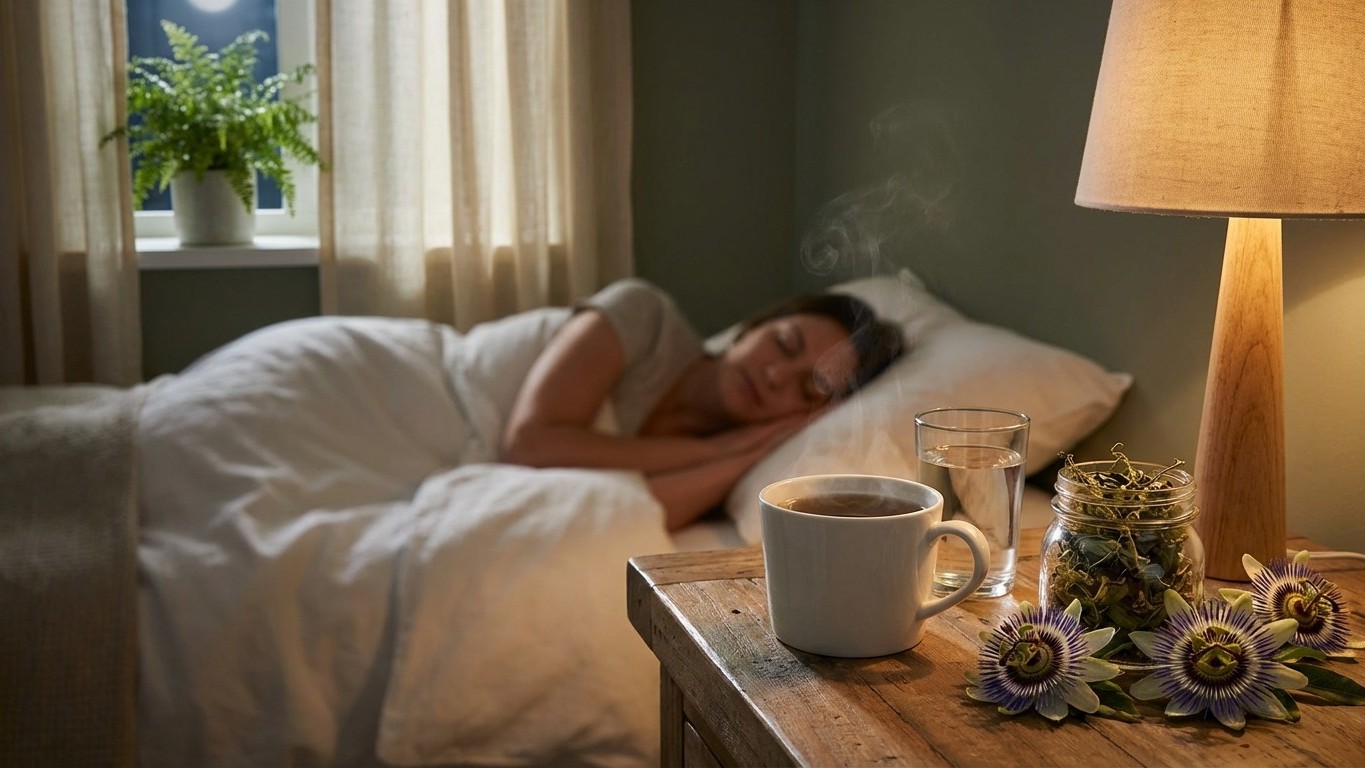
Passionflower has quietly become one of the most talked-about herbal remedies for sleep in recent years, and for good reason. Unlike some botanicals that carry a heavy sedative reputation, Passiflora incarnata works more gently, targeting the restless, wired-but-tired feeling that keeps so many people staring at the ceiling. Getting the dosage right, though, makes all the difference between a plant that helps and one that simply sits in your cupboard.
This guide focuses specifically on passionflower for sleep dosage: how much to take, in what form, and when. Whether you are new to herbal sleep support or looking to fine-tune an existing routine, the information here is grounded in what clinical research and phytotherapy practice currently support.
Always consult your GP before introducing any new supplement, particularly if you take prescription medication or have an existing health condition.
What Is Passionflower and Why Is It Used for Sleep?
Botanical Profile and Active Components
Passionflower, known botanically as Passiflora incarnata, is a climbing vine native to the southeastern United States and parts of Central America. The aerial parts of the plant, including the leaves, stems, and flowers, are used medicinally. Traditional herbalism in North America and Europe has relied on it for centuries to address anxiety, nervous tension, and difficulty sleeping.
The plant contains several groups of active compounds. Flavonoids, particularly chrysin and vitexin, are widely studied for their interactions with the central nervous system. Alkaloids and maltol are also present, though in smaller quantities. Together, these constituents appear to account for the plant’s calming properties, though research is still working out the precise contribution of each compound.
How Passionflower Acts on Sleep
The primary mechanism involves the gamma-aminobutyric acid (GABA) system. GABA is the brain’s main inhibitory neurotransmitter, the chemical that essentially tells an overactive nervous system to slow down. Some flavonoids in passionflower appear to bind to GABA-A receptors, producing a mild calming effect without the potency, or the dependency risks, associated with pharmaceutical GABA-enhancing drugs such as benzodiazepines.
Small clinical trials have observed improvements in sleep quality with passionflower supplementation, including better subjective sleep scores and reduced time to fall asleep. The effect is modest but meaningful, particularly for people whose sleep difficulties are rooted in anxiety and mental restlessness rather than a primary sleep disorder. For a broader look at plant-based options for sleep, the guide on natural sleep remedies herbs offers useful context.
Passionflower for Sleep: Dosage by Form
Recommended Dosages for Each Preparation
Dosage varies quite significantly depending on the form you choose. Passionflower is available as a herbal tea, a liquid extract (tincture), and standardised capsules or tablets. Each format delivers the active compounds differently, and that affects how much you need and how quickly you feel the results.
Herbal tea is the most traditional preparation and the most widely accessible. A typical dose uses 1 to 2 teaspoons (roughly 1.5 to 3 grams) of dried passionflower herb per cup of boiling water, steeped for 10 minutes. Most phytotherapy guidelines suggest one cup taken 30 to 60 minutes before bed.
Liquid extracts, often labelled as tinctures, are more concentrated. A common dosage range falls between 1 and 4 ml, usually taken diluted in a small amount of water. The precise volume depends on the extraction ratio indicated on the product label, so reading that carefully matters. A 1:5 tincture, for instance, requires a different volume than a 1:2 extract to deliver an equivalent dose of active compounds.
Capsules and tablets containing standardised passionflower extract are perhaps the most convenient option. Clinical studies have generally used dosages in the range of 300 to 800 mg of dried extract per day, often split into one or two doses. For sleep specifically, a single evening dose in the 300 to 500 mg range is typical in research settings.
Dosage Summary by Format
| Form | Typical Dose | Timing | Notes |
|---|---|---|---|
| Herbal tea (dried herb) | 1.5 to 3 g (1–2 tsp) | 30–60 min before bed | Steep 10 min, covered |
| Tincture (liquid extract) | 1 to 4 ml | 30–45 min before bed | Check extraction ratio on label |
| Capsule / tablet (standardised) | 300 to 500 mg | 30–60 min before bed | Look for standardised flavonoid content |
When and How to Take Passionflower for Best Results
Timing Your Dose
Timing genuinely matters with herbal sleep aids. For passionflower, taking it 30 to 60 minutes before you intend to sleep gives the active compounds time to reach circulation and begin interacting with the nervous system. Some people find that 45 minutes is the sweet spot, others prefer a full hour, particularly if they tend to have a slow digestive transit.
Consistency also plays a role. While passionflower can have an acute calming effect after a single dose, several studies suggest its benefits on sleep quality become more pronounced after several consecutive nights of use. A trial period of two to four weeks is often recommended before drawing conclusions about whether it is working for you.
Avoid taking large doses earlier in the day if you need to drive or operate machinery, as mild drowsiness can occur in sensitive individuals. A low dose taken in the afternoon for daytime anxiety management is sometimes used, but that is separate from the sleep-specific context discussed here.
Preparation Tips and Herbal Combinations
When preparing a tea, covering the cup while the herb steeps preserves the volatile aromatic compounds that contribute to the calming effect. A simple lid or small saucer placed over the cup is sufficient.
Passionflower combines well with other calming herbs. Pairing it with lemon balm can address both the anxious mind and mild physical tension. Combining it with valerian root for sleep how to use is a popular approach when the primary issue is difficulty falling asleep, since valerian appears to complement passionflower’s action through partially different pathways. Chamomile is another gentle companion, particularly for those who find valerian too strong; the article on chamomile tea for sleep benefits explains how that herb works in more detail.
Pre-formulated herbal sleep blends often include passionflower alongside one or more of these companions, which can simplify the process. The trade-off is less control over individual dosages, so checking each ingredient’s amount on the label remains worthwhile.
Precautions, Contraindications, and Side Effects
Who Should Avoid Passionflower
Passionflower is generally regarded as safe for short-term use in healthy adults, but several groups should avoid it or seek medical advice first. Pregnant women should not use passionflower, as some of its alkaloids have shown uterine-stimulating effects in animal studies. Women who are breastfeeding should also err on the side of caution given the limited safety data in that context.
Children under 12 should not take passionflower supplements without paediatric guidance. Older adults can generally use it, but at the lower end of the dosage range, particularly if they take other medications.
Interactions with certain prescription drugs represent the most clinically relevant concern. Passionflower may enhance the effects of sedative medications, including some antihistamines, anxiolytics, and sleep aids, which can lead to excessive drowsiness. It may also interact with anticoagulant therapy. Anyone taking prescription medication should speak to their GP or pharmacist before starting passionflower.
Reported Side Effects
When used at appropriate doses, passionflower is well tolerated by most people. The side effects reported in studies and clinical practice are generally mild: dizziness, drowsiness (which can be welcome at bedtime but inconvenient the next morning if the dose is too high), and occasional nausea. These typically resolve when the dose is reduced.
Allergic reactions are rare but possible. Anyone who experiences skin reactions, difficulty breathing, or significant digestive upset should discontinue use and consult a healthcare professional promptly.
Passionflower Compared to Other Sleep Herbs
When Passionflower Is a Good First Choice
Among the commonly used sleep herbs, passionflower sits in a useful middle ground. It is gentler than valerian for most people, which makes it a practical starting point for those new to herbal sleep support or those who found valerian’s earthiness or potency off-putting. It addresses the anxious, racing-mind type of sleeplessness particularly well.
For those whose sleep difficulties stem from physical restlessness or deeper circadian disruption, passionflower alone may not be sufficient. In those cases, combining it with other herbs or addressing underlying lifestyle factors tends to produce better outcomes.
Synergistic Herbal Combinations
The most researched pairings include passionflower with valerian and passionflower with lemon balm. Some clinical work has examined triple combinations involving all three herbs, generally showing additive benefits without significant increases in adverse effects at standard doses. Hops, another traditional sleep herb, also appears in combination products alongside passionflower.
A broader overview of how these plants fit together, including routine-building strategies and non-herbal approaches, is available in the comprehensive guide on natural sleep remedies.
Frequently Asked Questions About Passionflower and Sleep
What is the ideal dose of passionflower for falling asleep?
For most adults, a dose of 300 to 500 mg of standardised extract in capsule form, or one well-prepared cup of tea using 1.5 to 3 grams of dried herb, taken 30 to 60 minutes before bed, falls within the range used in clinical studies. Starting at the lower end and adjusting after several days is sensible practice. Individual response varies, and some people notice effects at lower doses.
Is tea, a capsule, or a liquid extract better for sleep?
There is no definitive evidence that one form is superior for everyone. Tea offers a ritualistic, slow-down quality that can itself support sleep preparation, and some people find the act of making and drinking a warm herbal drink genuinely calming. Capsules offer precision and convenience, particularly useful for those who dislike the slightly grassy taste of passionflower tea. Tinctures sit between the two: fast-absorbing and adjustable in dose, but requiring a little more attention to labelling. Choice often comes down to personal preference and how a form fits into your existing evening routine.
Are there risks to taking passionflower every evening?
Short-term use over several weeks is well documented as safe for healthy adults. Long-term daily use beyond two to three months is less studied, and most herbal medicine practitioners suggest taking periodic breaks, perhaps one week off every four to six weeks, to avoid the possibility of tolerance developing. At standard doses, passionflower does not appear to cause the dependence associated with pharmaceutical sleep medications, which is one of its practical advantages. That said, relying on any single intervention, herbal or otherwise, without addressing root causes of poor sleep is unlikely to produce lasting results.
Sleep quality is shaped by dozens of variables, and passionflower works best as part of a thoughtful routine rather than a standalone fix. The question worth sitting with is not just which herb to take, but what your particular pattern of sleeplessness is telling you about your nervous system, your daily rhythms, and what genuine rest might look like for you.