
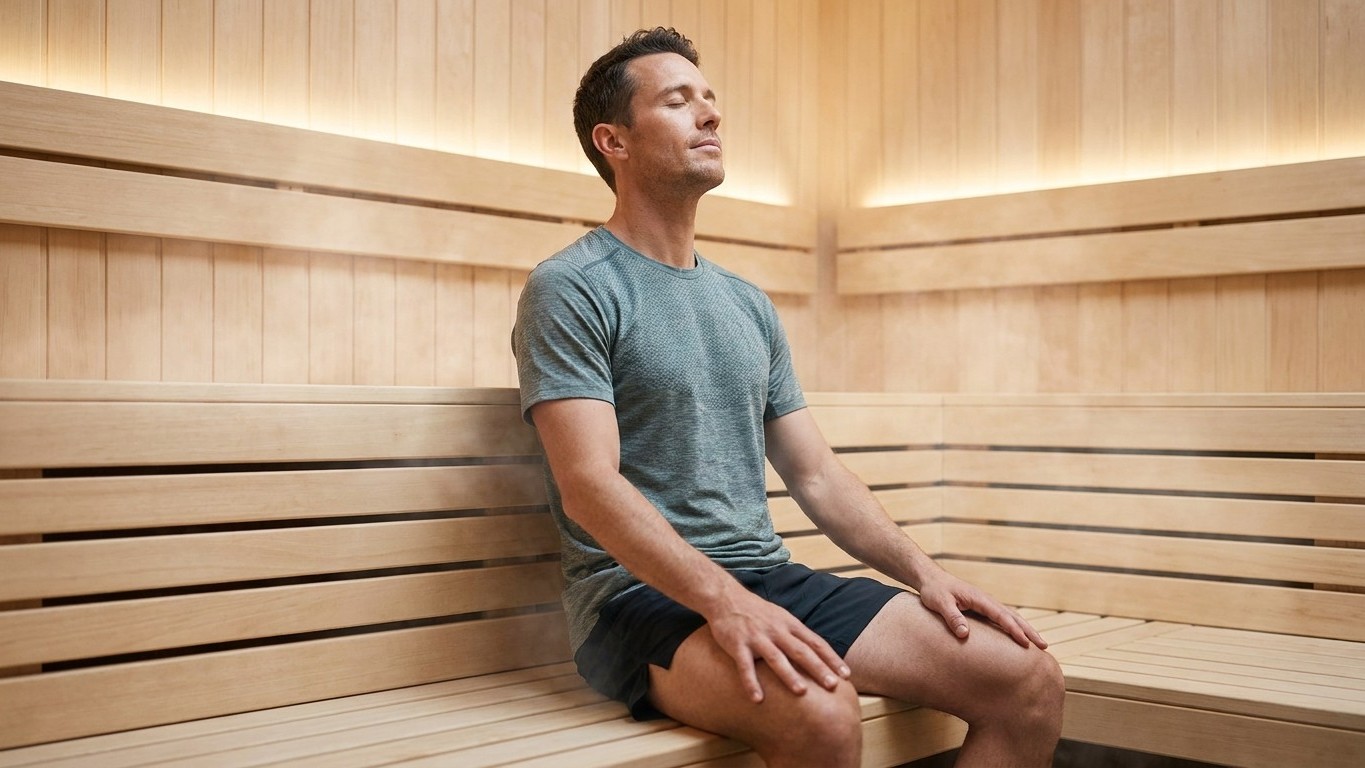
Three weeks of sitting quietly in a sauna after training genuinely can change how your heart responds to effort at the same pace, and the physiology behind it is well documented. Researchers studying trained runners who added post-exercise sauna sessions to their routine found measurable heat acclimation within roughly this timeframe, including a drop in exercising heart rate. That warm, slightly dazed feeling after a sauna isn’t just relaxation. It’s a sign your cardiovascular system is quietly renegotiating its workload.
Key takeaways
- A 20-minute sauna after training triggers a second cardiovascular workout without moving a muscle—your heart rate climbs to 150 bpm while blood redirects to cool you
- Trained athletes see their exercising heart rate drop by 5-9 bpm within three weeks, a change comparable to weeks of aerobic base-building
- The benefits aren’t universal: heart rate variability plateaus in sedentary people, but blood pressure and cholesterol show measurable improvements
What actually happens to your heart during those 20 minutes
Sitting in a hot room does far more to your circulation than most people realise. During heat exposure, there is a 50-70% redistribution of blood flow away from the core to the skin to facilitate sweating. Your heart has to work harder to manage this, and heart rate increases up to 150 beats per minute, which corresponds to moderate-intensity physical exercise, while cardiac output increases by 60-70%. Essentially, you’re giving your heart a second workout without moving a muscle.
The clever part is what happens afterwards. Immediately after sauna use, blood pressure and resting heart rate are lower than baseline, similar to physical activity. One study measuring heart rate variability found that after 30 min of recovery from sauna bathing, the HRV indices of parasympathetic activity were shown to be significantly higher, meaning the nervous system settles into a calmer, more recovered state than it was in during the heat exposure itself. That’s the unwind you were feeling, backed up by actual autonomic nervous system data.
The three-week shift, and why it’s real
Here’s where it gets genuinely interesting for anyone tracking their own numbers. In a study of trained middle-distance runners who added sauna sessions after their normal training, researchers found that females and males exhibited similar reductions in peak rectal temperature (−0.3°C), skin temperature (−0.9°C), and heart rate (−9 beats per minute) during a heat tolerance test post- versus pre-intervention. The study’s authors concluded that three weeks of post-exercise sauna bathing effectively induces heat acclimation in females and males, though possibly amid different thermoeffector adaptations. Nine beats per minute lower at the same physiological stress point is not a rounding error. That’s the kind of change you’d normally expect from several weeks of dedicated aerobic base-building.
A separate study on elite cross-country skiers who underwent a similar sauna protocol reported something comparable: after a series of sauna baths, the heart rate during exercise was around 5 bpm lower than in the control, with a reduction of around 8 bpm recorded at rest. The mechanism isn’t mysterious once you understand what heat exposure does to your blood. Part of it comes down to plasma volume expansion, one of the classic markers of heat adaptation, which effectively gives your heart more fluid to work with per beat, so it doesn’t need to beat as often to shift the same amount of oxygen. Sweat rate also improves with repeated exposure, meaning your body starts cooling itself more efficiently, which reduces the cardiovascular strain of managing heat, whether that heat comes from a sauna bench or a hard training session on a warm day.
Where the evidence gets more cautious
Not every marker moves in the same encouraging direction, and it’s worth being honest about that. A randomised controlled trial in sedentary adults with cardiovascular risk factors compared regular exercise alone against exercise plus 15 minutes of post-exercise sauna over eight weeks. The result was blunt: there were no statistically significant differences between the exercise-plus-sauna group and exercise-only group for any HRV indices measured, and adding regular sauna bathing post-exercise offered no additional benefits to HRV over regular exercise alone. So while heat acclimation studies in trained athletes show clear drops in exercising heart rate, the broader marker of heart rate variability, often used as a proxy for recovery and autonomic balance, doesn’t automatically improve just because you’ve bolted a sauna onto your workout.
That said, other cardiovascular markers tell a more favourable story. A separate trial found that the addition of a regular 15-minute typical Finnish sauna after exercise supplemented the gains in cardiorespiratory fitness, reductions in systolic blood pressure, and lowered total cholesterol levels considerably. UCLA Health summarised similar findings, noting if your cardiorespiratory fitness level is low, exercise followed by 15 minutes in the sauna improves fitness more than exercise alone, and that if your fitness level is high, adding sauna bathing to your workout routine can reduce your risk of heart-related death, including sudden cardiac death. The picture, then, isn’t one single clean story. Heart rate drops during matched effort, blood pressure and cholesterol improve, but HRV specifically seems to plateau once regular exercise is already doing its job.
Making sense of your own numbers
If you’ve noticed your heart rate sitting lower at the same jogging pace or the same spin bike resistance after a few weeks of post-workout sauna sessions, you’re likely picking up on genuine heat acclimation rather than a fitness fluke or a fluke of your tracker. The changes seen in trained athletes, roughly 5 to 9 beats per minute lower at matched intensity within two to three weeks, are consistent enough across different sports that it’s a reasonably reproducible effect. Hydration matters enormously here; losing significant fluid through sweating without replacing it will artificially inflate heart rate readings and mask any real adaptation, so drink properly before and after each session.
One nuance worth remembering: this heat-driven heart rate drop isn’t a substitute for building aerobic fitness through training itself, and none of the researchers behind these studies suggest swapping structured cardio for a warm room. It’s a genuine physiological bonus layered on top of the training you’re already doing, not a shortcut around it. If you have any existing heart condition, uncontrolled blood pressure, or you’re pregnant, do check with your GP before making sauna sessions a regular fixture of your training, since the acute rise in heart rate during heat exposure places real, if usually well-tolerated, demand on the cardiovascular system.
Sources : pmc.ncbi.nlm.nih.gov | physoc.onlinelibrary.wiley.com