
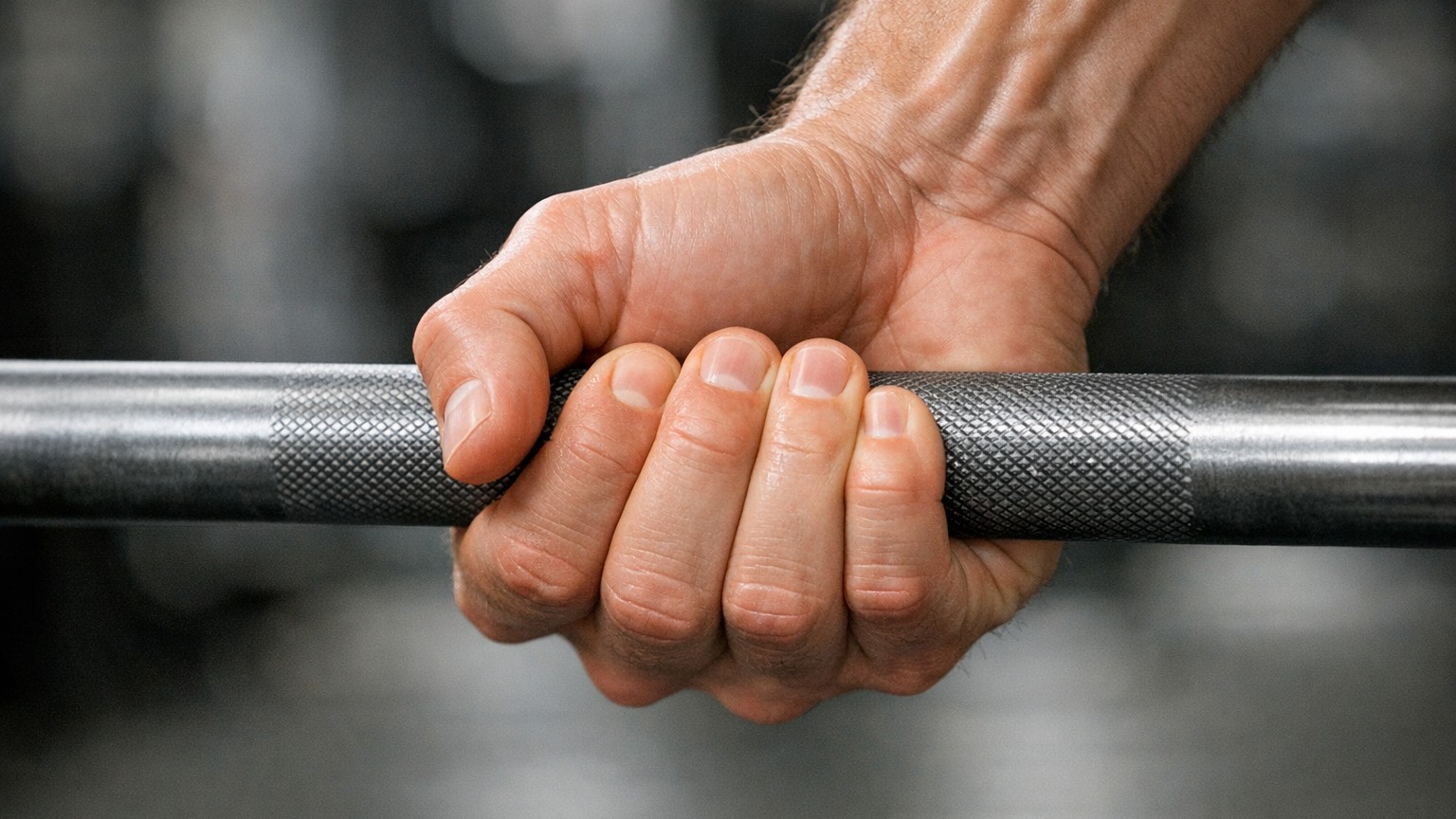
Grip strength matters more than most gym-goers realise, and the humble lifting glove may be quietly undermining yours. For years, many dedicated lifters rely on padded gloves as a default, protecting the palms, preventing calluses, keeping things comfortable. The logic feels sound. The results, eventually, tell a different story.
Key takeaways
- Glove padding reduces the mechanical advantage your grip has on the bar, causing your nervous system to stop recruiting maximum forearm muscle
- Your brain loses critical sensory feedback about bar position and pressure when gloves cushion direct skin contact with knurled steel
- Lifters often plateau on pulls not from weak backs, but from grip failure caused years of glove dependency masked the problem
What gloves actually do to your grip
The padding in a lifting glove adds bulk between your hand and the bar. That might sound trivial, but it forces your fingers to work around a thicker diameter, reducing the mechanical advantage your flexors have when squeezing. Your nervous system, ever efficient, stops demanding maximum recruitment from the forearm muscles because the glove is doing some of the stabilising work. Over months and years, the grip simply stops developing at the rate it should.
There is also a proprioception issue. Bare skin on knurled steel gives your brain a constant stream of sensory feedback about bar position, rotation, and pressure distribution. Gloves dampen that signal considerably. Your central nervous system uses tactile feedback to fine-tune motor patterns in real time, and deadlifts, rows, and pull-ups are movements where tiny adjustments in finger pressure and wrist angle determine whether a lift succeeds or fails. Strip that feedback away, and you are essentially asking yourself to drive with fogged windows.
The deadlift problem, specifically
Pulling movements expose the glove dependency most brutally. In a conventional deadlift, the bar wants to roll toward the fingertips as it leaves the floor. Preventing that roll requires active engagement from the finger flexors, the wrist extensors, and the muscles of the forearm. When gloves artificially stabilise the bar against the palm, the forearm never learns to produce that counterforce reliably.
This explains a pattern that coaches observe frequently: a lifter who hits a plateau on their pull not because their back or hips are weak, but because the grip fails at a load the posterior chain could otherwise handle. The body is only as strong as its weakest link in the kinetic chain, and years of glove use can leave the grip as that weakest link without the lifter even knowing it.
Grip strength is, incidentally, one of the most studied proxies for overall musculoskeletal health. Research published in the British Journal of Sports Medicine has consistently linked handgrip strength to longevity markers well beyond the gym floor. That does not mean gloves will shorten your life, but it does underscore how much the hands reveal about the body’s functional capacity.
Going bare-handed without wrecking your hands
The transition is not painless, and pretending otherwise would be dishonest. The first few sessions without gloves will likely produce tenderness across the metacarpal heads, the bony ridge across the top of your palm. That is normal. The skin is adapting. Calluses will form over three to six weeks, and once established, they are protective rather than problematic. The mistake most people make is trying to sand calluses away entirely; a thin, flat callus is useful, while a raised lump is what tears.
A few practical adjustments help enormously during this period. Gripping the bar in the middle of the palm rather than at the base of the fingers reduces shear forces on the skin. Chalk, whether standard magnesium carbonate or a liquid alternative, addresses the sweat issue without adding bulk. Many gyms now permit chalk, and even those that don’t usually allow the liquid versions. Chalk works by increasing friction between skin and steel, which means you need less grip force to hold the same load, reducing fatigue without compromising neural feedback.
If you lift five or six days a week and the volume is high, cycling gloves back in for accessory work while going bare-handed on your main compound pulls is a reasonable compromise. The goal is progressive exposure, not mortification of the flesh.
Building grip strength intentionally
Simply removing gloves is not a training programme. Grip strength responds to deliberate loading like any other quality. Dead hangs from a pull-up bar are one of the most underrated tools available, hanging for cumulative sets of 30 to 60 seconds taxes the grip, decompresses the spine, and requires almost no equipment. Farmer’s carries, where you simply walk with heavy dumbbells or kettlebells for distance, are extraordinarily effective and transfer directly to deadlift lockout and row performance.
Thick-bar training deserves mention here. Gripping a bar or handle with a larger diameter recruits more motor units in the hand and forearm than standard bar work, because the fingers cannot fully close around the implement. Even wrapping a towel around a pull-up bar simulates this effect. A few sets per session is sufficient; the forearms are dense, slow-recovering tissue and respond better to moderate, consistent work than to sudden high-volume assaults.
Wrist roller exercises, though unfashionable, remain genuinely effective for developing the extensors, the muscles on the back of the forearm that are chronically underdeveloped in most gym-goers because curling and pulling never properly load them. Balanced forearm strength reduces injury risk at the elbow and wrist, which becomes relevant as training loads increase over years of lifting.
One detail that often surprises lifters making the switch: their pulling technique frequently improves alongside their grip. Feeling the bar properly encourages a tighter lat engagement at the start of the pull, because the hands signal the brain more accurately when the bar begins to shift. The grip and the back, it turns out, are not separate conversations.
Always consult your GP or a qualified physiotherapist if you experience persistent pain in the hands, wrists, or elbows during training.