
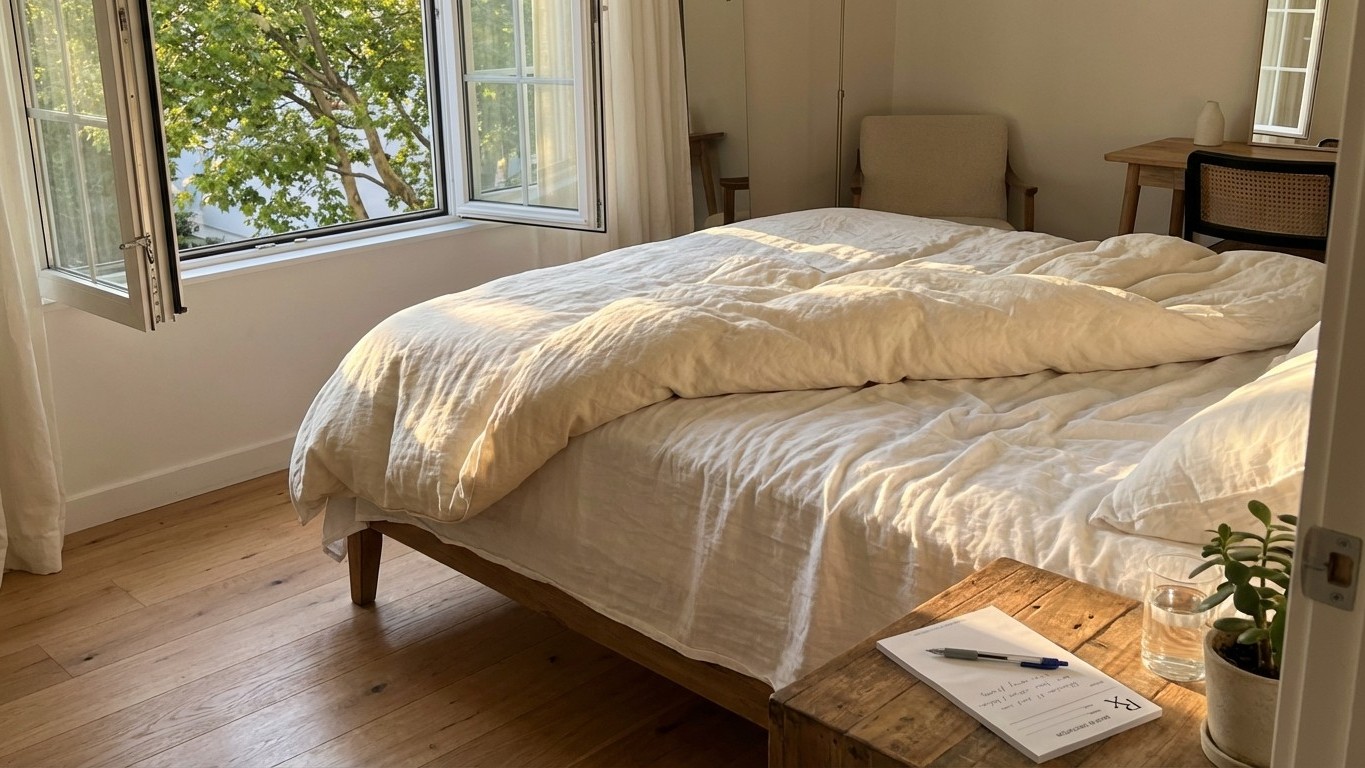
If you’d met me two years ago, you’d have found me smoothing sheets and plumping pillows before my first cup of tea. For months, making my bed had become as automatic as brushing my teeth. I relished that fleeting sense of order, the illusion that if my duvet sat straight, the rest of my day might follow suit. Yet one unexpected conversation in my GP’s surgery nudged me to reconsider this daily ritual. Yes, that seemingly harmless tradition, drilled into many from childhood, might deserve a closer look, especially if you value a truly restful night’s sleep.
Key takeaways
- Could your tidy bed be harming your health more than helping?
- The surprising role of dust mites thriving under freshly tucked sheets.
- A doctor’s advice that changed a lifelong morning ritual.
The surprising science hiding in our sheets
Bedmaking. It feels harmless, even virtuous. The internet is flooded with guides promising that a made bed can transform your productivity and mental wellbeing. There’s a kind of cultural pride in the UK around keeping a tidy bedroom, no doubt fuelled by memories of stern grandmothers instructing that “a made bed is the start of an organised life.” But underneath those straightened covers, a very different story unfolds.
Our bodies shed sweat, skin cells, and natural oils every night, no matter how meticulously we shower. Dust mites thrive in this environment, feasting on our microscopic leftovers. These critters aren’t dangerous in themselves, but they leave behind droppings which can trigger allergies and asthma. If you suffer from Morning sniffles, sneezing, or that mysterious tickle in your nose, you might not blame your bed. Yet studies dating back to research at Kingston University in the 2000s indicate dust mite populations drop when beds are left unmade. Why? Sunlight and air dry out the moisture dust mites need to survive, making the unmade bed far less welcoming for them.
An experiment led by Dr Stephen Pretlove (Kingston University, 2005) made headlines for suggesting that the best thing you can do is pull back the covers and let your bed air out. Over a typical humid British night, your mattress and bedding become a microclimate, a warm, moist biome. Tuck it all in first thing and you might trap that moisture in, giving mites the perfect hideaway.
The myth of the perfect bedroom routine
Trends can be persuasive. Instagram and lifestyle columns still sell the tidy bedroom as the foundation of serenity. There’s a kernel of truth here: for many, a neat environment tames anxiety. I know several friends who shudder at the thought of an unmade bed, convinced it’s synonymous with a messy mind. However, that shortcut to calm might come at the cost of your respiratory comfort or sleep quality in the long run.
The ritual itself isn’t nearly as universal as one might think. In Mediterranean climates, letting your bed “breathe” is an established custom, often to air out sweat and odours from warm nights. British homes, fond as we are of heavy duvets and central heating, combine insulation with humidity, conditions mites adore. When a GP offhandedly remarked that my ever-pristine bed could be a “five-star resort for mites,” I laughed, then shuddered. I had never connected my occasional stuffiness or eczema flares with this old-fashioned pursuit of order.
So what about that ingrained sense of guilt? Much of it, I started to realise, is inherited. As children, chores are equated with good behaviour or deserving praise. But there’s little evidence to suggest that a made bed, in itself, improves your life, unless, of course, you find the visual peace worth it.
Practical steps for a healthier bed
After that conversation with my GP, I didn’t swing to chaos. Instead, I experimented. Some mornings I’d toss the duvet back, crack open the window, and return an hour later to make the bed. Other times, I left it completely unmade, enjoying the oddly liberating (if slightly untidy) look. Within a fortnight, I noticed fewer sniffles when I woke up and less irritation on my skin.
If you’re curious about reclaiming your bedroom from dust mites without surrendering to mess, here are a few straightforward tricks:
- Fold back your duvet and sheets after getting up instead of instantly making the bed.
- Open a window for at least 30 minutes (even in winter, if possible) to let moisture escape.
- Wash bedding weekly at 60°C to eliminate mites and their eggs.
- Vacuum your mattress and stripped bed regularly, most people skip this step, to their peril.
You might also swap heavy duvets for lighter, washable options. Some people find allergen-proof mattress and pillow covers helpful, too, these won’t end the problem but can reduce exposure. While scented sprays or “bed fresheners” feel pleasant, there’s little concrete evidence that they deter mites; fresh air works much better. And if you can bear it, sunlight does wonders.
The emotional residue of tidiness
Despite my new laissez-faire approach, I still sometimes make the bed, especially when guests are coming. It feels like presenting myself to the world, yes, my life is together, or at least, it appears so from the doorway. There’s no harm in creating an orderly space if it soothes you. The key is to let your bed air for an hour or so first, before tucking those sheets in.
Who knew that one well-timed comment from a doctor could upend years of habit? The seasonal sniffles that felt like an incurable mystery, the occasional headaches, all that might have been brewing under tightly-tucked covers. I still love a beautiful bedroom, but I no longer feel guilty when my duvet slouches halfway down the mattress.
Perhaps the bigger question is what other “rules” of adult life survive unquestioned, simply because they soothe our anxieties or remind us of childhood? If a neat bed is your pride, keep it, but consider giving your mattress a quick airing first. And if you’re still waking stuffy, don’t overlook the silent guests who thrive in the dark folds beneath the covers. Habits, like beliefs, sometimes benefit from fresh air and a little sunlight.
This article is for general information only. For individual advice, always consult your GP.