
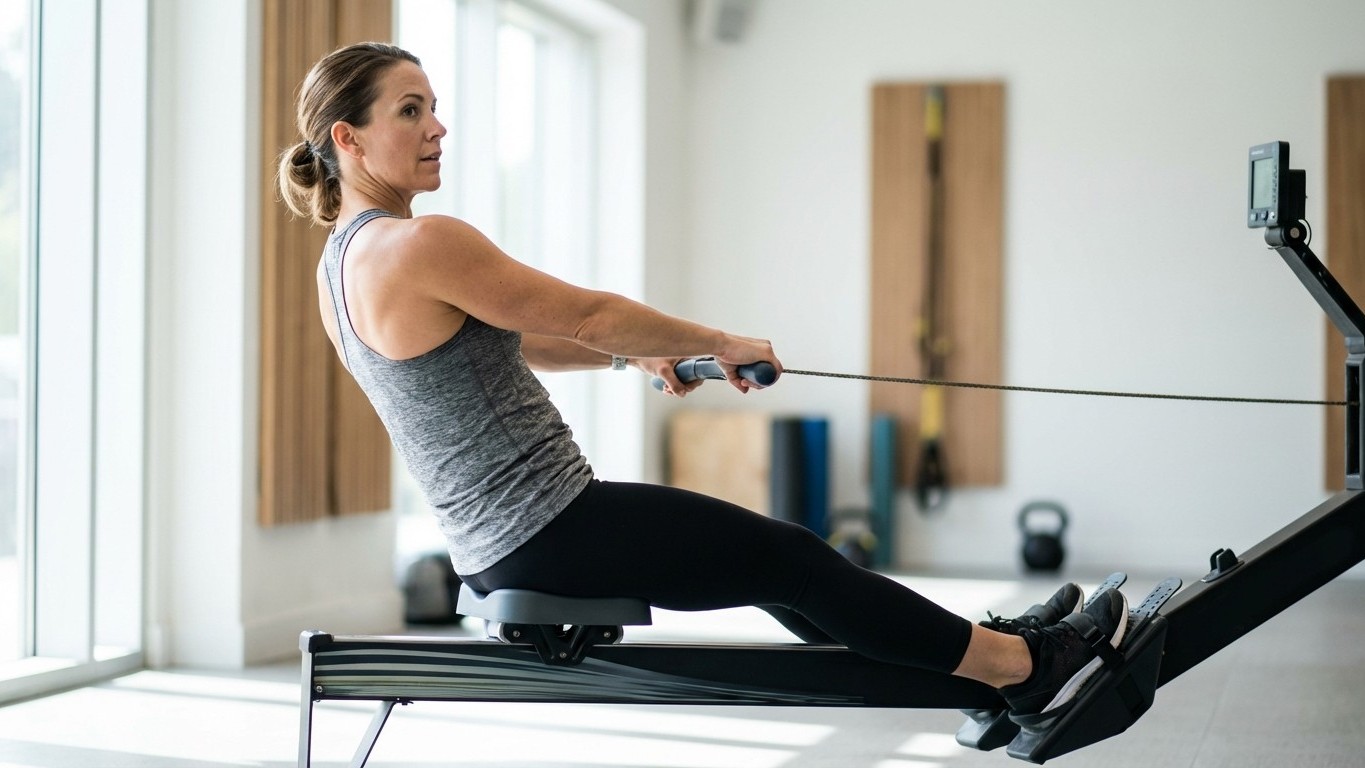
Running has long been the default answer to “I need to get fit.” Lace up, head out, job done. But something is shifting in gyms and training studios across the UK, and it’s not a passing trend. A growing number of fitness coaches are quietly steering their clients away from pavement pounding and towards an alternative that’s kinder to the joints, surprisingly demanding on the cardiovascular system, and, here’s the part that raises eyebrows, burns more calories per session. That alternative is rowing.
Key takeaways
- A growing movement of fitness coaches is steering clients away from running toward a surprising alternative that’s gentler on joints
- This low-impact workout recruits 86% of your major muscle groups and burns comparable or greater calories than running
- The catch? Most people are doing it wrong, and proper technique changes everything about how the exercise feels
Why Coaches Are Reconsidering the Default
Running is a high-impact activity. Each footstrike sends a force roughly two to three times your body weight up through your ankles, knees and hips. For many people, that’s perfectly manageable. For others, especially those returning from injury, carrying extra weight, or simply getting older, it’s a recipe for repetitive strain that sidelines progress before it even begins. The physio waiting rooms of Britain are well acquainted with runner’s knee, shin splints, and stress fractures.
Rowing, by contrast, is almost entirely low-impact. The movement is seated, the feet are strapped in, and there’s no ground reaction force to absorb. Yet the metabolic demand is striking. Research published in the Journal of Strength and Conditioning Research has found that vigorous rowing can burn between 400 and 600 calories per hour depending on body weight and intensity, figures that compare very favourably with running at a moderate pace and can exceed them at higher effort levels. The reason comes down to muscle recruitment: rowing engages the legs, back, core and arms simultaneously, involving an estimated 86% of the body’s major muscle groups in each stroke. A treadmill session rarely comes close to that.
There’s also a compounding effect that coaches find compelling. Because rowing doesn’t leave clients hobbling the next day with sore knees or tight calves, they can train more consistently. Consistency, not intensity, is what actually drives long-term fitness gains, and that’s a trade-off worth making.
The Mechanics That Make It Work
One reason rowing has a reputation for being “hard” is that most people do it wrong. The classic mistake is pulling predominantly with the arms, hunching forward, and grinding through the motion with sheer effort. Done that way, yes, it’s exhausting and not particularly efficient. Coaches who swear by rowing tend to spend the first few sessions teaching the sequence: legs drive first, then the torso leans back slightly, then the arms pull. That order matters. When it clicks, the exercise feels powerful rather than punishing.
The cardiovascular response to correct rowing technique is genuinely impressive. Because large muscle groups are working in coordination, the heart has to supply blood to a far wider area than during, say, cycling (which is predominantly lower body). This elevates heart rate efficiently without requiring the pace to feel uncomfortable. Many clients report they can sustain a challenging row for 20 to 30 minutes when they struggle to run for ten, which makes it a particularly useful tool for building aerobic base in people who are earlier in their fitness journey.
There’s also what sports Scientists call the “afterburn” effect, more formally known as excess post-exercise oxygen consumption (EPOC). Full-body compound movements tend to produce a stronger EPOC response than isolated exercises, meaning your body continues burning calories at an elevated rate after the session ends. Rowing’s whole-body nature makes it one of the more Effective activities for triggering this response, though it’s worth keeping expectations realistic, the afterburn adds minutes to your metabolic activity, not hours.
Who Benefits Most (And Who Should Be Cautious)
Rowing suits an unusually broad range of people. Older adults looking to maintain cardiovascular health without stressing ageing joints often find it transformative. Athletes in weight-based sports use it for conditioning without adding the cumulative leg stress of running mileage. People recovering from lower-limb injuries (with medical clearance) frequently use rowing as a rehabilitation bridge back to full activity.
That said, it’s not without caveats. People with lower back problems need to be careful, because poor technique under fatigue can strain the lumbar spine. Shoulder impingement issues can also flare if the catch position (the moment arms are extended at the front of the stroke) is sloppy. The consistent advice from those who train clients on rowing machines is this: learn the technique before you load the intensity. Ten minutes of correct rowing is worth more than thirty minutes of grinding badly through the motion.
If you have any existing musculoskeletal conditions or have been advised against certain types of exercise, please consult your GP or a physiotherapist before starting rowing or any new fitness programme.
Getting Started Without a Gym Membership
The good news is that access has genuinely improved. Most commercial gyms now have Concept2 ergometers (the industry standard, used by Olympic athletes and beginners alike), and the machine’s built-in monitor gives real-time feedback on your stroke rate, pace and estimated calorie burn. For home use, air resistance rowers have become significantly more affordable over recent years, and water resistance models offer a smoother, quieter pull for those who want something closer to on-water rowing.
A sensible starting point for beginners is 20 minutes at a conversational pace, three times per week. Focus on keeping the stroke rate low (around 18 to 22 strokes per minute) rather than trying to move the handle quickly. Lower stroke rates with strong leg drive produce far more power and actually feel better. From there, you can introduce intervals: 250 metres hard, 250 metres easy, repeated six to eight times. That structure alone, taking under 20 minutes, delivers a cardiovascular workout that would be difficult to replicate on a treadmill without risking injury.
Running will always have its place, and there’s real joy in it for those who love it. But the growing enthusiasm among coaches for rowing points to something worth sitting with: sometimes the exercise we’ve overlooked for years turns out to be the one our body actually needed.