
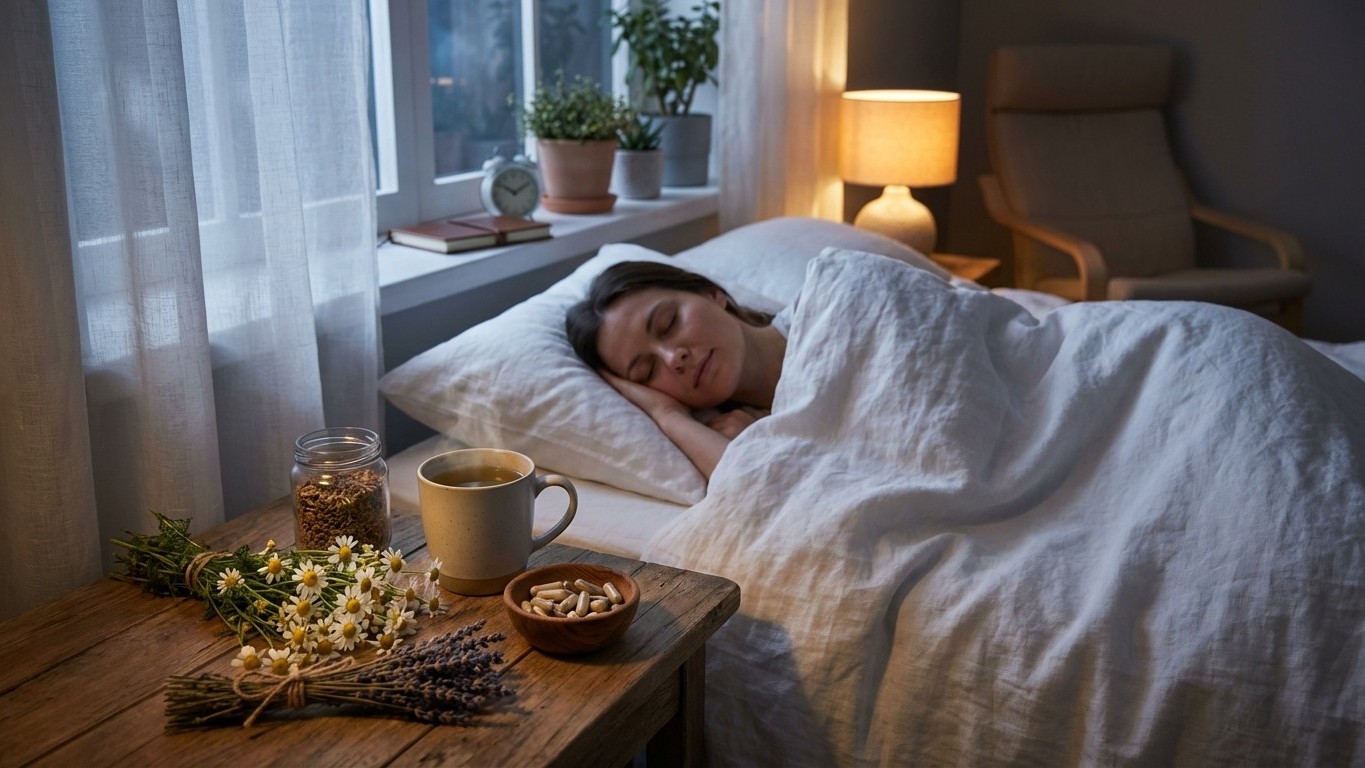
Sleep is one of the most powerful medicines we have, and it costs nothing. Yet millions of people in the UK lie awake each night, staring at the ceiling, reaching for a glass of water, checking the time. If you’ve been searching for ways to sleep better without relying on prescription pills or over-the-counter sedatives, you’re in good company, and you’re asking exactly the right question. Natural remedies for insomnia span a surprisingly wide territory: natural sleep remedies herbs, targeted supplements, a consistent natural sleep routine, relaxation techniques for sleep naturally, dietary tweaks, and natural ways to improve sleep environment that together can transform your relationship with sleep. This guide brings all of those threads together in one place.
Why prioritise natural remedies for better sleep?
The real cost of poor sleep quality
A single bad night is unpleasant. Chronic poor sleep is something else entirely. Research consistently links long-term sleep deprivation to elevated risk of cardiovascular disease, type 2 diabetes, obesity, anxiety, and depression. Sleep challenges can be particularly pronounced during hormonal transitions, which is why many women find natural sleep remedies for menopause especially helpful. The NHS estimates that sleep problems cost the UK economy billions in lost productivity each year, yet sleep health remains chronically underfunded as a public health priority.
Beyond the population-level statistics, the day-to-day experience of poor sleep erodes quality of life in quiet, cumulative ways. Concentration slips. Patience thins. Food cravings intensify (particularly for sugary, high-fat foods, because sleep deprivation disrupts the hormones ghrelin and leptin that govern appetite), though choosing foods that help you sleep naturally can help counteract this cycle. Immune function drops. Emotional resilience shrinks. The body keeps score, even when we’re too tired to notice.
What’s worth understanding here is that sleep isn’t a passive process. It’s a complex, actively regulated state during which the brain consolidates memories, the body repairs tissue, the immune system organises itself, and hormones reset. Disrupting that process night after night has consequences that no amount of coffee can fully offset.
The limits of sleeping tablets and the case for natural solutions
Prescription sleeping tablets such as benzodiazepines and z-drugs can be effective short-term tools in specific clinical contexts. However, they come with real risks: dependency, tolerance, rebound insomnia when stopped, next-day grogginess, and, in older adults, an increased risk of falls. The NHS generally advises against using them for more than a few weeks.
Over-the-counter antihistamine-based sleep aids have similar limitations. They cause drowsiness, yes, but they also suppress REM sleep and lose effectiveness quickly as the body adapts. Many people find themselves using them habitually without addressing the underlying cause of their sleep difficulties.
Natural remedies work differently. Most don’t knock you out; they support your body’s own sleep mechanisms, nudging the nervous system towards calm rather than forcing unconsciousness. This gentler action is both their strength and their limitation. They require consistency, a degree of patience, and often a willingness to combine several approaches. But for the majority of people whose sleep problems are driven by stress, poor habits, or suboptimal environments rather than a diagnosable medical condition, they work remarkably well.
That said, a quick but necessary note: if your sleep problems are severe, longstanding, or accompanied by symptoms like loud snoring, gasping, or extreme daytime sleepiness, please speak with your GP. Sleep apnoea, restless legs syndrome, and other conditions need proper diagnosis, and no herbal tea will fix them.
Plants and herbal teas: the botanical toolkit for sleep
The five most evidence-backed sleep herbs
The herbal medicine tradition for sleep is ancient and global, but not all plants are created equal when it comes to scientific scrutiny. Here are the five with the strongest evidence base for supporting sleep in adults.
Valerian root is probably the most studied sleep herb in Western medicine. Multiple randomised controlled trials have examined its effects on sleep latency (the time it takes to fall asleep) and sleep quality, with results that are modestly positive, particularly for people with mild to moderate insomnia. It’s thought to work in part by influencing GABA receptors in the brain, the same pathway targeted by many prescription sedatives, though with far gentler effect. It smells dreadful, incidentally. This is worth knowing before you open the bag.
Passionflower has a smaller but growing evidence base. Studies suggest it may reduce anxiety and improve overall sleep quality, likely through similar GABAergic mechanisms. It’s often combined with valerian in commercial sleep blends, and the combination appears to work better than either alone.
Lavender, used aromatically rather than ingested, has genuine research support. Inhalation of lavender essential oil has been shown in multiple studies to reduce heart rate, blood pressure, and self-reported anxiety, creating physiological conditions that favour sleep. A small pot of dried lavender near the pillow, or a few drops of essential oil on a tissue tucked under it, is a genuinely evidence-based intervention.
Ashwagandha is an adaptogenic root from the Ayurvedic tradition that has attracted considerable research attention over the past decade. Several well-designed trials have found that supplementing with ashwagandha extract improves sleep quality and reduces cortisol levels, the stress hormone that is the arch-enemy of a good night’s rest. It tends to work better as a supplement (standardised extract) than as a tea.
Lemon balm, a member of the mint family, has anxiolytic (anxiety-reducing) properties and is often combined with valerian or chamomile. The evidence for lemon balm alone is limited but promising, and it makes a genuinely pleasant tea. Chamomile itself deserves mention too: the research is modest but consistent, and it has an unbeatable safety profile.
For a deeper dive into how to choose between these herbs and how to use them, natural sleep remedies herbs covers each one in detail, including dosing, preparation, and contraindications.
How to prepare herbal teas for sleep
Preparation matters more than most people realise. A rushed one-minute steep of a valerian teabag in lukewarm water will deliver a fraction of the active compounds you’d get from a proper infusion. For most sleep herbs, you want a covered infusion of 10 to 15 minutes in water that has just boiled (not a rolling boil, which destroys volatile compounds). Use a lid to trap the aromatic steam, which contains active constituents you’d otherwise lose.
Timing is also worth getting right. Drinking your sleep tea 45 to 60 minutes before bed allows the compounds to be absorbed and begin acting by the time you’re lying down. Drinking it while already in bed and anxious about sleep is less effective, both pharmacologically and psychologically.
Combining herbs: synergies and sensible limits
Blending herbs can be genuinely synergistic. Valerian and passionflower is a well-studied combination. Lemon balm and chamomile work beautifully together for mild stress-related sleeplessness. A three-way blend of valerian, hops, and lemon balm is common in European herbal medicine and has reasonable clinical support.
The sensible limit is this: more is not always better. Combining five or six sedating herbs doesn’t produce five or six times the effect; it produces unpredictability. Stick to combinations of two or three, preferably from established traditional formulas or reputable commercial blends, and avoid using multiple sedating herbs at the same time as prescribed medications without checking with your GP or pharmacist first.
Natural sleep supplements: choosing wisely
Magnesium, glycine, L-theanine and beyond
The supplement market for sleep is enormous and noisy, so it helps to know which ingredients actually have evidence behind them.
Magnesium is the most broadly useful sleep supplement for general adult use. A significant proportion of the UK population doesn’t meet the recommended intake through diet alone, and magnesium plays a direct role in regulating the nervous system and supporting the production of melatonin and GABA. Magnesium glycinate or magnesium threonate are the forms best absorbed and most associated with sleep benefits, compared to cheaper forms like magnesium oxide which are absorbed poorly and more likely to cause digestive discomfort.
Glycine is an amino acid with genuine sleep research behind it. Studies have found that taking around 3g of glycine before bed can improve subjective sleep quality, reduce daytime fatigue, and lower core body temperature slightly, which supports sleep onset. It’s tasteless, mixes easily in water, and has an excellent safety profile.
L-theanine, found naturally in green tea, promotes relaxation without sedation. It increases alpha brain waves, the kind associated with calm alertness and meditative states, and has been shown to improve sleep quality particularly in people whose insomnia is driven by anxiety and racing thoughts. It works well on its own and even better when combined with magnesium.
Melatonin deserves a separate mention. In the UK, it’s currently available only on prescription, unlike in the US where it’s sold freely as a supplement. This distinction exists for a reason: melatonin is a hormone, and self-dosing without guidance isn’t without risk. For jet lag and circadian rhythm disruption, it has strong evidence. For general insomnia, the evidence is more mixed. If you’re considering it, speak with your GP.
For a comprehensive breakdown of which supplements suit which type of sleep problem, including dosing guidance by age group, natural sleep supplements goes into much greater detail.
Getting the timing right
Supplements taken at the wrong time can be ineffective or counterproductive. Magnesium is generally best taken 30 to 60 minutes before bed. Glycine works best taken with a small amount of water 30 to 60 minutes before sleep. L-theanine can be taken earlier in the evening if anxiety tends to build in the hours before bed, rather than specifically at bedtime.
A practical note: start with one supplement at a time and give it at least two weeks of consistent use before judging its effect. Combining three new supplements simultaneously makes it impossible to know what’s helping, and your sleep is worth that methodical approach.
The evening routine: building a natural sleep ritual
Sleep hygiene: the fundamentals that actually matter
Sleep hygiene is a term that can feel clinical and obvious, but the basics are worth stating clearly because most people follow only some of them, some of the time, and then wonder why they’re not sleeping. Consistency of sleep and wake times is probably the single most powerful behavioural intervention available. The body’s circadian clock thrives on regularity. Going to bed at 10pm on weekdays and 2am at weekends genuinely confuses your internal clock in a way that resembles mild social jet lag.
Light exposure is the primary signal that sets the circadian clock. Bright light in the morning, particularly natural daylight, anchors your rhythm early. Bright light in the evening, particularly the blue-enriched light from screens, signals to the brain that it’s still daytime and suppresses melatonin production. Dimming your living space and switching screens to night mode after 8pm isn’t precious or extreme; it’s basic circadian biology.
The bedroom as a sleep-only space is a principle with genuine evidence behind it. When you regularly work, scroll, or watch films in bed, the brain learns to associate that space with wakefulness. Keeping the bedroom for sleep (and intimacy) strengthens the associative cue that triggers sleepiness when you lie down.
A seven-day natural evening routine plan
Rather than overhauling everything at once, a staged approach works better for most people. The first two days can focus simply on consistent wake times (yes, even at weekends) and a fixed lights-dim time in the evening. Days three and four add a herbal tea ritual and a brief period away from screens before bed. Days five and six introduce one relaxation technique, even just five minutes of slow breathing. By day seven, you’re layering in your chosen supplement if you’ve decided to use one.
This gradual approach matters because sleep responds poorly to pressure. Frantically implementing twelve new habits simultaneously creates performance anxiety around sleep, which is itself one of the most common causes of insomnia. For a day-by-day plan with specific activities, natural sleep routine provides the full structure.
What to avoid in the evening
The list of things that disrupt sleep is longer than most people expect. Caffeine has a half-life of around five to seven hours in most adults, meaning a 4pm coffee still has half its stimulant effect at 9 or 10pm. Alcohol is widely misunderstood: it helps you fall asleep faster but significantly disrupts the second half of the night, reducing REM sleep and causing early waking. A nightcap is, biochemically, a sleep disruptor wearing a disguise.
Intense exercise late in the evening raises core body temperature and cortisol, both of which delay sleep onset. This doesn’t mean you should avoid evening activity entirely; a gentle walk after dinner is beneficial. Vigorous HIIT at 9pm, less so. Large meals close to bedtime divert blood flow and digestive energy away from the processes that support sleep transition. A light snack is fine; a three-course dinner at 10pm is not.
Relaxation techniques: calming the mind and body before sleep
Breathing, meditation, and muscle relaxation
The nervous system has two modes relevant here: sympathetic (the fight-or-flight state that keeps you alert and tense) and parasympathetic (the rest-and-digest state that allows the body to settle towards sleep). Most relaxation techniques for sleep work by actively shifting the balance from the former to the latter.
Diaphragmatic breathing with a slow, extended exhale is one of the most immediate ways to do this. The extended exhale activates the vagus nerve, which is the primary pathway of the parasympathetic nervous system. A simple technique: inhale for 4 counts, hold for 2, exhale slowly for 6 to 8 counts. Even five minutes of this before bed produces measurable reductions in heart rate and blood pressure.
Progressive muscle relaxation (PMR), developed decades ago and still one of the most evidence-supported behavioural techniques for insomnia, involves systematically tensing and releasing muscle groups from the feet upward. The contrast between tension and release teaches the body to identify and let go of residual physical tension that often persists unnoticed into the night.
Mindfulness meditation, even in brief doses, has accumulated a solid evidence base for improving sleep quality, particularly in people whose insomnia is driven by rumination and worry. The goal isn’t to clear the mind (which is neither possible nor necessary) but to observe thoughts without engaging with them, allowing the nervous system to settle. A body-scan meditation, which involves slowly directing attention through different parts of the body, is particularly suited to the transition into sleep.
Protocols for before and during the night
For the period before bed, a 10 to 20 minute sequence combining breathing, PMR, and a brief body scan is genuinely effective and doesn’t require any equipment or prior experience. The key is regularity: the body learns to associate the routine with sleep, creating a conditioned response over time.
For those who wake during the night, the most effective natural strategy is to avoid clock-watching (which activates the stress response immediately), practise slow breathing without turning on lights, and use a brief cognitive shuffle technique: deliberately imagining a series of random, unconnected images, which disrupts the analytical thinking that sustains wakefulness. For a full library of techniques with step-by-step protocols, relaxation techniques for sleep naturally is the place to go.
Personalising natural sleep remedies by age and life stage
Children, pregnant women, and older adults
One of the most important things to understand about natural sleep remedies is that “natural” does not automatically mean safe for everyone. Several herbs and supplements that are appropriate for healthy adults need to be approached with caution in specific populations.
For children, most herbal sleep remedies are not recommended, particularly for children under 12. The exception is a carefully prepared, dilute chamomile tea for older children with mild anxiety-related sleep difficulties, and even this should be discussed with a GP or paediatric nurse first. The behavioural approaches, consistent bedtimes, wind-down routines, limiting screens, and creating a calm sleep environment, are far more appropriate for children and have excellent evidence behind them.
During pregnancy, the picture becomes complex quickly. Many herbs that support sleep, including valerian, passionflower, and ashwagandha, have insufficient safety data for use in pregnancy. Chamomile in small amounts is generally considered low-risk, but the safest approach is to rely primarily on non-herbal strategies: sleep positioning (left-side lying with a pillow between the knees), breathing techniques, gentle Stretching, and environmental optimisation. Always consult your midwife before taking any herbal product during pregnancy.
For older adults, sleep architecture changes naturally with age: the proportion of deep, slow-wave sleep decreases, sleep becomes more fragmented, and circadian rhythms tend to shift earlier. Magnesium glycinate is particularly well-suited to older adults, given both the evidence for sleep benefits and the frequency of magnesium insufficiency in this group. Valerian is generally considered safe, though it should be checked against any medications for potential interactions. Falls risk is an important consideration: any supplement that causes morning grogginess warrants extra caution.
Menopause, postpartum, and adolescence
Sleep disruption at the menopause is driven by a specific combination of factors: night sweats, hormonal fluctuation, increased anxiety, and shifts in circadian timing. Natural remedies that address the heat component (a cooler bedroom, breathable natural bedding, avoiding alcohol and spicy food in the evening) combine well with adaptogens like ashwagandha that address the cortisol dysregulation piece. Magnesium is particularly valuable here, given its role in supporting both mood and thermoregulation.
The postpartum period presents a genuinely difficult sleep challenge that no herbal tea can fully solve, given that much of the disruption is external (a feeding baby). What natural remedies can do is maximise sleep quality during available windows: keeping the environment cool and dark, using brief relaxation techniques to fall back to sleep quickly after feeds, and supporting nutritional status with magnesium and glycine when breastfeeding allows (consult your health visitor).
Adolescent sleep is governed by a biological circadian shift that pushes sleep timing later, which means teenagers genuinely find it hard to fall asleep before 11pm or midnight. Fighting this with early bedtimes is largely futile. The most effective natural strategies focus on strict morning light exposure, reduced evening screen use, and consistent wake times even on weekends. Supplements and herbs are generally not recommended for adolescents without professional guidance.
Food, drink, and environment: the sleep-supportive backdrop
What to eat and avoid in the evening
The relationship between diet and sleep is bidirectional: sleep deprivation drives poor food choices, and poor food choices disrupt sleep. In the evening, foods rich in tryptophan (an amino acid precursor to both serotonin and melatonin) can genuinely support sleep. Turkey, eggs, dairy, oats, nuts, and seeds all contain meaningful amounts. A small bowl of oats with warm milk before bed is not just comforting nostalgia; it has a rational nutritional basis.
Foods high in refined sugar cause blood glucose spikes and crashes that can trigger waking in the early hours. A heavy, high-fat meal close to bedtime requires significant digestive work that elevates core body temperature and keeps the system alert. Foods high in tyramine, including aged cheeses, cured meats, and red wine, can increase brain norepinephrine levels and promote wakefulness. None of these need to be eliminated from the diet; they simply work better eaten earlier in the day.
What to drink for natural sleep support
Water is underrated as a sleep aid. Mild dehydration affects mood, cognitive function, and body temperature regulation in ways that make sleep harder. Staying hydrated through the day (and tapering fluid intake in the two hours before bed to reduce night waking) is a simple and free sleep strategy.
Warm milk has genuine pharmacological plausibility beyond its soothing associations: it provides tryptophan and is a source of melatonin in small amounts. Tart cherry juice has attracted research attention as one of the few food sources of melatonin, with some studies suggesting it improves sleep duration in adults with mild insomnia. It’s not a miracle drink, but it’s a pleasant and low-risk addition to an evening routine.
What to avoid: caffeine after early afternoon, alcohol within three hours of bed, and high-sugar drinks in the evening. These three changes alone can produce noticeable improvements in sleep quality within a week for people who currently consume them regularly in the evening.
Optimising the bedroom environment
Sleep researchers broadly agree that the ideal bedroom temperature for sleep is between 16 and 19 degrees Celsius, which feels cooler than most people expect. The body needs to drop its core temperature by about one degree to initiate and maintain sleep, and a cool room facilitates this process. Many people in the UK sleep in rooms that are simply too warm, particularly in houses with central heating.
Darkness matters more than many people acknowledge. Even low levels of light through eyelids can suppress melatonin production and shift circadian timing. Blackout curtains or a well-fitting sleep mask are straightforward, inexpensive interventions with good evidence behind them. Noise is similarly disruptive, and where external noise can’t be controlled, white or pink noise (via an app or a fan) can mask it effectively.
Scent is often underestimated. Lavender in the bedroom has evidence supporting its sleep-promoting effects through aromatherapy, as mentioned earlier. Keeping the bedroom free of work materials, screens, and clutter also has an underappreciated psychological benefit: it keeps the space associated with rest rather than obligation.
FAQ: common questions about natural sleep remedies
Answers to the questions people ask most
Which natural remedy works fastest for sleep? For immediate effect, slow diaphragmatic breathing is probably the fastest-acting intervention available, capable of reducing physiological arousal within minutes. Glycine and L-theanine taken 30 to 45 minutes before bed work faster than most herbs. Lavender aromatherapy acts quickly too, within the first sleep cycles.
Can I use natural remedies alongside my prescribed medication? Some can be combined safely; others cannot. Valerian and passionflower interact with certain antidepressants, anticoagulants, and sedative medications. Magnesium can affect absorption of some antibiotics. Always check with your GP or pharmacist before combining any supplement or herbal remedy with prescription medication.
How long do natural sleep remedies take to work? This varies widely. Breathing techniques can work the first night. Herbal teas typically show noticeable effects after one to two weeks of consistent use. Magnesium supplementation often takes two to four weeks to produce sleep improvements. Behavioural changes like sleep hygiene overhaul typically show results within two to three weeks, but the improvements tend to be more durable than any supplement.
Are natural sleep remedies safe long-term? For the most part, the approaches in this guide, good sleep hygiene, relaxation techniques, environmental optimisation, and dietary adjustments, are indefinitely sustainable. Long-term herbal use warrants periodic review, particularly for people with health conditions or taking medications. Supplements should be cycled or reassessed periodically rather than taken indefinitely without reason.
A natural anti-insomnia checklist
Before reaching for anything more complex, it’s worth checking these fundamentals first:
- Consistent wake time, seven days a week
- Morning light exposure within an hour of waking
- No caffeine after 2pm
- Screens dimmed and in night mode after 8pm
- Bedroom temperature below 19°C
- A brief wind-down routine of 20 to 30 minutes before bed
These six changes, applied consistently, address the most common causes of sleep difficulty in otherwise healthy adults. Everything else in this guide layers on top of this foundation.
Choosing your natural sleep strategy
The breadth of natural sleep remedies is both their strength and their challenge. There is no single answer, no one tea or supplement or technique that works for everyone, because poor sleep has many different roots. Someone whose sleep is disrupted primarily by anxiety needs a different toolkit from someone whose problem is circadian misalignment, or hormonal disruption, or a chronically noisy environment.
The most effective approach for most people is a layered one: start with the foundations of sleep hygiene and environmental optimisation, add a relaxation practice that suits your temperament, then consider a targeted herbal or supplement strategy based on your specific pattern of difficulty. If your problem is difficulty falling asleep due to a racing mind, L-theanine and breathing techniques address the anxiety piece. If your issue is frequent waking, glycine and a cool dark room are worth prioritising. If your sleep is chronically shallow and unrefreshing, magnesium and a consistent schedule may be the starting point.
What this guide can’t do is replace an honest conversation with your GP if your sleep problems are severe, longstanding, or accompanied by symptoms that suggest an underlying condition. Natural remedies are powerful, well-evidenced tools in the right circumstances. They work best when you understand why you’re not sleeping, which is itself the most important question to answer.
The good news is that sleep is remarkably responsive to thoughtful, consistent attention. Most people who commit to even a portion of the approaches described here notice meaningful improvement within two to four weeks. Your body wants to sleep. Sometimes it just needs a little help remembering how.