
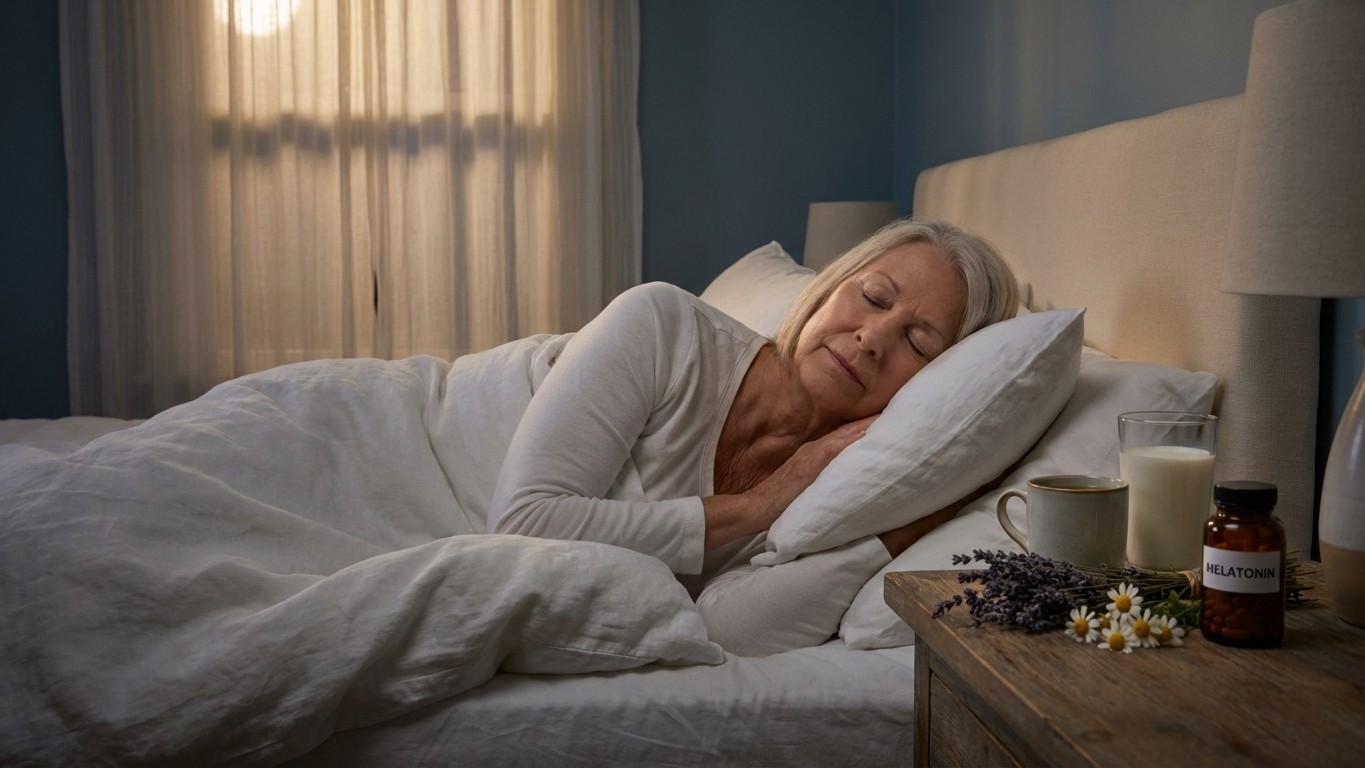
Sleep changes profoundly as we age, and not always in the ways we expect. Many older adults find themselves waking at 3am, lying alert in the dark, or feeling exhausted despite spending eight hours in bed. These disruptions are common, but they are not inevitable, and they absolutely do not have to be managed with sleeping tablets. The good news is that there is a genuine range of natural sleep aids for older adults that can help, provided they are chosen with the specific considerations of later life firmly in mind.
Understanding Sleep in Older Adults: What Changes and Why
How sleep needs shift with age
The idea that older people need less sleep is one of the most persistent myths in health. Adults over 65 still need seven to eight hours per night, broadly similar to middle-aged adults. What does change, however, is the architecture of sleep itself. Deep slow-wave sleep, the most restorative phase, tends to diminish from our forties onwards. The circadian rhythm, the internal body clock that governs sleepiness and wakefulness, also shifts earlier, which is why many older adults feel genuinely sleepy by 8pm but then find themselves wide awake long before dawn.
Melatonin production naturally declines with age. This hormone, released in response to darkness, is the body’s primary sleep signal, and lower levels mean that the transition from wakefulness to sleep can become slower and less reliable. Add to this the fact that older adults spend a greater proportion of the night in lighter sleep stages, and you start to understand why even a minor disruption, a sound, a slight need to use the bathroom, can result in prolonged wakefulness.
Common factors behind sleep problems in later life
Physical health conditions play a considerable role. Chronic pain, arthritis, restless legs syndrome, breathing difficulties, and heart conditions all interfere with sleep quality. Medications are another major factor: many drugs commonly prescribed to older adults, including certain antihypertensives, diuretics, and corticosteroids, have alerting effects or disrupt sleep architecture as a side effect.
Psychological factors matter too. Anxiety and depression are underdiagnosed in older populations, yet both are strongly associated with insomnia. Social changes, retirement, bereavement, reduced physical activity, can all disrupt the daily rhythm that underpins healthy sleep. Understanding these root causes is the starting point for choosing the right approach, natural or otherwise.
Natural Sleep Aids After 60: A Practical Overview
Herbs and herbal teas: which options suit older adults best?
Valerian root is probably the most widely studied herbal sleep remedy, with some evidence suggesting it may help reduce the time needed to fall asleep. The research is mixed, but the safety profile appears reasonable for short-term use. That said, valerian can interact with sedative medications and should not be combined with benzodiazepines or antihistamine-based sleep aids. A warm cup of valerian tea in the evening is a gentler approach than standardised supplements.
Passionflower and lemon balm both have a long tradition of use for anxiety-related sleep difficulties, which are particularly relevant in older adults. Chamomile tea, mild and pleasant, has been shown in some small studies to improve subjective sleep quality, partly through its mild anxiolytic properties. For anyone managing multiple health conditions or taking regular medication, chamomile’s very low interaction risk makes it a sensible starting point. You can explore a broader view of these options in this comprehensive guide to natural sleep remedies.
Natural supplements: melatonin, magnesium, glycine, and chamomile
Low-dose melatonin, typically 0.5 to 1mg taken thirty minutes before bed, is one of the most evidence-backed options specifically for older adults. Because natural melatonin production is lower after 65, supplementing it can genuinely restore a more reliable sleep signal. Importantly, low doses are preferable; higher doses (5mg or more, widely sold) are not more effective and may cause morning grogginess, which in older adults translates directly into fall risk. Always consult your GP before starting melatonin, particularly if you take blood-thinning medication, as interactions have been documented.
Magnesium glycinate is another option worth considering. Magnesium supports the nervous system’s ability to wind down, and deficiency, which is surprisingly common in older adults due to reduced dietary absorption, is associated with poor sleep and leg cramps at night. Glycine, an amino acid found naturally in protein-rich foods, has shown promise in clinical trials for improving sleep quality and reducing daytime fatigue. It is considered very safe and well-tolerated, making it particularly suitable for this age group.
Relaxation techniques adapted for older adults
Body scan meditation and progressive muscle relaxation are both well-evidenced techniques that require no equipment, carry no interaction risk, and can be practised lying in bed. Breathing exercises, particularly the 4-7-8 technique (inhale for four seconds, hold for seven, exhale for eight), activate the parasympathetic nervous system and can noticeably reduce the physiological arousal that keeps people awake.
Gentle yoga or tai chi practised earlier in the day has been associated with better sleep quality in several studies involving older adults. The key word here is earlier: vigorous activity within two hours of bed can have the opposite effect. Even a short walk in daylight during the morning anchors the circadian rhythm and helps reinforce the sleep-wake cycle.
Bedroom environment and sleep hygiene for seniors
A cool, dark, quiet bedroom remains the gold standard regardless of age, but a few adaptations are worth making specifically for older adults. Blackout curtains help, but a small, dim nightlight near the floor, visible from the bed without being bright enough to disrupt sleep, is a sensible compromise that also reduces fall risk during any nocturnal bathroom visits.
Keeping a consistent sleep and wake time, including at weekends, is one of the single most effective sleep interventions available. The body’s circadian system responds very well to predictability. Avoiding screens for at least an hour before bed helps protect melatonin production, as does dimming overhead lights in the evening in favour of warmer, softer lamps.
When Medications Become the Problem, Not the Solution
Sleeping tablets and sedatives: accustoming, falls, and confusion
Benzodiazepines (such as temazepam or diazepam) and the so-called Z-drugs (zopiclone, zolpidem) are among the medications that older adults are advised, by most national and international guidelines, to use with extreme caution if at all. Their sedative effect does not distinguish between night-time sleep and daytime alertness; residual effects the following morning are common and measurable, even when the person does not feel subjectively groggy.
The consequences can be severe. Research consistently links benzodiazepine and Z-drug use in older adults with significantly increased rates of falls and fractures, including hip fractures, which carry serious risks of long-term disability and loss of independence. Cognitive impairment, memory difficulties, and increased confusion are also associated with regular use. Dependence develops quickly, often within two to four weeks. None of this means that medication is never appropriate, but it does mean the risk-benefit calculation in older adults looks very different from that in younger people.
Over-the-counter antihistamine-based sleep aids, sold widely in pharmacies, are equally problematic. Their anticholinergic properties can cause pronounced morning sedation, urinary retention, constipation, and confusion in older adults, effects that are genuinely alarming when they occur and that many people do not associate with a product bought off the shelf.
Interactions and precautions with natural supplements and existing treatments
Natural does not automatically mean safe in combination with prescription drugs. Valerian and passionflower both have additive effects with sedatives and should be treated with the same care as pharmacological sleep aids. St John’s Wort, occasionally recommended for sleep-related anxiety, has extensive interactions with common medications including anticoagulants, antidepressants, and some heart medications. This is not a minor caveat; the interactions can be clinically serious.
Magnesium can interact with certain antibiotics and some medications for osteoporosis. Even melatonin warrants a conversation with your GP if you are on anticoagulants. The general principle here is simple: always disclose any supplement you are taking to your pharmacist or GP, just as you would a prescription drug. Natural sleep remedies for menopause and other life-stage considerations follow similar principles of adapted safety guidance.
Preventing Daytime Drowsiness and Falls: Practical Guidance
Managing age-related or remedy-related drowsiness
Daytime sleepiness in older adults is often dismissed as a normal part of ageing. It rarely is. Persistent daytime drowsiness warrants a GP review, as it can signal untreated sleep apnoea, medication side effects, or an underlying health condition. If drowsiness follows the introduction of any new supplement, reducing the dose or stopping entirely and monitoring the change is a sensible first step.
Short naps of fifteen to twenty minutes before 2pm can provide restorative benefit without fragmenting night-time sleep. Napping later in the afternoon, or for longer, tends to worsen nocturnal wakefulness and create a frustrating cycle. Bright light exposure in the morning, even just sitting near a window with a cup of tea, is a powerful and underused tool for resetting alertness and anchoring the sleep cycle. Women navigating menopause-related sleep disruption alongside the changes of ageing may find additional tailored guidance in articles on natural sleep remedies for menopause and natural sleep remedies for perimenopause night sweats.
Adapting the environment: light cues and reducing fall risk
Falls at night are the single most preventable safety issue associated with sleep problems in older adults. A few straightforward environmental changes make a considerable difference. Remove trip hazards, rugs and trailing leads particularly, between the bed and the bathroom. Ensure the path is lit with low-level motion-activated lighting that activates without requiring a switch to be found in the dark. Bed rails, if appropriate, should be discussed with an occupational therapist rather than fitted ad hoc.
Wearing non-slip socks or slippers, having a firm surface to push up from when getting out of bed, and taking a moment to sit on the edge of the bed before standing (allowing blood pressure to stabilise) are all simple measures that reduce risk considerably. If dizziness on standing is a recurring problem, this should always be discussed with a GP, as it may reflect a medication effect or postural hypotension that warrants adjustment.
Common Questions About Natural Sleep in Older Adults
Are natural sleep aids genuinely safe after 65? Most herbal teas and low-dose supplements carry a good safety profile when taken in isolation, but the key phrase is “in isolation.” Interactions with prescription drugs are the main concern, which is why pharmacist or GP input before starting anything new is worthwhile rather than optional.
Do you have to give up sleeping tablets completely? Not necessarily, and abruptly stopping benzodiazepines after long-term use carries its own risks. A gradual reduction plan, ideally supported by a GP and combined with behavioural approaches like CBT for insomnia (CBT-I), is the evidence-based route. CBT-I, which works on the thoughts and habits maintaining insomnia, has strong evidence for effectiveness in older adults and is now recommended as a first-line treatment ahead of medication in most clinical guidelines.
Can melatonin be taken long-term? The evidence supports short-to-medium term use at low doses, but long-term data in older adults specifically is limited. Periodic reviews with a GP are sensible.
Key Points for Better, Safer Sleep in Later Life
Sleep changes with age, but poor sleep is not something to simply accept. Low-dose melatonin, magnesium glycinate, chamomile or lemon balm tea, consistent routines, morning light exposure, and relaxation techniques form a toolkit that is both practical and, when used thoughtfully, genuinely effective. The safeguards matter: disclose everything to your pharmacist, prioritise fall prevention at night, and treat drowsiness as a signal worth investigating rather than an inconvenience to push through.
If you are currently taking prescribed sleep medication and are concerned about dependence or side effects, the conversation to have is with your GP, ideally framed around a gradual reduction plan with natural and behavioural strategies introduced alongside. The goal, preserved independence, good quality rest, safety at night, is entirely achievable. It simply requires a more tailored approach than a one-size-fits-all sleep tip can offer.
This article is for informational purposes only and does not constitute medical advice. Always consult your GP or pharmacist before starting any new supplement, particularly if you are taking prescription medication.