
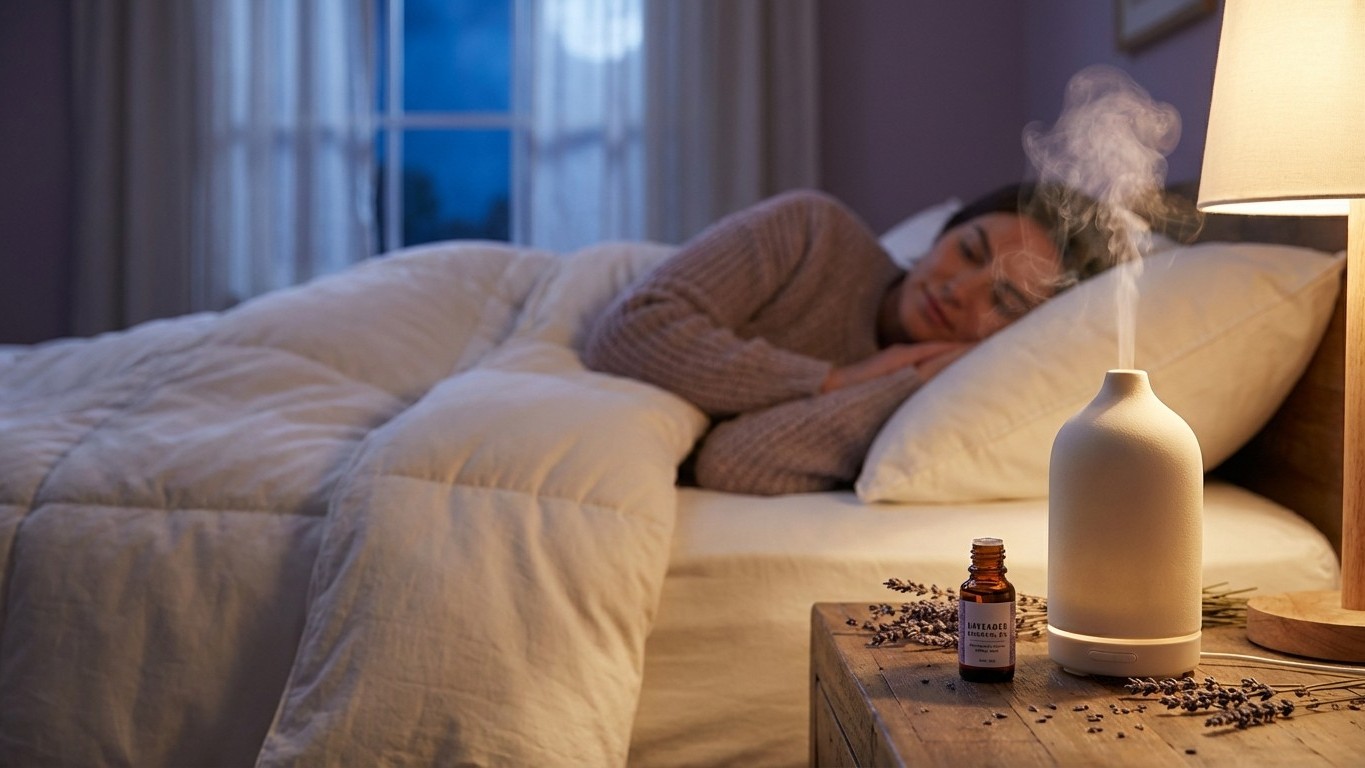
Scent is one of the most direct routes to the nervous system. Long before sleep aids lined pharmacy shelves, people were tucking dried lavender under their pillows, burning fragrant resins before bed, and hanging herbs in sleeping quarters. Modern aromatherapy has given this ancient practice a scientific framework, and while the evidence is still building, what we know so far is genuinely compelling. Using essential oils in the bedroom isn’t a magic fix for poor sleep, but as one layer within a broader sleep hygiene strategy, the olfactory environment deserves your attention.
Why the olfactory environment matters for sleep
The link between scent and sleep quality
The nose has an unusually direct line to the brain. Unlike other senses, olfactory signals bypass the thalamus and travel straight to the limbic system, the region governing emotion, memory, and autonomic responses, including heart rate and breathing. This is why a smell can shift your mood in seconds, before you’ve consciously processed what you’re smelling.
Several small-scale studies have looked at lavender specifically. Research published in peer-reviewed sleep journals has found associations between lavender inhalation and reduced heart rate, lower blood pressure, and self-reported improvements in sleep quality, particularly in young adults and older people with mild insomnia. The compounds most studied are linalool and linalyl acetate, both present in high concentrations in true lavender (Lavandula angustifolia). These appear to have mild sedative properties through interaction with GABA receptors, though the exact mechanisms in humans are still being investigated. Worth keeping in mind: most studies use controlled inhalation setups, not domestic diffusers, so real-world results may be more modest.
Still, the signal is consistent enough to take seriously. A pleasant, calming scent in the bedroom can act as a conditioned cue over time, your brain learning to associate that specific smell with the wind-down routine and sleep. That kind of Pavlovian pairing is legitimate, useful, and costs very little to build.
Scent as part of a whole-bedroom approach
The olfactory layer is one piece of a larger puzzle. Temperature, light exposure, noise, and air quality all shape how readily you fall asleep and how deeply you stay there. If your room is swelteringly warm, a lavender diffuser is unlikely to compensate. But when you’ve already addressed the core environmental factors, adding a calming scent can genuinely deepen the effect.
For a complete picture of how to optimise your sleeping space, the guide on natural ways to improve sleep environment covers light, temperature, sound, and air together. Pairing that foundation with intentional use of essential oils is where the real synergy lies. Similarly, understanding the best room temperature for sleep (broadly 16–18°C for most adults) ensures you’re not asking aromatherapy to compensate for an overheated room.
Which essential oils to choose for the bedroom
True lavender: the most studied option
Lavandula angustifolia, known as true or fine lavender, is the variety you want. It’s different from lavandin (Lavandula x intermedia), a hybrid that’s cheaper and more widely available but has a sharper, more camphorous scent and a different chemical profile. True lavender from Provence or the UK tends to have a higher linalool content and a softer, sweeter aroma. Always check the Latin name on the label.
A good true lavender essential oil is the most evidence-backed choice for sleep. It works well diffused in the bedroom 20–30 minutes before sleep, added to a pillow spray, or placed on a ceramic diffuser stone. The scent is familiar, broadly tolerated, and pairs well with other calming oils.
Alternatives worth exploring: petitgrain, chamomile, and marjoram
Lavender isn’t the only option, and for some people it simply isn’t their favourite scent. Petitgrain bigarade (from the leaves and twigs of the bitter orange tree) has a fresh, woody, slightly floral character and is widely used in aromatherapy for nervous tension. Roman chamomile (Chamaemelum nobile) is intensely calming, with a sweet, apple-like note; even a single drop goes a long way. Sweet marjoram (Origanum majorana) has a warm, herbaceous quality and a traditional reputation for promoting sleep, though human clinical evidence is thinner than for lavender.
Blending these can be interesting. A few drops of lavender with one drop of Roman chamomile and a drop of petitgrain creates a softer, more complex scent that many people find more appealing than lavender alone. Experimentation is part of the process.
Choosing quality oils
The essential oil market is largely unregulated in the UK, which means quality varies enormously. Look for oils that display the Latin botanical name, the country of origin, the chemotype where relevant, and a batch number. Reputable suppliers will provide gas chromatography (GC/MS) test results, either on request or publicly available on their website. Organic certification is a useful signal but not the only one. Avoid oils labelled simply “fragrance oil” or “aromatherapy blend” without ingredient transparency; these are often synthetic.
Price is a rough guide: genuine Roman chamomile, for instance, is costly to produce. If a bottle is suspiciously cheap, it likely isn’t what it claims to be.
How to use essential oils in the bedroom
Diffusion: timing, duration, and safety
An ultrasonic diffuser is the most popular method. It disperses tiny water droplets carrying the oil into the air without heating it, which preserves the chemical integrity of the oil. The key mistake most people make is over-diffusing. Running a diffuser continuously for hours isn’t more effective than using it intermittently, and prolonged exposure to concentrated aromatic compounds can cause headaches or airway irritation.
A sensible approach: diffuse for 20–30 minutes during your pre-sleep wind-down routine, then switch it off before you actually go to sleep, or use a model with an automatic timer. For a standard bedroom (around 15–20 square metres), 3–5 drops in the water reservoir is plenty. More isn’t better.
Children under 3 should not be in rooms where essential oils are being actively diffused. For older children (3–12), use half the adult amount, choose gentle oils such as true lavender, and ensure the room is well ventilated. Never diffuse oils around cats; their livers lack the enzymes to metabolise many aromatic compounds, and even passive inhalation can be harmful over time.
Pillow sprays and textile mists
A pillow spray is probably the most practical delivery method for everyday use, and making one at home is straightforward. Combine distilled water with a small amount of alcohol (witch hazel or vodka works well as an emulsifier), then add your essential oils. A basic ratio: 100ml of water, 10ml of witch hazel, and 15–20 drops of essential oil. Shake well before each use and spray lightly onto your pillow cover 10–15 minutes before bed.
Ready-made options are widely available in health shops and online. They’re convenient, but reading the ingredient list matters; some contain synthetic fragrance rather than genuine essential oils. If you’re particularly sensitive to scents, a DIY version lets you control the concentration precisely.
Other methods: ceramic stones, linen sachets, and humidifiers
Ceramic or clay diffuser stones placed on your bedside table offer a very gentle, passive diffusion. Add 2–3 drops and allow the scent to dissipate naturally over several hours. This is an excellent option if you want background scent rather than a concentrated hit, and it’s one of the safest approaches for households with children or pets.
Dried lavender sachets tucked inside your pillowcase are a traditional method with zero risk. The scent is subtle but real, and sachets can be refreshed with a drop of essential oil when the natural fragrance fades. Some people add a drop of essential oil to the fabric softener drawer when washing bedding, which leaves a faint, pleasant scent. Avoid adding oils directly to a humidifier unless it’s specifically designed for this; oils can degrade plastic components and create an irritating aerosol.
Precautions and contraindications
Allergies, irritation, and interactions
Essential oils are highly concentrated plant extracts. Even oils with a benign reputation can cause skin irritation if applied undiluted, trigger allergic reactions in sensitised individuals, or interact with certain medications. Inhalation is generally lower-risk than topical application, but prolonged or high-concentration diffusion can irritate the airways, particularly in people with asthma or other respiratory conditions.
If you’re new to aromatherapy, start with brief diffusion sessions and low concentrations, and pay attention to how you feel. Headaches, a tight chest, or a racing heart are signals to stop and ventilate the room. Anyone on medication should check with their GP before using essential oils regularly, as some compounds can affect drug metabolism. Always consult your GP if you have underlying health conditions.
Children, pregnancy, and pets
Pregnancy warrants particular caution. Some essential oils, including clary sage and marjoram, are traditionally avoided in pregnancy because of their potential to stimulate uterine contractions. Even lavender, generally considered one of the gentler oils, should be used conservatively during the first trimester. If you’re pregnant, speak with a qualified aromatherapist or your midwife before using oils in any form.
For babies and toddlers under 3, the consensus among aromatherapy practitioners is to avoid essential oil diffusion in their rooms altogether. For children aged 3 and above, stick to well-tolerated oils like true lavender at very low concentrations, ensure good ventilation, and use intermittent rather than continuous diffusion.
Dogs can tolerate many essential oils at low ambient concentrations, but cats and birds are considerably more sensitive. If you have feline companions who sleep in your bedroom, passive methods (sachets, very dilute pillow sprays used only on pillowcases) are safer than active diffusion.
Building a complete evening routine around essential oils
Weaving scent into a sleep ritual
The power of aromatherapy for sleep is amplified considerably when it’s embedded in a consistent ritual rather than used sporadically. Your nervous system responds to repetition; when the same scent appears night after night alongside dimmed lights, a warm bath, and a move away from screens, it becomes a reliable cue that sleep is coming. That transition, from the stimulation of the day to the quietness of the bedroom, is where essential oils earn their place.
A practical evening structure might look something like this: an hour before bed, start your diffuser with 3–4 drops of true lavender or your chosen blend. Dim the lights (see the how to sleep better naturally without blackout curtains guide for light management strategies that don’t require heavy investment). Have a warm shower or bath. When you get into bed, switch the diffuser off and spray your pillow lightly. Read, breathe, and let the scent do its quiet work.
Synergies with other natural approaches
Essential oils are one thread in a broader tapestry of natural sleep remedies that includes herbal teas, magnesium, breathing techniques, and sleep hygiene habits. No single element works in isolation. Lavender won’t rescue you from chronic sleep debt or anxiety, but alongside a cool, dark, quiet room and a consistent bedtime, it’s a genuinely pleasant and evidence-supported addition.
The consistency piece matters more than the specific oil you choose. A scent you find genuinely calming and enjoyable, used regularly as part of a deliberate wind-down, will serve you better than the “most effective” oil used haphazardly.
Frequently asked questions
Which essential oil is most effective for sleep? True lavender (Lavandula angustifolia) has the strongest body of research behind it for sleep support. Roman chamomile and petitgrain bigarade are well-regarded alternatives, particularly for those who find lavender too floral. The “best” oil is ultimately the one you find genuinely calming and can use consistently.
How do you diffuse essential oils safely in the bedroom? Use an ultrasonic diffuser with 3–5 drops in the water reservoir. Diffuse for 20–30 minutes during your wind-down period, not throughout the night. Keep the room ventilated, and never diffuse around cats or in rooms where very young children sleep.
Can you use essential oils with children or during pregnancy? With children under 3, avoid active diffusion entirely. For older children, use true lavender at half the adult concentration with good ventilation. During pregnancy, consult your midwife or GP before using any essential oils, as some compounds are contraindicated, and caution is advisable even with gentler oils during the first trimester.
Perhaps the most honest thing to say about essential oils and sleep is this: they’re not a treatment, but they’re not mere placebo either. The relationship between scent, the nervous system, and the sleep state is real, if still being mapped. Whether you find your way to lavender, chamomile, or something else entirely, the practice of creating a calm, intentional sensory environment before bed is, in itself, worth something.